If you’re exploring printing options for t-shirts or apparel, you may wonder: “Does DTF feel the same as vinyl?”
Although both methods are popular, they feel very different when worn. Understanding these differences helps you pick the best option for your products and customers.
❓ Quick Answer
DTF (Direct-to-Film) does not feel like vinyl.When comparing DTF vs vinyl, many apparel decorators are making the switch to digital transfers for better efficiency and quality.
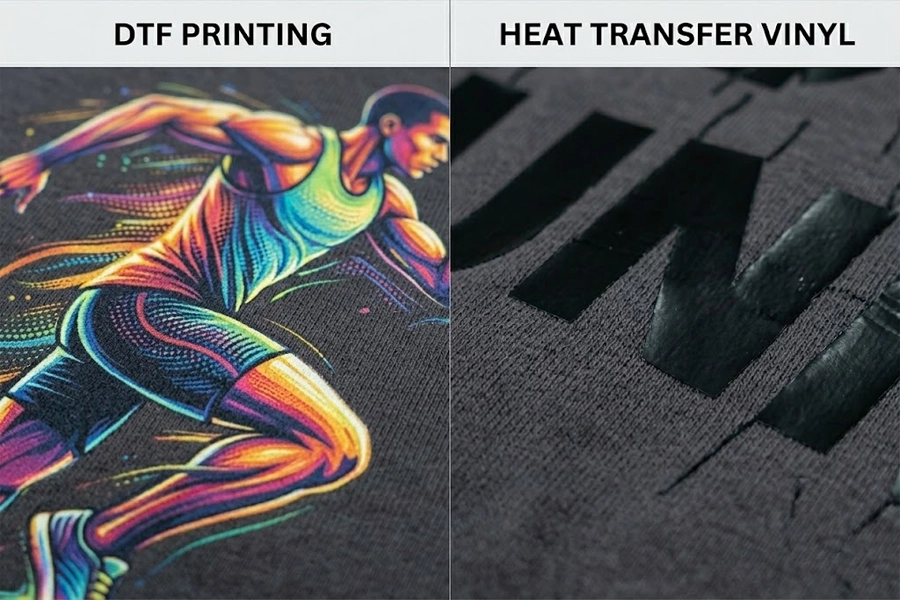
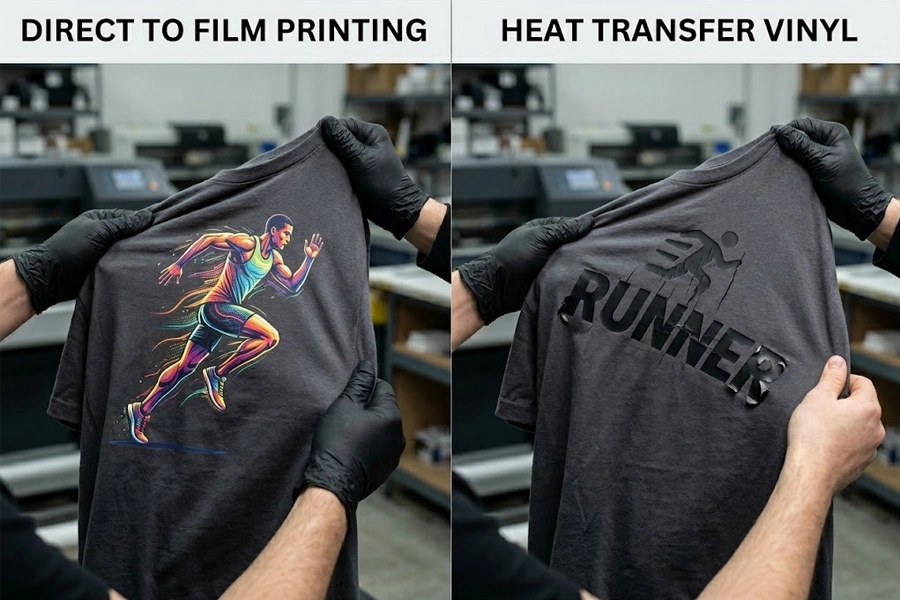
- Vinyl is thicker, slightly rubbery, and sits on top of the fabric.
- DTF is thinner, softer, and blends into the fabric for a more natural feel.
With the right materials, DTF prints feel almost part of the garment, unlike vinyl, which can feel raised and stiffer.
📊 DTF vs Vinyl printing: Feel and Performance
For Winnerjet’s clients, “weeding” is Vinyl’s biggest pain point. If a logo contains many small letters, manually tearing off the excess can take 5-10 minutes; DTF printing, however, bypasses this step entirely through digital technology. When processing orders of 100 or more pieces, DTF is more than 10 times more efficient than Vinyl.
| Feature | DTF Printing (Direct-to-Film) | Heat Transfer Vinyl (HTV) | Best For |
|---|---|---|---|
| Design Complexity | Unlimited. Supports full-color photos, gradients, and fine lines. | Limited. Best for solid colors, bold text, and simple shapes. | DTF |
| Production Speed | High-Speed. Print → Powder → Press. No weeding required. | Slow. Requires manual weeding, which is labor-intensive. | DTF |
| Hand Feel | Soft & Breathable. Inks integrate with fabric for a "retail" feel. | Thick & Rubbery. Feels like a plastic layer on top of the fabric. | DTF |
| Durability | Exceptional. High stretchability; resists cracking for 50+ washes. | High. Very durable, but prone to cracking if overstretched. | Tie |
| Versatility | Universal. Works on Cotton, Polyester, Nylon, Leather, etc. | Wide. Good on most fabrics, but struggles with high-stretch Lycra. | DTF |
| Cost Efficiency | Low (for Volume). Lower ink costs; higher ROI for scaling. | Low (Entry Level). Cheap equipment but high labor cost per unit. | DTF |
| Special Effects | Limited. Mostly Matte, Glossy, or Fluorescent. | Winner. Available in Glitter, Metallic, Reflective, and Puff. | Vinyl |
💡 Winnerjet Tip: Our DTF inks and films make soft, natural-feeling prints that stay flexible and vibrant, perfect for high-quality t-shirts.
🍃Is DTF the same as vinyl?Understanding the Technology
Many beginners ask, is DTF the same as vinyl? The short answer is no. While both are heat transfer methods, DTF printing is a digital process that uses eco-friendly pigment inks printed onto a PET film. In contrast, Vinyl (HTV) is a solid-colored material that is mechanically cut. DTF allows for complex, multi-color designs with zero weeding, whereas vinyl is limited to simpler, single-color graphics. If you are looking for “is dtf vinyl,” remember that DTF is a liquid-to-film technology, offering much more creative freedom than traditional plastic-based films.
Vinyl vs DTF Vinyl Durability: Which lasts longer after 50 washes?
When comparing DTF vs vinyl durability, both offer impressive longevity, but they fail in different ways. High-quality DTF prints are known for their incredible stretchability; they integrate with the fabric fibers, meaning they won’t crack even after 50+ washes. Traditional vinyl, however, can sometimes peel at the edges or crack if the design is large and solid. For athletic wear or high-use garments, DTF printing generally provides a more reliable, “retail-grade” finish that stays vibrant and intact longer than standard HTV.
Cost Analysis: DTF Printing vs Vinyl Cutting
For business owners, the choice often comes down to the bottom line. Vinyl cutting has a lower entry cost but high labor costs due to the “weeding” process. On the other hand, DTF printing requires a higher initial investment in equipment and premium DTF ink, but it drastically reduces labor time for multi-color or bulk orders. In the long run, DTF is the more cost-effective solution for scaling a custom apparel brand, as it handles intricate details and unlimited colors at a fraction of the time required for multi-layered vinyl application.
⚙️ When to Choose DTF or Vinyl
- DTF:
- Soft feel for the wearer
- Works on thin or blended fabrics
- Great for colorful or detailed designs
- Vinyl:
- Best for simple logos or text
- Very durable for long-lasting use
- Slightly raised texture gives a noticeable look
Pro Tip: If comfort and softness matter, DTF is usually the better choice.
🛠 Tips for the Softest DTF Prints
- Use good-quality PET film and DTF ink
- Apply the right heat and pressure when pressing
- Don’t use too much powder — it can make the print stiff
- Test on a small fabric sample before full production
💡 Winnerjet’s DTF inks are designed for smooth application and soft prints, so your t-shirts stay comfortable and professional-looking.

🎯 Choose the Right Transfer for Your Business
DTF gives a soft, natural feel, while vinyl is thicker and slightly stiffer. Choosing the right method affects how your t-shirts feel, look, and last.
For consistent softness and vibrant results, try Winnerjet DTF inks and films.
🧠 FAQs
Does DTF peel off like vinyl?
No — DTF bonds directly with the fabric, so it stays flexible and doesn’t peel like vinyl can.
Does DTF feel like vinyl on the garment?
Does DTF feel like vinyl? Not exactly. Traditional vinyl can feel heavy, stiff, and “rubbery,” especially on large designs. High-quality DTF printing offers a much softer “hand feel.” It is lightweight, stretchable, and integrates more naturally with the fabric fibers, ensuring the garment remains comfortable and flexible.
Which is better for t-shirts?
DTF is ideal for detailed designs and a soft feel. Vinyl is better for bold logos and long-lasting durability.
Can I layer DTF prints like vinyl?
Yes, but too many layers can slightly reduce flexibility.
Is DTF suitable for all fabrics?
DTF works well on cotton, polyester, blends, and some canvas fabrics when pressed correctly.
Is DTF the same as vinyl? Understanding the Technology
No, they are fundamentally different. Vinyl (Heat Transfer Vinyl) is a pre-colored material that requires mechanical cutting and manual weeding. DTF printing, on the other hand, is a digital process where designs are printed onto a film using specialized DTF ink. This allows for unlimited colors and photographic details that traditional vinyl simply cannot achieve.
Is DTF vinyl? Clarifying the Material Difference
Is DTF vinyl? Technically, no. While both are used for heat transfer, vinyl is a PVC or PU-based film, whereas DTF uses a PET (polyester) carrier film and high-quality pigment ink. DTF creates a thinner, more breathable layer on the fabric compared to the thicker, plastic-like feel of traditional vinyl.
Why choose DTF over traditional vinyl?
The biggest advantage of DTF is efficiency. Unlike vinyl, which requires time-consuming manual weeding, DTF is a “print and press” solution. For professional suppliers like Winnerjet, DTF provides a more scalable and cost-effective way to produce complex, multi-color designs at high speed without the limitations of solid-color films.