How Long Does Pigment Ink Take to Dry? Factors and Analysis
Many people who use pigment ink for printing often struggle with one question: exactly how long does pigment ink take to dry? This seemingly simple question actually involves multiple complex factors. As a company with 20 years of experience in ink production, we have conducted in-depth research and testing on the drying time of pigment ink. Below, we reveal the answers to this question and the contributing factors.
Drying Time of Pigment Ink in Common Applications
- General document printing: On standard A4 paper, ink typically dries within a few minutes to the touch without smudging. However, complete drying may take approximately 10-15 minutes.
- Photo printing: On regular photo paper, pigment ink may require 15-30 minutes for initial drying, while complete drying can take 1-2 hours.
- Textile printing: For cotton fabrics using conventional printing processes, pigment ink may take 30 minutes to 1 hour for initial drying. To reach a fully dry state suitable for subsequent processing, it may require 2-4 hours. For chemical fiber fabrics, drying time may be longer, sometimes even 6-8 hours.

Composition and Drying Mechanism of Pigment Ink
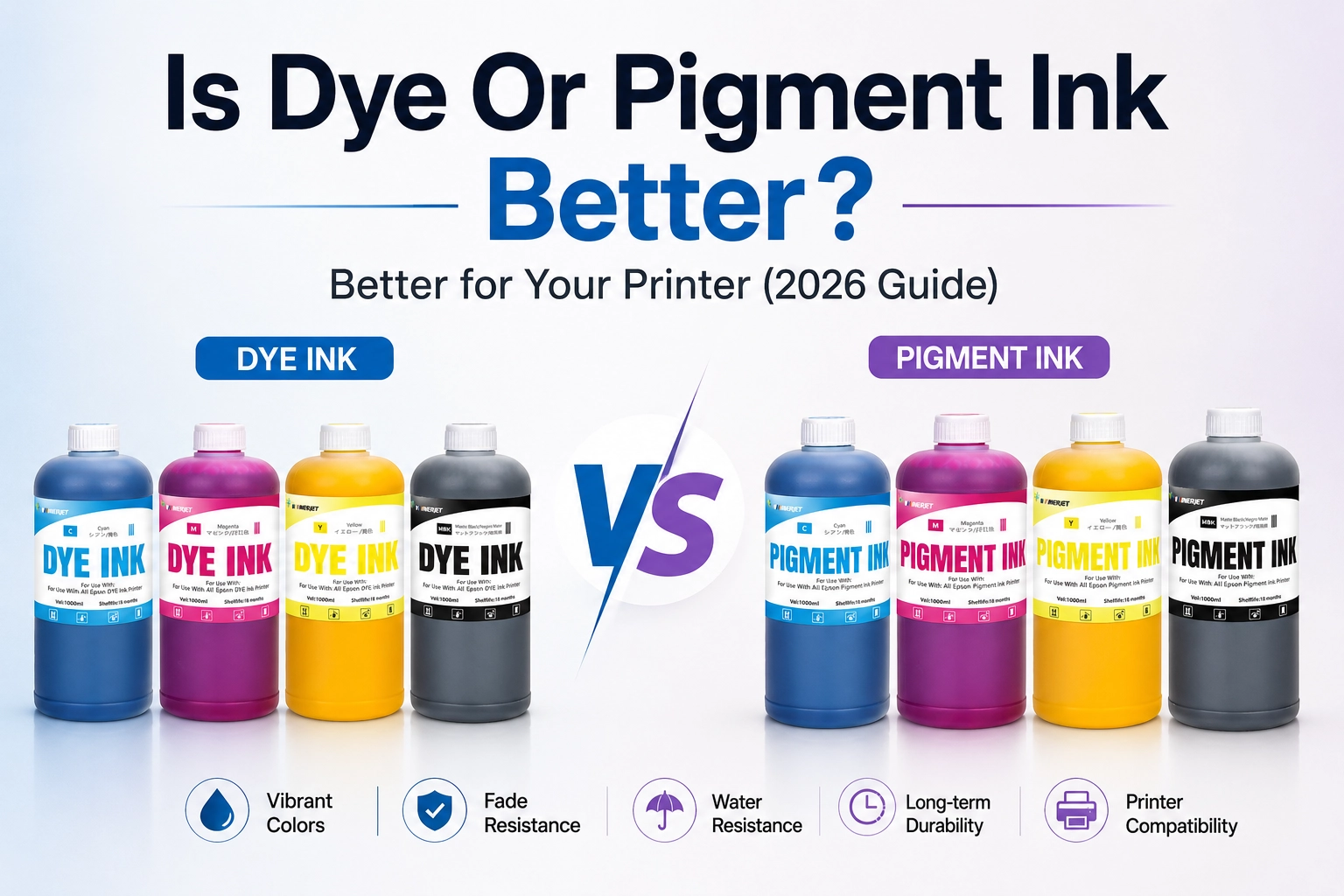
Pigment ink is a suspension formed by dispersing solid pigment particles in water or organic solvents. Its main components include pigments, dispersants, binders, and other additives. Pigments are the key components that provide color; dispersants ensure uniform dispersion of pigment particles in the solution to prevent agglomeration; binders hold pigment particles together and allow the ink to adhere to the substrate surface; additives regulate various properties of the ink, such as viscosity and surface tension.
The drying process of pigment ink is primarily achieved through physical means. When ink is printed or applied to a substrate, the solvent (water or organic solvent) begins to gradually evaporate. As the solvent decreases, the distance between pigment particles gradually decreases, eventually coming into contact and forming a tight packing structure, thereby achieving drying and curing of the ink. This process is similar to wet sand drying in the sun, where water gradually evaporates and sand particles pack tightly together.
Factors Affecting Pigment Ink Drying Time
Environmental Factors
- Temperature: Temperature is one of the important factors affecting the drying speed of pigment ink. Generally speaking, the higher the temperature, the faster the solvent evaporates, and the shorter the ink drying time. This is because in high-temperature environments, solvent molecules gain more energy and can more easily escape the liquid surface and enter the air. Studies have shown that within a certain range, for every 10°C increase in temperature, the drying speed of inks (including pigment inks) can increase by approximately 30%. For example, pigment ink dries significantly faster in hot summer than in cold winter. In practical applications, we can control environmental temperature to adjust pigment ink drying time. Installing air conditioning equipment in printing workshops or writing environments to maintain temperature within an appropriate range can both improve production efficiency and ensure printing and writing quality.
- Humidity: Environmental humidity has a significant impact on the drying speed of pigment ink. In high humidity environments, where air contains more moisture, the evaporation rate of ink solvents slows down. This is because solvent molecules are interfered by surrounding water molecules during evaporation and cannot easily enter the air. When relative humidity increases from 40% to 60%, the drying time of inks (including pigment inks) may extend by more than 50%. During the rainy season in southern regions, due to high air humidity, we find that pigment ink dries particularly slowly, and sometimes it feels like the ink never dries. To solve this problem, we can use dehumidification equipment in the environment to reduce air humidity and accelerate pigment ink drying.
- Air flow: Good ventilation can accelerate solvent evaporation from pigment ink, thereby increasing drying speed. Air flow can quickly carry away evaporated solvents, reducing solvent concentration on the ink layer surface and allowing internal solvents to continue evaporating. In a closed, poorly ventilated space, pigment ink dries significantly slower than in well-ventilated environments. In printing workshops, ventilation equipment such as exhaust fans and ventilation ducts are usually installed to ensure air circulation and promote ink drying. Additionally, when writing or painting, we can use fans and other equipment to increase air flow and accelerate pigment ink drying.
Ink-related Factors
- Pigment particle size: The size of pigment particles significantly affects ink drying speed. Smaller pigment particles provide a larger surface area, facilitating contact between ink and air, thereby accelerating the drying process. This is because solvent molecules need to escape from the surface of pigment particles during evaporation, and a larger surface area means more solvent molecules can evaporate simultaneously. However, excessively small particles may increase ink permeability and affect drying uniformity. If pigment particles are too small, ink may more easily penetrate into paper, slowing surface drying and potentially causing color bleeding and other issues.
- Binder type: The type of binder determines the basic properties and drying characteristics of ink. Different types of binders have different drying methods and speeds. Oil-based binders primarily dry through oxidative polymerization reactions and have relatively slow drying speeds; solvent-based binders dry depending on solvent evaporation rate, and selecting appropriate solvents can adjust drying speed. Some new binders, through special formula design, can accelerate drying speed while ensuring ink performance. When selecting pigment ink, we can choose products with appropriate binder types according to actual needs to meet drying time requirements.
- Solvent volatility: Solvent volatility is a key factor affecting pigment ink drying speed. Highly volatile solvents can quickly evaporate from ink, allowing rapid drying. However, excessively volatile solvents may cause ink to dry too quickly during printing, affecting print quality. If solvents evaporate too quickly, ink may dry before fully transferring to the substrate, leading to incomplete printed patterns, uneven colors, and other issues. Therefore, in ink formulations, it is necessary to reasonably select solvent types and proportions to balance drying speed and print quality.

Substrate Factors
- Paper type: The physical and chemical properties of paper significantly affect the drying time of pigment ink. Different types of paper have different water absorption, surface roughness, and pH levels. Generally speaking, paper with strong water absorption can absorb ink solvents more quickly, thereby accelerating drying. Newsprint, which has strong water absorption, allows pigment ink to dry relatively quickly. Paper with smooth surfaces and poor water absorption, such as coated paper, results in relatively slow ink drying. Paper pH can also affect ink drying—acidic paper may inhibit ink drying, while alkaline paper may promote drying.
- Fabric material: When pigment ink is used for textile printing, fabric material also significantly affects drying time. Different fabric materials, such as cotton, linen, silk, and chemical fibers, have different fiber structures and surface properties, resulting in different ink absorption and drying speeds. Cotton fabrics generally have good water absorption, allowing pigment ink to dry relatively quickly; chemical fiber fabrics have poor water absorption, resulting in potentially slower ink drying. Additionally, fabric pre-treatment processes can affect ink drying—specially treated fabrics may have different effects on ink absorption and drying.
Ink Layer Thickness Factor
The thickness of the ink layer is an important factor affecting drying time. Thicker ink layers mean longer paths for solvent evaporation and thus require more time. This is like a glass of water—a thinner layer evaporates faster, while a thicker layer requires more time to evaporate. During printing or writing, if ink volume is too large, forming an excessively thick ink layer, the drying time of pigment ink will significantly increase. Furthermore, excessively thick ink layers may result in surface drying while the interior remains wet, affecting print and writing quality. Therefore, in practical operations, it is necessary to control ink usage to avoid excessively thick ink layers.
Examples of Pigment Ink Drying Time in Common Applications
- General document printing: In office environments, when using ordinary laser or inkjet printers with pigment ink to print documents on standard A4 paper, ink typically dries within a few minutes to the touch without smudging. However, complete drying may take approximately 10-15 minutes, with specific times affected by the various factors mentioned above. If environmental temperature is low and humidity is high, drying time may extend to 20 minutes or more.
- Photo printing: In professional photography developing shops, when using pigment ink to print photos, since photos usually require higher quality and color saturation, the printed ink layer is relatively thick. On regular photo paper, pigment ink may require 15-30 minutes for initial drying, while complete drying can take 1-2 hours. This is why after developing photos, shop assistants usually recommend waiting for a period of time before organizing and packaging to prevent photos from sticking together.
- Textile printing: In the textile industry, when pigment ink is used for digital printing, drying time varies significantly depending on fabric material and printing process. For cotton fabrics using conventional printing processes, pigment ink may take 30 minutes to 1 hour for initial drying. To reach a fully dry state suitable for subsequent processing, it may require 2-4 hours. For chemical fiber fabrics, drying time may be longer, sometimes even 6-8 hours.
The drying time of pigment ink is comprehensively affected by multiple factors. In practical applications, we need to comprehensively consider these factors according to specific usage scenarios and needs, and take corresponding measures to adjust pigment ink drying time to achieve optimal printing and writing results. Whether to improve production efficiency or ensure product quality, understanding and mastering the secrets of pigment ink drying time is crucial.
If you have other questions about pigment ink, please contact us for consultation. We have rich experience in producing pigment ink.