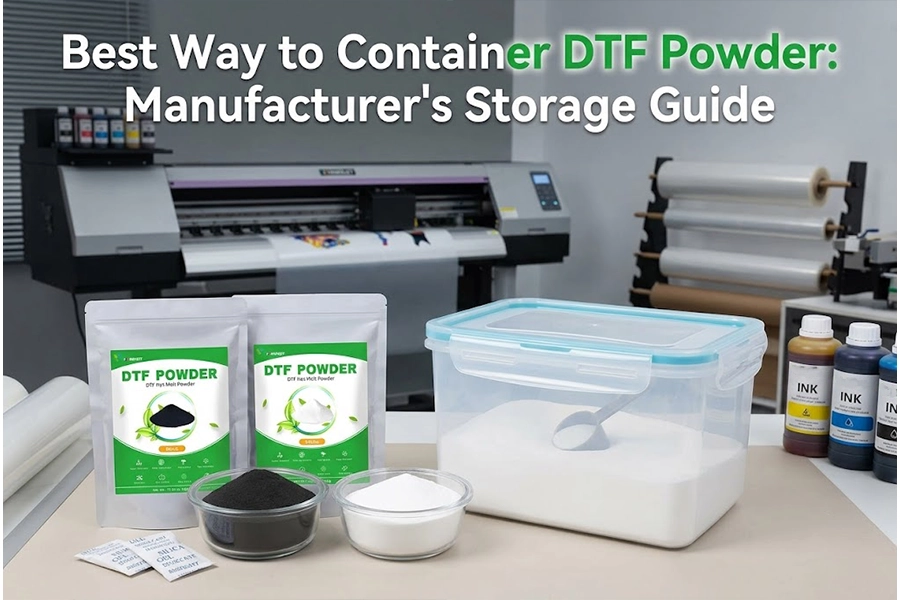
The best way to store DTF powder is using airtight, food-grade HDPE/PP plastic tubs or glass jars with silicone gaskets, paired with silica gel packets, kept in a climate-controlled room (18–25°C, <50% RH).
As a global manufacturer with nearly 20 years of experience in the R&D and export of digital printing consumables, we have witnessed many customers ruin high-quality hot-melt powder due to improper storage. Here, we provide a systematic breakdown of the most practical and scientifically sound storage solutions for DTF powder.
Best Containers for Storing DTF Powder (Material Comparison)
When printing shops ask our technical team about the best way to container dtf powder, our answer always starts with material selection. Not all storage tubs are built equal. DTF TPU/PA powders are extremely vulnerable to ambient humidity and electrostatic friction. Choosing the right container material is your first line of defense against clumping and uneven powder distribution.
Below is a quick comparison of container materials before we dive into each option:
| Container Type | Moisture Barrier | Anti-Static Performance | Best For | Recommendation |
|---|---|---|---|---|
| HDPE/PP Plastic Tubs with Gasket | Excellent (100% Sealed) | High | Factories & High-Volume Shops | ⭐⭐⭐⭐⭐ (Top Pick) |
| Glass Jars with Clamp Lids | Impermeable | Excellent (Zero Static) | DIY Crafters & Small Studios | ⭐⭐⭐⭐ (Best for Small Batches) |
| Vacuum-Sealed Mylar Bags | Exceptional | Moderate | Long-Term Storage & Bulk Backup | ⭐⭐⭐⭐ (Best for Backup) |
| Bare Metal Containers | Poor Seal | Terribly High Static | NOT Recommended | ❌ (Avoid) |
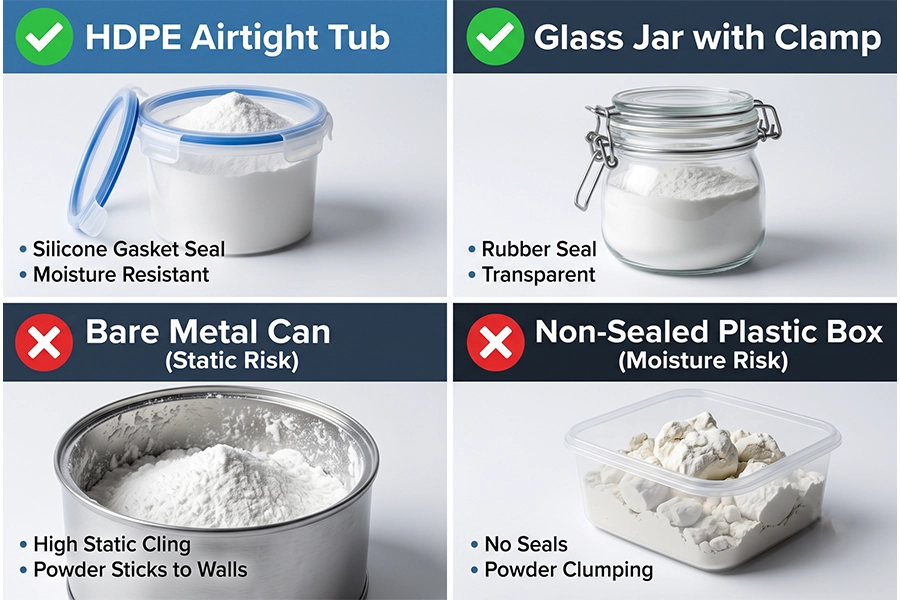
⚠ What to Avoid: Bare Metal & Non-Sealed Containers
Understanding the best way to container dtf powder also means knowing what not to use. Avoid these common storage pitfalls:
❌ Bare Metal Cans: Unlined tin or stainless steel cans generate intense electrostatic charges through friction. The TPU powder will magnetically stick to the metal walls, creating a messy buildup that is nearly impossible to clean and leads to severe powder waste.
❌ Standard Tupperware / Non-Gasket Plastic Boxes: Cheap food containers without silicone gaskets may look sealed, but ambient humidity will slowly seep in through micro-gaps, turning your fine adhesive powder into hard, unusable clumps within weeks.
Storage Methods for Different Types of DTF Powder
Not all hot melt adhesive powders behave the same way in storage. The particle size (mesh size) and chemical formulation directly affect how a powder reacts to humidity and static. To get the most out of your consumables, tailoring your container setup to the specific powder type is the best way to container dtf powder without risking material degradation.
Here is how to store different DTF powders effectively, along with our recommended product solutions:
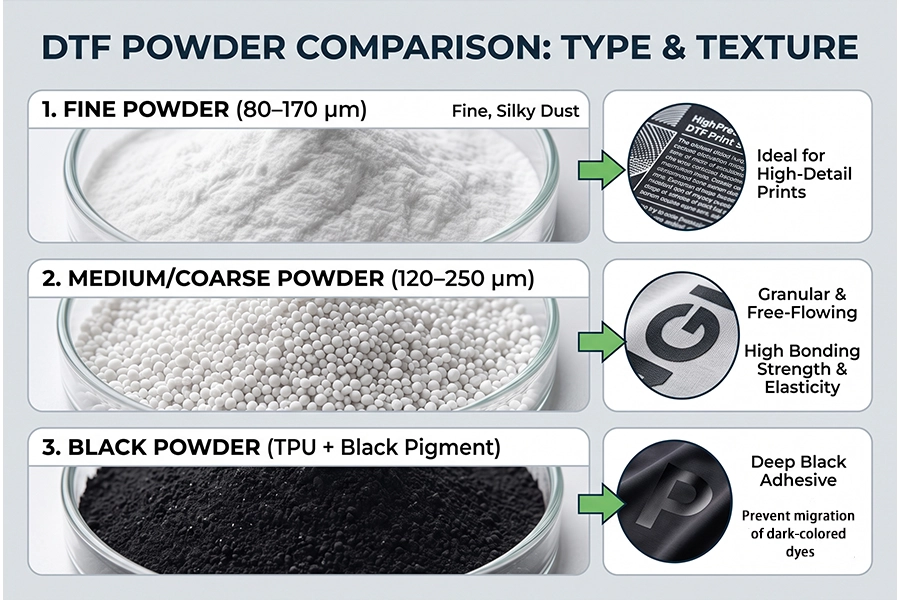
| DTF Powder Type | Physical Characteristics & Pain Points | Best Container & Storage Requirements | Recommended Solution & Application |
|---|---|---|---|
| Fine DTF Powder 80–170 µm | High surface area; extremely prone to moisture absorption, clumping, and static cling. | Food-grade HDPE airtight tub with a silicone gasket seal + 2 silica gel desiccant packs. | Winnerjet Fine DTF Powder (Ideal for ultra-fine details & soft hand-feel; must be sealed immediately after use) |
| Medium & Coarse DTF Powder 120–250 µm | Larger particles; good flowability; used frequently in high-volume production. | Heavy-duty HDPE industrial buckets with a screw-top lock lid for easy scooping. | Winnerjet Medium/Coarse DTF Powder (High tensile strength & superior washability for high-volume factories) |
| Black DTF Powder TPU + Black Pigment | Contains intense black pigment particles; high risk of cross-contaminating white powder. | Opaque / UV-blocking HDPE container dedicated exclusively to black powder. | Winnerjet DTF Series Consumables (Prevents dye migration on dark garments; keep strictly separated from white powder) |
Storage Deep-Dive by Powder Type
1. Fine DTF Powder (80–170 µm): Maximum Moisture Protection Needed
Because fine powder particles have a significantly larger surface area per gram, they act like a sponge for airborne humidity.
- The Storage Rule: Always use a smaller, rigid HDPE container fitted with a rubber gasket lid. Keep the headspace in the tub minimal to reduce trapped air, and insert a fresh silica gel pack inside the lid.
2. Medium & Coarse Powder (120–250 µm): Easy Access for High-Volume Production
Medium and coarse powders are less sensitive to minor humidity fluctuations than fine powder, but they are used in much larger quantities during daily factory operations.
- The Storage Rule: The best way to container dtf powder for coarse grades is a heavy-duty, wide-mouth HDPE tub with a screw-top threaded lid. This design allows operators to quickly scoop large quantities of powder into the shaking hopper while maintaining a air-tight seal during downtime.
3. Black DTF Powder: Prevent Cross-Contamination & Dye Migration
Black hot melt powder is specially designed to prevent sublimation dye migration on dark polyester shirts. However, even a tiny stray airborne spec of black powder landing in your white powder bucket can ruin light-colored transfer films.
- The Storage Rule: Store black powder in an opaque, dark-colored HDPE tub that is clearly labeled. Keep this container on a separate shelf away from your white powder stock, and use dedicated scoops.
How to Store & Recycle Used DTF Powder (Fresh vs Recycled Powder Management)
On industry forums like the Reddit DTF Transfer Talk community, users frequently report nightmare scenarios where “entire 5kg tubs turned into rock-hard sponges within weeks” due to improper moisture control. Similarly, in the Facebook DTF Printing USA Group, seasoned printers emphasize: “Never dump your shaker tray residue directly into your main powder bucket unless you want to ruin fresh TPU adhesive.”
What is the best way to container dtf powder once it has already been used? Many beginners make the fatal mistake of dumping used powder straight back into their main, fresh powder container. Below is the exact step-by-step recycling framework recommended by Winnerjet’s technical support team to prevent material waste while protecting print quality.
Never Mix Used Powder Directly into Fresh Stock
When TPU powder sits in an active shaking tray or powder trough, it is exposed to ambient workshop moisture, static charges, dust particles, and tiny lint fibers from pet film or textiles.
If you pour this used powder directly back into your sealed bucket of virgin powder, you introduce trapped humidity into the whole supply. Within days, moisture from the recycled powder will cause the fresh powder around it to clump, contaminating your entire stock.
Step-by-Step Guide: How to Filter, Container, and Recycle Used Powder
To maintain flawless transfer adhesion without throwing away valuable powder, follow this 3-step reclamation process:
Step 1: Dedicate a Separate “Recycled Powder Tub”
- Never store fresh and recycled powder together. Set up a dedicated, highly visible container labeled “Recycled TPU Powder”.
- Use an airtight, food-grade HDPE plastic tub with a silicone gasket seal—the same high-seal design recommended as the best way to container dtf powder for fresh stock.
Step 2: Sieve Out Debris (40–60 Mesh Screen)
- Before pouring reclaimed powder into your recycling tub, pass it through a 40–60 mesh stainless steel sieve.
- Why this matters: Sieving filters out lint, hardened micro-clumps, and film debris that could otherwise clog your automatic shaking machine’s hopper or cause rough spots on hot melt transfers.
Step 3: Dehumidify & Blend before Reuse
- Add 1–2 fresh silica gel packets inside your dedicated recycling tub to extract any moisture absorbed during the printing run. Seal the tub tightly for at least 12–24 hours.
- The Golden Blending Ratio: When loading your shaker hopper for the next job, do not use 100% recycled powder. Mix it with fresh powder at a 1:1 ratio (50% Fresh : 50% Recycled) or 2:1 ratio (66% Fresh : 33% Recycled). This ensures optimal melt consistency, strong elasticity, and smooth flowability.
we designed our premium Winnerjet DTF Hot Melt Powder Series with low-hygroscopic TPU formulations. However, even with moisture-resistant powders like our Fine DTF Powder and Medium/Coarse DTF Powder, following strict container separation between fresh and reclaimed powder remains the absolute best way to container dtf powder for long-term consistency.
Four Precautions for Storing DTF Powder
Even with the best way to container dtf powder, daily shop habits dictate your final adhesive quality. Invisible airborne moisture will quickly degrade exposed TPU/PA powder. Here are four essential storage rules every print shop must follow:
1. Control Room Climate (40%–50% RH)
TPU and PA hot melt powders are extremely hygroscopic. When ambient humidity exceeds 50% RH, water vapor bonds with powder granules and causes micro-clumping. Always operate in a climate-controlled room kept between 18–25°C and 40%–50% RH. Place a digital thermo-hygrometer right next to your storage tubs to monitor air quality in real time.
2. Balance Temperature Before Opening
Moving cold powder into a warm, humid shop causes thermal condensation. Moisture instantly forms droplets on cold powder granules if you open the lid too early. When retrieving powder from cold storage or outdoor shipping, keep the container tightly sealed. Allow the tub to sit at room temperature for 2–3 hours before breaking the air seal.
3. Mount Desiccants Inside the Lid
Adding silica gel packets inside your tub is crucial for absorbing residual humidity. However, throwing loose packets directly into the powder can mess up your daily scooping workflow. Use strong double-sided tape to attach 1–2 silica gel packs underneath the tub lid. This absorbs moisture in the top air space without contaminating your powder scoops.
4. Enforce the 5-Minute Re-Seal Rule
Leaving powder buckets uncapped during long print runs is the leading cause of gradual moisture ruin. Every minute a container stands open, ambient humidity circulates inside the tub. Train your operators to scoop the required powder and completely seal the gasket lid within 5 minutes. Never leave open containers near heat units or open windows.