No, DTF ink and sublimation ink are completely different in chemical composition and printing technology.
If you’re in the custom printing business, choosing the right ink makes a big difference.
In this guide, we’ll explain the key differences between the two, so you can decide which ink is better for your printing needs.
Watch: DTF vs Sublimation Printing Side-by-Side Test
See how DTF pigment ink and sublimation dye behave differently on dark cotton vs. white polyester t-shirts using the exact same heat press workflow:
- [00:00:21] – DTF printing, powder application, and dark cotton transfer
- [00:03:28] – Sublimation gas transfer and ultra-soft polyester photo print
- [00:04:40] – Hand-feel, breathability, and final finish comparison
📋 Quick Comparison: DTF Ink vs Sublimation Ink
| Feature | DTF Ink | Sublimation Ink |
|---|---|---|
| Ink Base Type | Pigment Ink (Textile Pigment) | Dye-based Ink (Dye Sublimation) |
| Works On | Cotton, polyester, blends, dark fabrics | Polyester (min. 65%) or special coated materials |
| Durability | Long-lasting and washable | Very long-lasting, no cracking or peeling |
| Color Look | Bright with a slightly raised texture | Very vibrant and smooth |
| Transfer Method | PET Film + adhesive powder + heat press | Sublimation paper + heat press |
| Feel of the Print | Slight texture ('plasticky' feel) | Feels like part of the fabric (zero texture) |
| Start-Up Cost | Medium (needs special printer + curing oven) | Lower (basic sublimation printer & paper) |
| Best Use | Custom cotton T-shirts, canvas bags, hoodies | Polyester sportswear, mugs, tumblers, phone cases |
🎨 What Is DTF Ink?
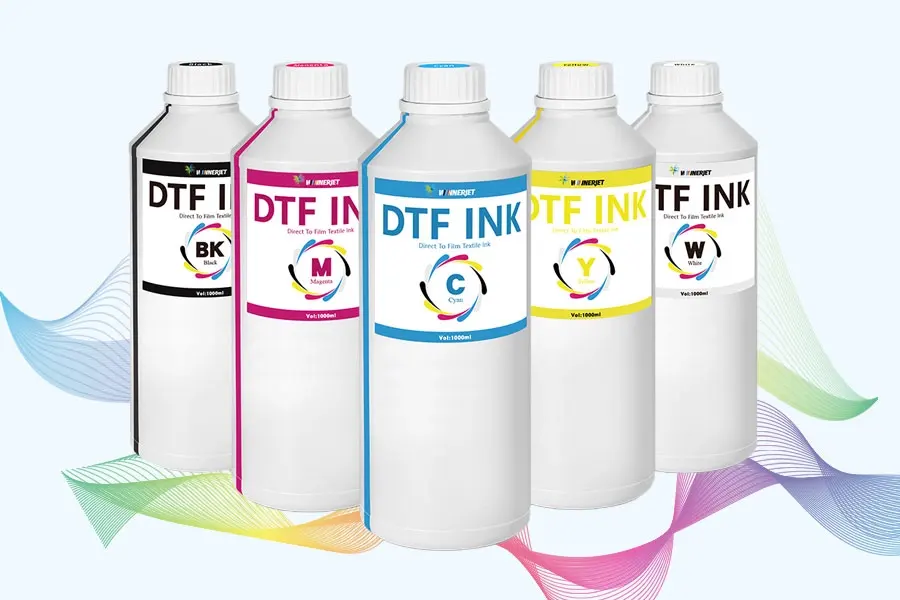
DTF ink stands for Direct to Film ink. Essentially, DTF ink is a specialized textile pigment ink. Instead of soaking into the fabric, this pigment ink sits on top of the material. You print your design onto a special PET film, sprinkle some hot-melt adhesive powder, and then press it onto the fabric using heat. The powder acts as a glue, allowing the pigment to stick to almost any kind of fabric, whether it’s light or dark.
Why does it work so well on dark fabrics? Unlike other methods, DTF printing uses a layer of opaque white DTF ink as a base, allowing the design to stand out vividly on dark fabrics like black cotton or denim.
👍 Pros:
- Can print on cotton, polyester, denim, and various blends.
- Excellent for both light and dark fabrics due to the opaque white base layer.
- Durable, stretchable, and waterproof.
👎 Cons:
- Requires more steps than sublimation
- Needs special film and adhesive powder
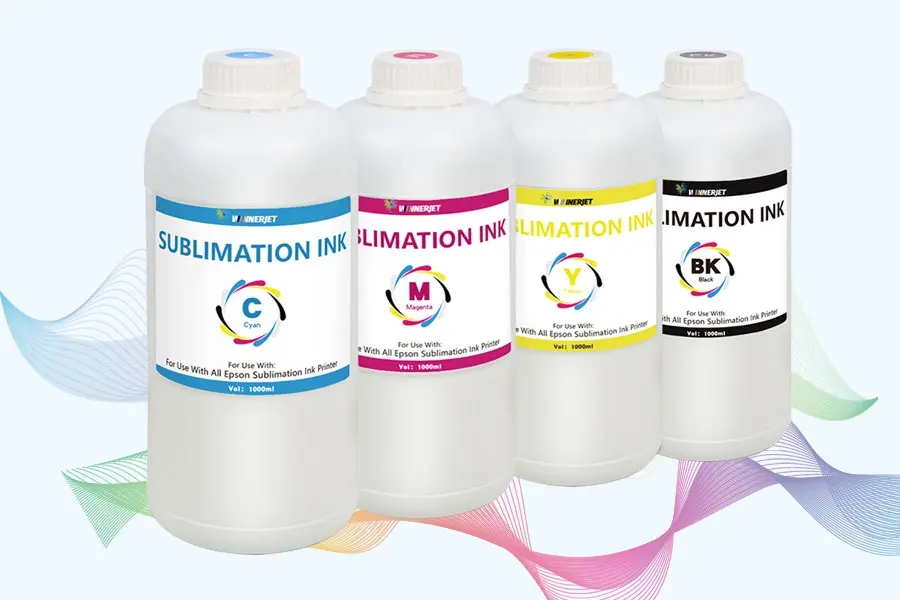
🌈 What Is Sublimation Ink?
Sublimation ink is a dye-based ink that works through a unique chemical process. When heated to high temperatures, the dye particles turn into a gas and permanently embed into the polyester fibers, becoming a part of the material itself. Because it uses transparent dyes rather than solid pigments, the print will never peel, crack, or fade, and it leaves zero texture on the fabric.
However, it comes with strict technical limitations:
Fabric Composition: It requires fabrics with at least 65% polyester (100% polyester is best) to properly bind with the ink gas. It will not bond with 100% cotton.
Color Limitations: Because sublimation ink is transparent, it does not work on dark garments. The colors will not show up on a black or navy shirt; it requires a white or light-colored background.
👍 Pros:
Super bright, photorealistic, and long-lasting colors.
Great for hard substrates like mugs, phone cases, and puzzles.
👎 Cons:
- Only works on polyester or coated materials
- It can’t be used on cotton
🤔 When to Use Each Ink
✅ Use DTF Ink if:
- You want to print on cotton or mixed fabrics
- You sell custom t-shirts, tote bags, or hats
- You want to print on dark-colored fabric
✅ Use Sublimation Ink if:
- You mainly print on polyester
- You make products like mugs, phone cases, or puzzles
- You want prints that never peel or fade
💵 Costs: Which One Is More Budget-Friendly?
| Cost Item | DTF Printing | Sublimation Printing |
|---|---|---|
| Printer | Special DTF printer needed | Regular sublimation printer |
| Transfer Material | Film + adhesive powder | Sublimation paper only |
| Ink and Supplies | DTF ink, film, powder | Sublimation ink, paper |
| Maintenance | Needs regular cleaning | Easy to maintain |
Sublimation printing is cheaper to start, but DTF offers more options for printing on different kinds of materials.
🖼️ Print Quality & Hand Feel: Which One Looks Better?
When comparing the final results, the visual look and the texture (hand feel) are completely different:
- DTF Prints: Offer highly saturated, vivid colors on almost any fabric. Because the ink stays on the surface held by adhesive powder, the print has a slightly flexible, ‘plasticky’ feel with a soft, raised texture.
- Sublimation Prints: Deliver extremely bright colors with zero texture (no hand feel) on polyester. Since the dye embeds directly into the fibers, you cannot feel the print at all when you run your hand over it.
The Verdict on Longevity: Both offer great durability, but sublimation prints usually last a lifetime on polyester because they cannot peel or scratch off.
✅ Final Verdict: Which Ink Should You Choose?
Both DTF and sublimation ink have their strengths:
- Go with DTF ink if you’re printing on cotton, dark fabrics, or mixed materials.
- Choose sublimation ink if you only print on polyester or want to make items like mugs and phone cases.
🔧 Need Reliable Inks for Your Business?
Choosing the right technology is just the first step—your business success depends on ink quality. At Winnerjet, we provide high-performance inks engineered to solve your daily printing challenges:
- Anti-Clogging DTF Inks: Formulated with sub-micron nano-pigments to prevent white ink settling, ensuring smooth circulation and minimizing printhead clogging.
- Ultra-Vibrant Sublimation Inks: Engineered for high color density and superior transfer efficiency, delivering razor-sharp, zero-texture prints that never fade.
- Fast Global Shipping: Leveraging our extensive foreign trade experience, we offer reliable global supply to keep your production moving without delays.
👉 Contact the Winnerjet Team Today for Premium Ink Solutions
❓ FAQs: DTF vs Sublimation Ink
Can I use sublimation ink on cotton?
No. Sublimation only works on polyester or coated surfaces.
Is DTF ink more durable than sublimation?
Both are strong, but sublimation lasts longer on polyester.
Can one printer use both types of ink?
No. DTF and sublimation need different printers and setups.
Which one is easier to start with?
Sublimation is simpler for beginners, but DTF gives more fabric options.
What materials can DTF ink print on?
Cotton, polyester, blends—even dark fabrics.