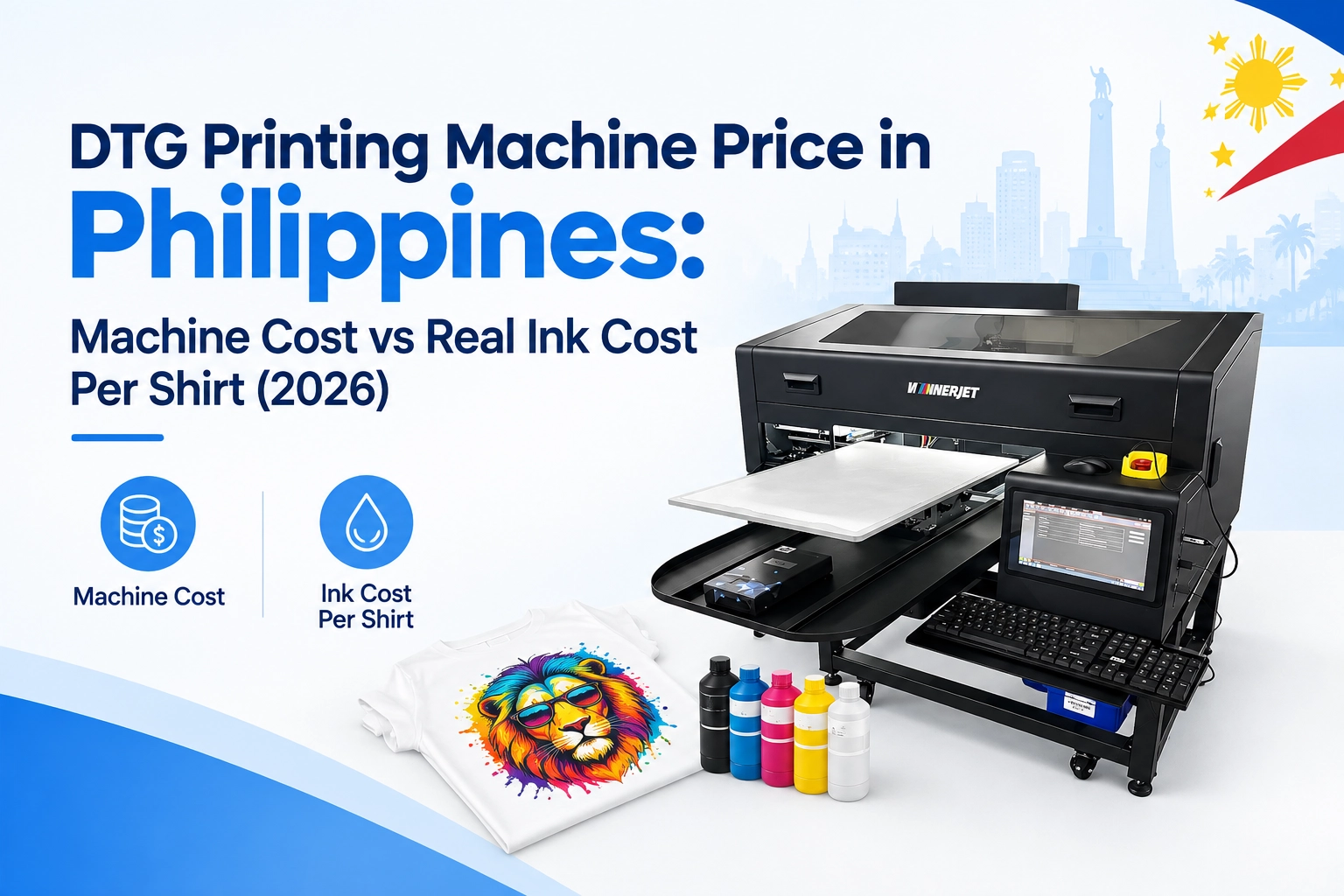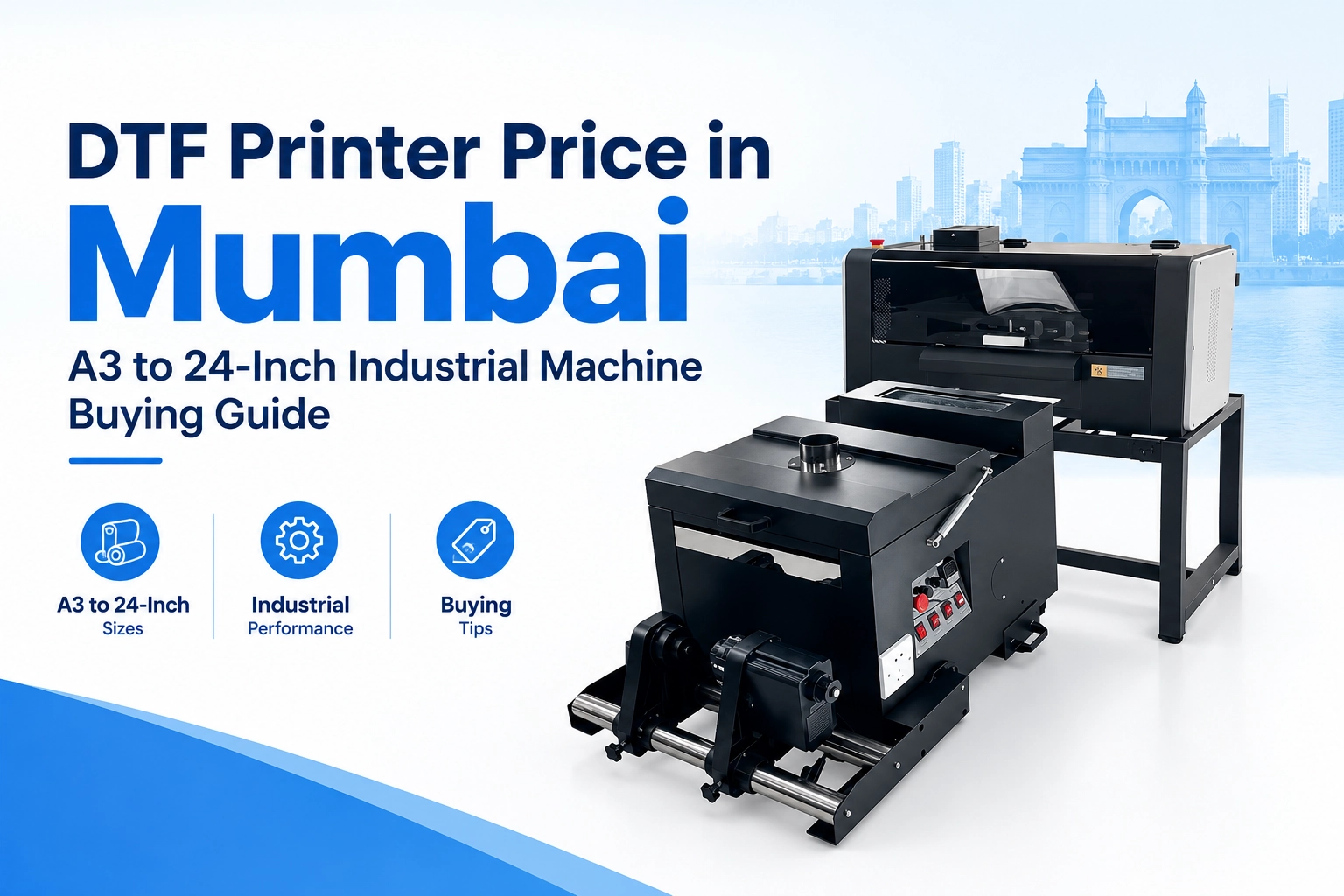
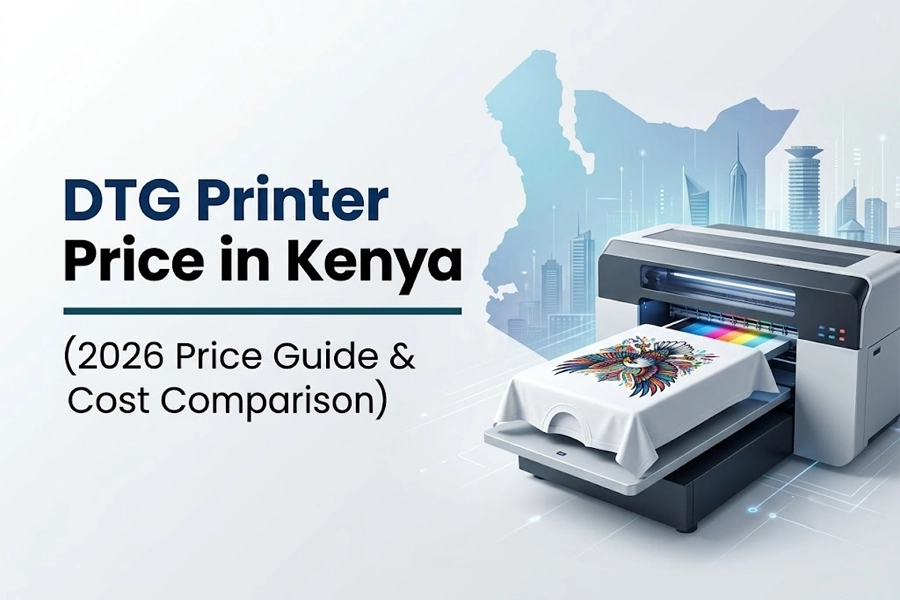
Direct-to-garment printing technology offers high-resolution, vibrant prints on pure cotton apparel, but initial equipment investments vary drastically depending on the printer’s build quality and production capacity.
Here is the current market price range for DTG printers in Nairobi and across Kenya:
Entry-Level / Converted DTG Printers (A3/Desktop Modified, e.g., Epson L805/L1800 engines):KSh 400,000 to KSh 500,000(approx. $3,100 – $3,900 USD). These are budget-friendly options suitable for small custom orders, though they require frequent manual maintenance.
Industrial & Genuine Brand DTG Printers (e.g., Epson SureColor, Brother GTX, Ricoh Ri series):KSh 1,500,000 to KSh 4,000,000+(approx. $12,000 – $30,000+ USD). These high-end production units offer heavy-duty reliability, faster print speeds, and automated white ink circulation systems.
Why Pure DTG is a High-Barrier Choice in Kenya
While these numbers provide a baseline, acquiring a DTG machine in Nairobi or Mombasa is only part of the equation. Most local print shops find DTG operations financially challenging due to steep hidden operational costs:
- Mandatory Pre-Treatment Liquids: Dark cotton apparel requires specialized pretreatment liquid application and heat-curing before printing, adding extra labor, equipment, and processing time per garment.
- High White Ink Waste & Maintenance: DTG textile white ink settles rapidly. Daily automatic maintenance and printhead flushing consume expensive ink even on non-production days, driving up overhead.
- Fabric Restrictions: DTG is limited almost exclusively to 100% pure cotton, whereas the Kenyan apparel market heavily demands polyester sportswear, workwear, and promotional safety vests.
In this 2026 investment breakdown, we will examine the real Return on Investment (ROI) for DTG machines in Kenya’s printing industry. More importantly, we will reveal how over 80% of local printing shops in Nairobi are leveraging alternative digital technologies (like DTF printing)—at less than one-third of the startup cost—to build highly profitable apparel businesses.
The Hard Reality of DTG Investment in Kenya
While DTG delivers impressive quality on retail cotton wear, operating a DTG setup in Kenya comes with severe business and technical risks:
- Fabric Limitations vs. Local Market Demand:
DTG only works well on 100% pure cotton.
Over 70% of lucrative local orders are polyester sportswear, school uniforms, workwear blends, and high-visibility reflector jackets. Pure DTG locks you out of these volume contracts.
- Pre-Treatment Overhead & Slower Turnaround:
Dark cotton requires manual or automated pretreat fluid application and drying before printing.
Adds extra labor, potential garment staining, and slows down delivery times for rush orders.
- Power Instability & High Clogging Risks:
Heavy white pigment ink requires strict 50%–60% humidity and constant circulation.
Frequent local power fluctuations interrupt cleaning cycles, quickly drying ink inside channels. Replacing a damaged industrial printhead can cost KSh 250,000 to KSh 500,000.
- High Unit Costs & Extremely Slow ROI:
High white ink usage and pretreatment costs push dark garment print costs up to KSh 250 – KSh 400 per piece.
Facing a price-sensitive local market and a KSh 2,000,000+ equipment investment, payback periods stretch to 18–36 months.
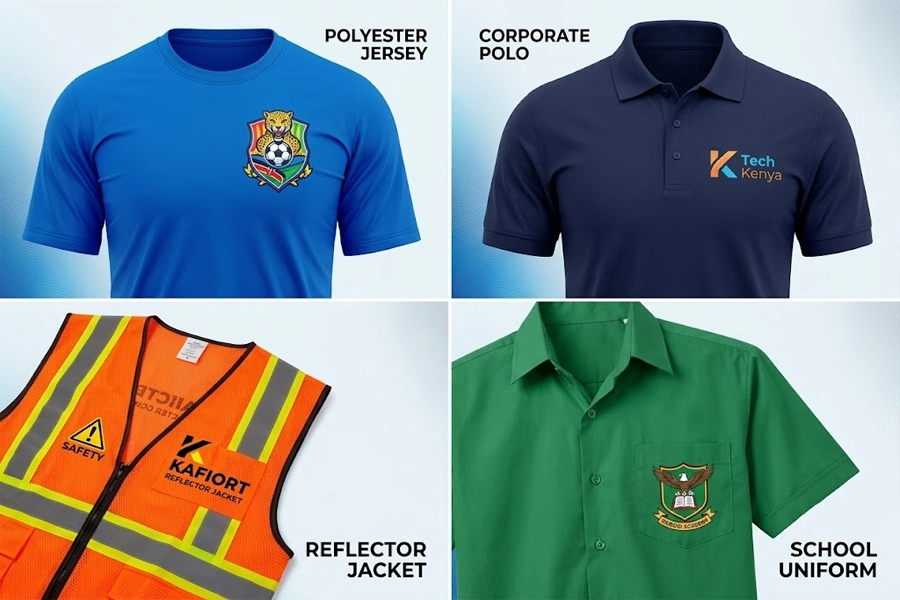
DTG vs DTF: Which Printing Solution Suits Your Business?
When comparing garment printing technologies for the East African market, understanding the trade-offs between Direct-to-Garment (DTG) and Direct-to-Film (DTF) is critical. While DTG excels in premium softness for pure cotton fashion brands, DTF has quickly become the go-to printing method for over 80% of print shops in Nairobi and Mombasa due to its versatility and high profitability.
Below is a direct comparison matrix designed to help you choose the right equipment for your capital and customer demand:
DTG vs DTF Comparison Matrix for Kenya Print Shops
| Comparison Factor | DTG Printing (Direct-to-Garment) | DTF Printing (Direct-to-Film) |
|---|---|---|
| Initial Startup Investment | KSh 400,000 – KSh 2,000,000+ | KSh 175,000 – KSh 450,000 |
| Fabric Versatility | 100% Pure Cotton only | All Fabrics (Cotton, Polyester, Nylon, Blends, Canvas, Caps) |
| Pre-Treatment Requirement | Mandatory liquid spraying & pressing on dark cotton | None (Direct printing on PET film with hot-melt powder) |
| Avg. Consumable Cost / Print | KSh 250 – KSh 400 (High) | KSh 50 – KSh 120 (Low) |
| Maintenance & Climate Risk | High (Requires strict humidity & daily flushing) | Moderate to Low (Simpler roll-to-roll ink system) |
| Estimated Payback Period (ROI) | 18 – 36 Months | 3 – 6 Months |
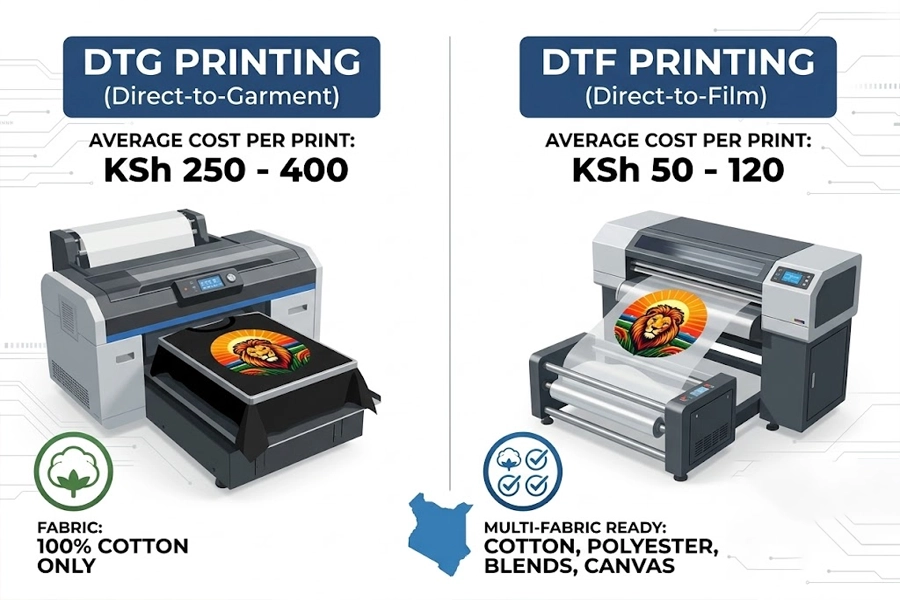
Key Takeaway for Kenyan Entrepreneurs
Starting a DTF setup requires a fraction of the capital—entry-level A3 desktop units to dual-head 60cm industrial machines range from just KSh 175,000 to KSh 450,000.
More importantly, DTF removes all fabric barriers. Whether your customer needs corporate polo shirts, polyester football jerseys, reflector jackets, or promotional canvas bags, a single DTF machine handles them all effortlessly—making it the ultimate profit driver for Kenya’s diverse apparel printing market.
Can You Convert a DTF Printer into a DTG Printer?
As DTF printers become increasingly popular across Nairobi, many resourceful shop owners ask: “Can I buy a budget-friendly DTF printer and modify it into a DTG machine to handle pure cotton garments?”
While hardware modification is a common topic among technicians, converting a DTF setup into a DTG printer is commercially non-viable and highly risky.
Here is an expert breakdown of why attempting this hardware hack will cost you more than buying a dedicated unit:
⚠️ WARNING: 3 Critical Risks of Converting DTF to DTG
- ❌ Z-Axis & Motion Architecture Defects: DTF machines operate on roll-to-roll or flat PET film feeds without height clearance. DTG requires an automated motorized Z-axis platen and anti-collision optical sensors to fit thick apparel seams. Placing a T-shirt directly on a DTF bed will severely strike and destroy your printhead.
- ❌ Ink Viscosity & System Corrosion: DTG textile pigment inks have entirely different viscosity and binder chemistry than DTF film inks. Flushing a DTF ink delivery system and running DTG white ink often leads to instant printhead clogging, damper corrosion, and pump failure.
- ❌ Negative Return on Investment (Cost Inversion): Customizing linear rails, stepper motors, driver boards, and software firmware often exceeds the cost of buying an entry-level factory machine—resulting in an unreliable, Frankenstein unit with zero warranty.
💡 Pro Advice for Kenya Printers
Do NOT attempt hardware modifications. Instead, achieve DTG-like results by optimizing your consumables. Using premium soft-touch DTF inks combined with ultra-fine hot-melt TPU powder delivers prints with over 90% of the softness and breathability of pure DTG—easily satisfying your high-end cotton clientele at a fraction of the cost.
What About Converted DTF Printers in Kenya?
While turning DTF into DTG is a bad idea, local markets are flooded with cheap desktop-converted DTF units (e.g., Epson L1800 modifications). If you are curious about how these conversions work, read our comprehensive guide on what printers can be converted to DTF.
However, for a serious commercial business, converted desktop machines lack white ink circulation and powder shakers, leading to constant clogging and slow production.
💡 Pro Advice for Growing Print Shops:
Skip the DIY headaches and hardware modifications. Investing in purpose-built industrial equipment is the fastest path to profitability. If you are scaling up, consider reliable factory setups like our 2-Head i3200 60cm DTF Printer for mid-sized production, or upgrade to our high-speed 4-Head 60cm Industrial DTF Printer to dominate high-volume local orders with zero downtime.
Essential High-Quality Consumables and Raw Materials for Print Shops in Kenya
Whether you run an industrial DTG setup or a high-volume DTF production line, high-grade consumables are the true lifeline of stable, profitable printing. In East Africa, equipment breakdowns are rarely caused by the printer itself—they usually stem from poor-quality inks and incompatible raw materials.
To safeguard your printheads and deliver vibrant, durable prints, sourcing reliable raw materials directly from a trusted source factory is critical.
Premium Consumables Engineered for Kenya’s Climate
- High-Performance DTF Inks (High-Temp & Dry-Climate Resistance):
Kenya’s climate and seasonal low humidity can cause standard inks to dry and clog printheads rapidly. Our specialized DTF Ink Series is engineered for extreme high-temperature and low-humidity stability, offering exceptionally smooth jetting, vibrant white density, and zero nozzle clogging even during long continuous runs.
- Affordable Factory-Direct DTG Inks:
For print shops operating direct-to-garment machines, ink cost is your largest overhead. We supply Cost-Effective DTG Inks at wholesale factory-direct pricing. Available in multiple packaging sizes, our formulations deliver high compatibility with major printhead models, superior wash fastness, and rich color saturation at a fraction of local retail costs.
High-static release films designed for seamless peeling, clean edge definition, and zero ghosting on cotton, polyester, and sportswear blends.
Solves the traditional “stiff and plastic feel” of heat transfers. Our fine TPU powder ensures high wash durability (50+ domestic washes) while maintaining a breathable, soft-hand feel that rivals DTG prints.
Factory-Direct Supply & Global Shipping Advantage
Local suppliers in Nairobi often mark up consumable prices by 200% to 300% while offering inconsistent quality batches. As a dedicated source factory with nearly 20 years of global OEM/ODM experience, we eliminate local middlemen to protect your profit margins.
- Factory-Direct Pricing: Buy premium inks and film directly from the manufacturer without distributor markups.
- Fast Global Logistics: Leverage our extensive international shipping network for fast, reliable delivery to Nairobi, Mombasa, and across East Africa.
- One-on-One Technical Support: Every order includes 1-on-1 remote guidance from our expert engineering team, ensuring seamless ink profiling and print setup.
Conclusion & Buying Advice for Kenya Print Businesses
Navigating the garment printing industry in Kenya requires balancing quality with strict operational economics.
- Choose DTG Printing If: You have a substantial capital budget (KSh 1.5 Million+), operate an established fashion brand with exclusive 100% pure cotton garments, and cater primarily to high-end export or boutique retail clients who prioritize maximum breathability and hand-feel softness over quick payback.
- Choose DTF Printing If: You want a rapid return on investment (ROI in 3–6 months), need to print on all fabric types (polyester sportswear, corporate polo shirts, safety vests, caps), and want to eliminate manual pre-treatment bottlenecks while keeping start-up costs under KSh 450,000.
FAQ –DTG printer price in Kenya
What is the average DTG printer price in Kenya?
The average DTG printer price in Kenya ranges from KSh 400,000 to KSh 500,000 for converted desktop entry-level units, and KSh 1,500,000 to KSh 4,000,000+ for genuine industrial-grade brand units (e.g., Epson, Brother, Ricoh).
Which is more profitable in Nairobi: DTG or DTF?
DTF printing is currently significantly more profitable for most local print shops. DTF equipment costs under one-third of a genuine DTG setup, requires no pre-treatment liquids, handles polyester sportswear and reflector jackets, and cuts consumable costs down to KSh 50–120 per print. Most Nairobi DTF businesses achieve full ROI in 3 to 6 months.
What equipment do I need to start a t-shirt printing business in Kenya?
To launch a complete custom apparel printing shop, you will need:
- Core Printer: A purpose-built 2-Head or 4-Head 60cm DTF Printer (or a DTG unit for cotton-only setups).
- Curing & Heat Transfer Equipment: An automated TPU powder shaker & curing oven, plus a heavy-duty Flatbed Heat Press (40x50cm or 40x60cm).
- Workstation & Software: A dedicated graphics PC with specialized RIP software (e.g., FlexiiRIP, MainTop, or CADlink).
- High-Grade Raw Materials: Fast-drying DTF Inks, static-free PET release films, and soft-touch hot-melt TPU powders.