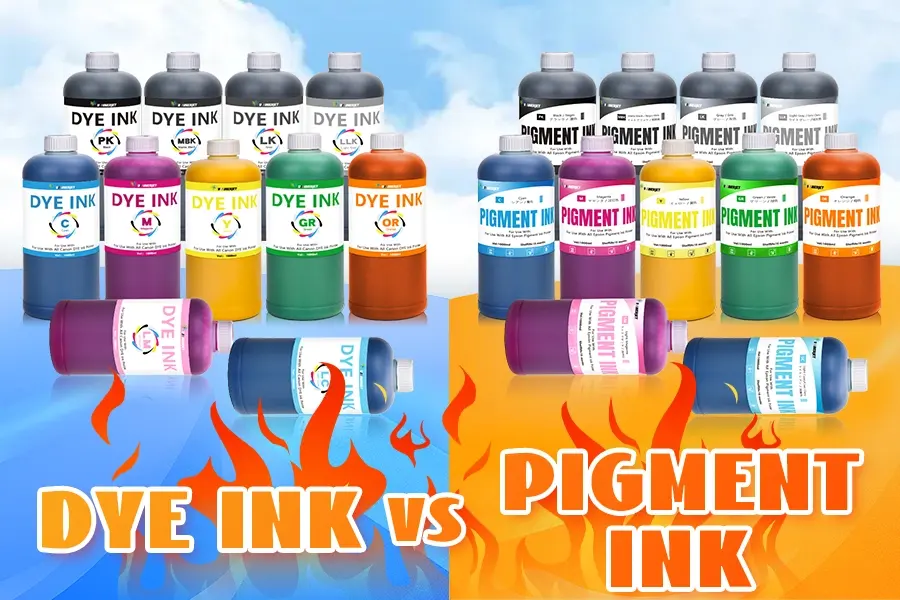
What is dye ink? Dye ink is a water-soluble colorant that dissolves completely in liquid, producing vibrant colors for photo printing. What is pigment ink? Pigment ink consists of tiny solid particles suspended in a carrier fluid, offering excellent fade resistance and water resistance.
Print quality and durability depend significantly on ink type, making it essential to understand their technical differences, performance on various media, and pros and cons of choosing the right ink for your printing needs.
Composition and Key Differences
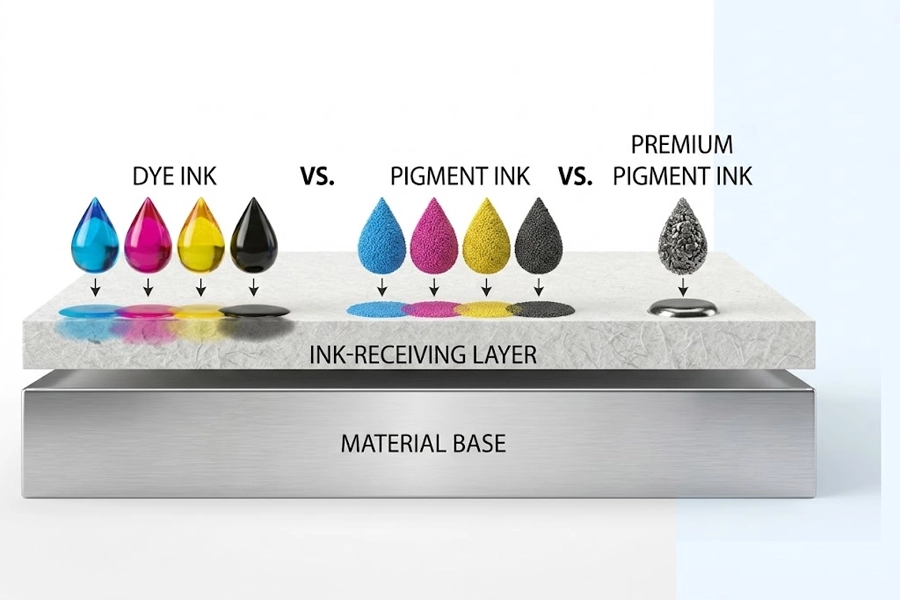
Dye ink is made of colorant molecules fully dissolved in liquid, allowing it to penetrate the printing media easily. This results in vibrant, sharp colors with a wide color gamut, making it ideal for producing vivid prints.
In contrast, pigment ink consists of tiny solid pigment particles suspended in a liquid carrier. Instead of being absorbed, these particles remain on the surface of the media, offering superior durability and lightfastness. However, pigment inks generally have a narrower color gamut compared to dye inks.
Performance on Different Media
Dye ink excels on glossy and coated papers, as well as specialty photo papers, producing brilliant colors and smooth gradients—ideal for high-quality photo printing.
Pigment ink, on the other hand, works well on a wide variety of media, including plain paper, matte paper, and fine art papers. Its surface-level adhesion ensures crisp, detailed prints, making it suitable for documents and archival-grade artwork.
Advantages of Each Ink Type
Dye Ink:
Delivers exceptional color vibrancy and rich tones, making it perfect for photo printing.
Absorbs quickly into paper, leading to faster printing speeds and drying times.
More cost-effective than pigment ink, making it a budget-friendly option.
Pigment Ink:
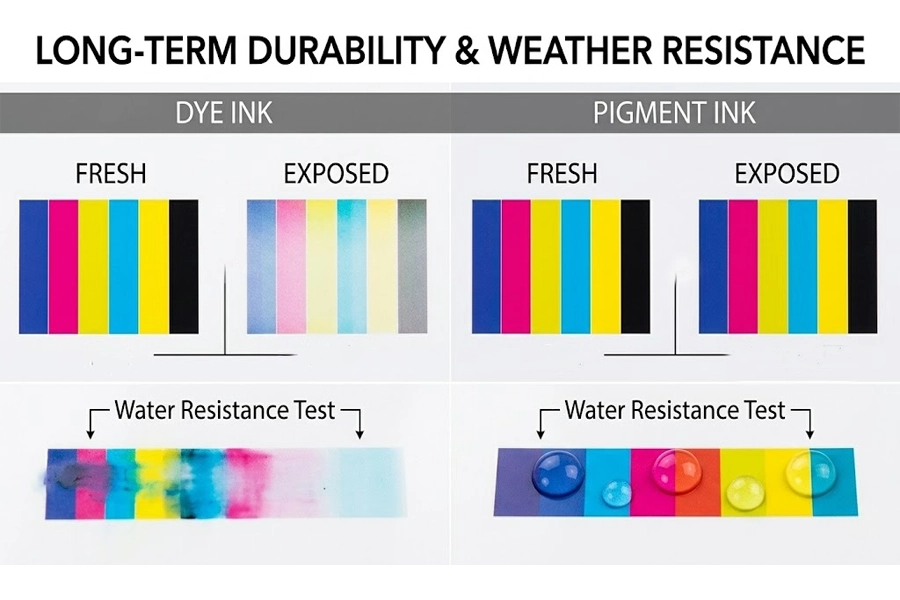
Offers superior longevity and fade resistance, ensuring prints remain vibrant over time.
Provides excellent water and smudge resistance, making it ideal for prints exposed to environmental conditions.
Produces sharp, high-detail prints, making it well-suited for documents and artwork.
Can I mix dye and pigment ink?
Absolutely not. You must never mix dye-based and pigment-based inks directly within the printer. Doing so triggers an immediate chemical reaction that leads to severe printhead clogging.
Because dye inks are fully water-soluble while pigment inks consist of tiny solid particles held in suspension, mixing them causes a conflict between their chemical carriers. The solid pigment particles tend to react with the dye solution, causing them to aggregate, clump, or transform into a viscous, sludge-like substance. This “ink sludge” can instantly clog the printer’s ultra-fine nozzles—a type of blockage that is extremely difficult, if not impossible, to clear—and will likely cause permanent damage to the printhead hardware.
If you plan to switch your printer from one ink type to another, it is strongly recommended that you thoroughly flush the entire ink delivery system with a professional printhead cleaning solution before introducing the new ink.
In practice, printing professionals and technical experts strongly advise against mixing these inks, as it carries a high risk of permanent hardware damage. For firsthand technical insights and community discussions regarding the performance differences between these two ink types in real-world printing scenarios, you can consult printer-related forums on Reddit.
Best Uses for Dye Ink
Dye ink is best suited for vibrant, high-color prints, making it an excellent choice for photo printing and graphic-rich documents. Its ability to produce brilliant colors and smooth gradients ensures stunning results, especially on glossy and coated papers.
Additionally, dye ink dries quickly and is more cost-effective, making it ideal for high-volume printing where speed and affordability are priorities. While it may be more susceptible to fading over time, modern dye inks have improved in longevity. For photos, marketing materials, and everyday prints that require rich, vivid colors, dye ink is the preferred option.
Best Uses for Pigment Ink
Pigment ink is ideal for producing professional-quality prints due to its durability and archival properties. It offers superior resistance to UV light and scratches, making it a preferred choice for long-lasting prints. Many photographers, especially those creating black-and-white images, favor pigment ink for its ability to produce a wider range of monochrome shades.
While its outdoor durability can be debated, laminating prints can significantly extend their lifespan in such environments. For high-quality, long-lasting indoor displays, pigment ink remains the best choice.
Pigment Ink vs Dye Ink: Which One is Better?
There is no definitive answer—it all comes down to your specific needs and preferences. Advancements in technology have minimized the drawbacks of both ink types over time.
Dye-based printers are generally more affordable and widely available, making them a great choice for cost-conscious users. However, if you prioritize exceptional longevity and archival-quality prints, a pigment ink printer is a better investment despite the higher cost of both the printer and ink.
For those producing professional black-and-white prints, pigment ink is often the preferred choice due to its superior monochrome dynamic range.
Pigment vs Dye ink: Side-by-Side Comparison
| Feature | Dye Ink | Pigment Ink |
|---|---|---|
| Color Quality | Superior. Vivid and brilliant. | Good. Accurate but matte. |
| Water Resistance | Poor. Smudges when wet. | Excellent. 100% Waterproof. |
| UV/Fade Resistance | Low. Fades in sunlight. | High. Archival quality (decades). |
| Best For | Indoor photos, posters. | Business docs, DTF, outdoor. |
| Common Surfaces | Glossy photo paper. | Matte paper, fabric, stickers. |
| Cost | Budget-friendly. | Premium / Higher price. |
Tips for Achieving Better Prints
To ensure consistent image quality, regardless of whether you’re using dye or pigment ink, always use the printer’s recommended ICC profiles for your specific paper and ink combination.
For example, Epson offers both types of ink. Its high-end Stylus Photo R1800 printer uses UltraChrome Hi-Gloss, a pigment-based ink rated to last up to 250 years, while models like the Epson Stylus Photo 1400 utilize Claria Hi-Definition, a dye-based ink claimed to last 98 years. Similarly, Canon and HP provide printers compatible with both dye and pigment inks.
A key point to remember: always use the ink type recommended for your printer. Switching ink types or using an incompatible ink—such as using pigment-based ink in a printer designed for dye-based ink—can quickly lead to clogged inkjets.
How to Choose the Right Ink for Your Printing Needs
When selecting between dye and pigment ink, consider the following key factors:
Intended Use: Determine whether your primary focus is photo printing, document printing, or fine art printing.
Print Longevity: Assess how long your prints need to last and whether they’ll be exposed to environmental factors.
Budget: Pigment inks tend to be more expensive than dye inks, so understanding your printing needs will help you choose wisely.
Printer Compatibility: Check if your printer supports dye, pigment, or both ink types before making a selection.
Ink Recommendations for Different Applications
Photo Printing: Dye ink is ideal for its vivid colors and fast drying time.
Document Printing: Pigment ink offers superior fade resistance and sharp text quality.
Art & Design Printing: Pigment ink is best for archival-grade prints with fine details, though a printer with more color options may be required.
Best Practices for Printing with Dye and Pigment Ink
Ink Storage: Keep cartridges in a cool, dry place away from direct sunlight to maintain quality.
Printer Maintenance: Follow manufacturer guidelines for cleaning and upkeep to ensure consistent performance.
Paper Selection: Choose the right paper type—glossy, matte, or fine art paper—to achieve the best print results
Final Thoughts
The choice between dye and pigment ink significantly impacts the quality and longevity of your prints. Dye ink delivers vibrant, high-color images, making it ideal for photo printing, while pigment ink offers superior detail, fade resistance, and durability for long-lasting prints.
By carefully evaluating your specific printing needs and understanding the strengths of each ink type, you can make an informed decision to achieve the best results. Additionally, following proper ink handling and printer maintenance practices will help maximize print quality and longevity.
FAQ—Pigment Ink vs Dye Ink
What is the main difference between pigment ink and dye ink?
Dye ink uses water-soluble colorants that fully dissolve, offering vibrant colors for standard photos. Pigment ink uses microscopic solid particles that sit on the paper surface, providing superior water and fade resistance for archival documents.
Can I mix dye and pigment ink in the same printer?
No, never mix them. Their differing formulas (solution vs. particle suspension) cause a chemical reaction, creating a thick sludge that will instantly clog your printhead nozzles.
Which ink lasts longer, dye or pigment?
Pigment ink lasts significantly longer. Its solid particles resist UV rays and moisture, lasting up to 20+ years under proper storage, while dye ink fades within a few years under light exposure.
Is pigment ink waterproof?
Yes, pigment ink is highly water-resistant. Once dry, the solid particles lock onto the media and won’t re-dissolve. Dye ink is water-soluble and will bleed or smudge immediately when wet.
Can a standard dye ink printer use pigment ink?
It is highly risky. Pigment ink has higher viscosity; using it in a printer designed only for dye ink can cause severe clogging. If you must switch, you must flush the system completely with professional cleaning solution first.