According to Wikipedia, textile printing is the process of applying color, pigments, or designs directly to fabric in definite patterns—unlike whole-fabric dyeing, the color is bonded to the fiber for lasting durability.
Today, industrial solutions like Kornit’s Direct-to-Fabric systems are transforming production through on-demand digital inkjet technology, cutting water waste while expanding print capabilities on cotton, polyester, and technical textiles.
What you will learn in this guide:
Direct vs Indirect Printing: How inkjet methods compare to traditional screen printing.
6 Core Technologies: DTF, DTG, Sublimation, Heat Transfer, Screen, and Digital Textile Printing.
Production Essentials: Choosing the right printers, transfer films, and specialized inks for your business.
Direct vs Indirect Textile Printing: Core Mechanisms
Understanding modern fabric printing starts with how ink meets the substrate:
Direct Textile Printing: Ink is jetted or pressed directly onto the fabric roll or ready-to-wear garment (e.g., Direct-to-Garment / DTG, industrial roll-to-roll inkjet). It preserves the natural touch and breathability of the fabric.
Indirect Textile Printing: The design is first printed onto an intermediary carrier—such as PET film (DTF) or transfer paper (Dye Sublimation)—and subsequently bonded to the textile using heat and pressure. It excels at multi-fabric versatility and complex color registration.
Inkjet & Digital Textile Printing: Printheads & Ink Chemistry
Digital inkjet printing relies on precision piezoelectric printheads (such as Epson, Ricoh, or Kyocera industrial heads) to fire micro-droplets of ink on demand. Selecting the right ink formulation depends strictly on the chemical structure of your textile fiber:
Water-Based Textile Pigment Ink:
Fiber Compatibility: All fabrics (100% cotton, polyester, poly-cotton blends, linen, rayon).
Process: Direct-to-fabric printing with no water-wash post-processing; requires heat fixation to cure resin binders.
Best For: On-demand apparel, home textiles, and eco-friendly short runs.
Fiber Compatibility: Natural cellulose and protein fibers (cotton, viscose, silk, wool).
Process: Chemical reaction forms covalent bonds with fiber molecules; requires pre-sizing and post-steaming/washing.
Best For: High-end fashion, luxury scarves, and high wash-fastness apparel.
Disperse & Dye Sublimation Ink:
Fiber Compatibility: Pure polyester and synthetic blends (minimum 60–70% poly content).
Process: Heat triggers dye particles to vaporize (sublimate) and diffuse directly into synthetic polymer chains.
Best For: Sportswear, team jerseys, soft signage, and flag banners.
6 Popular Textile Printing Methods
1. Screen Printing
This classic method pushes ink through a screen onto the fabric.
- ✅ Good for simple designs and large batches
- ❌ Not ideal for small orders or photo-like images

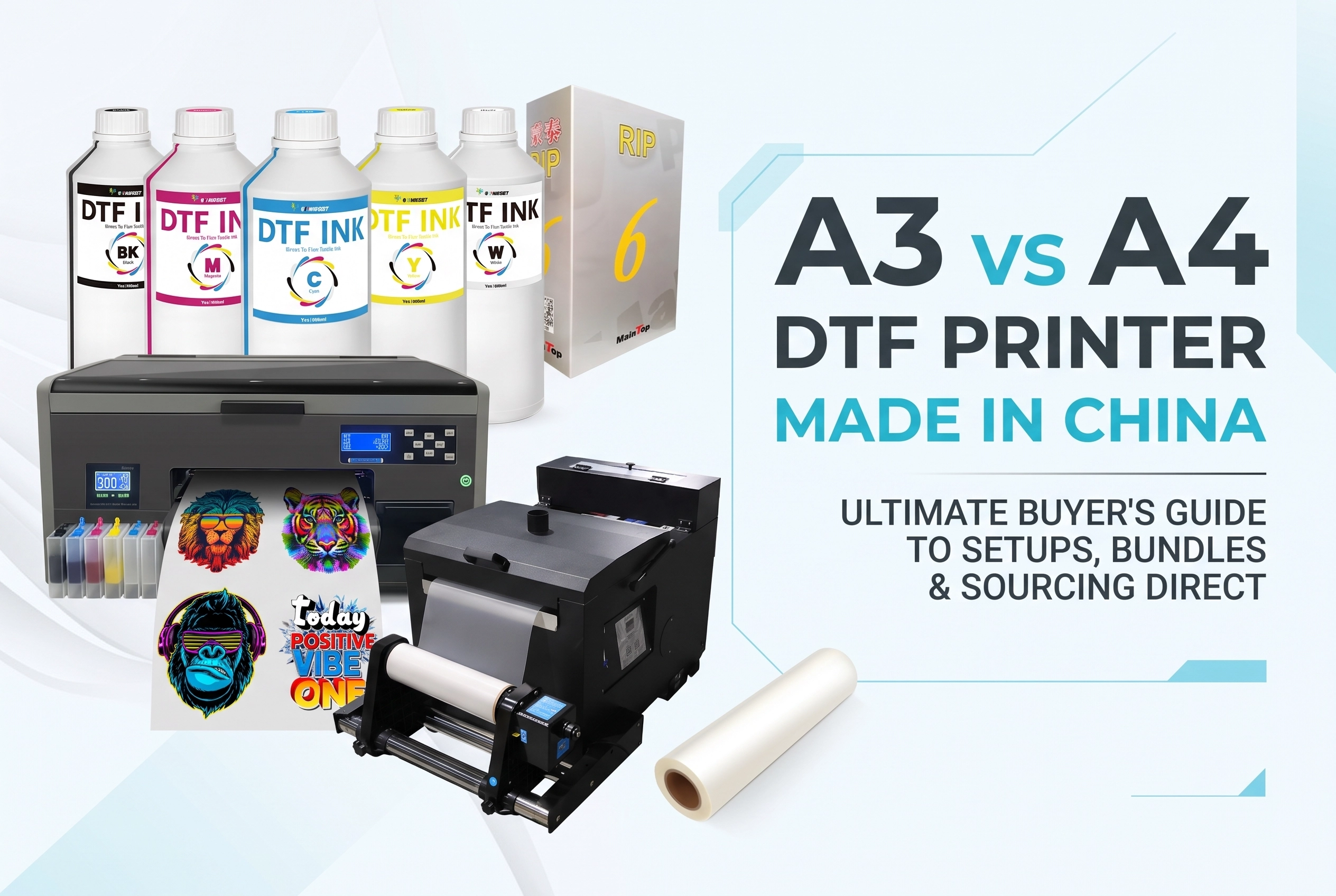
2. DTF Printing (Direct to Film)
Print the design on a film, add powder, then press it onto fabric with heat.
- ✅ Works on many materials: cotton, polyester, blends, leather
- ✅ Strong colors and long-lasting
- ✅ No need for fabric pre-treatment
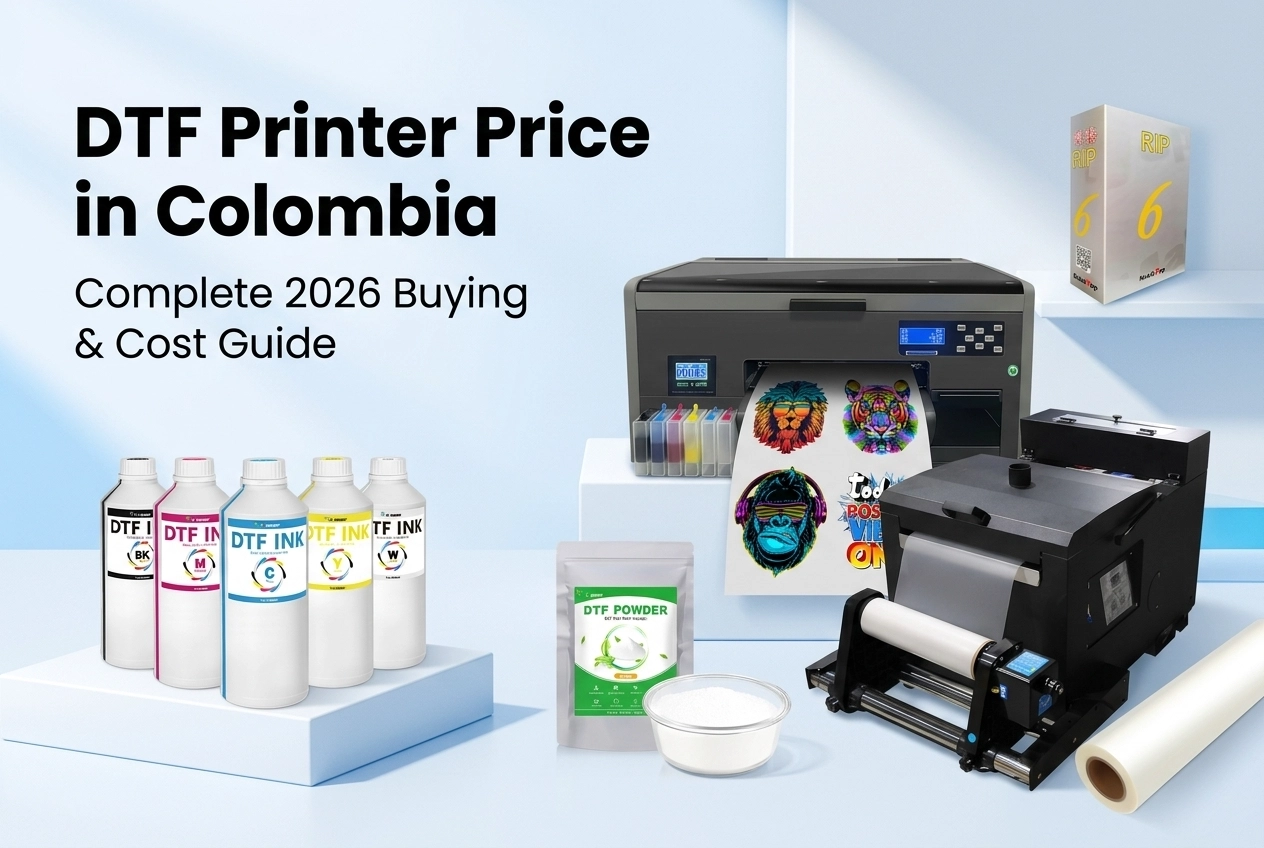
🏆 Winnerjet DTF Essentials: DTF Printer | DTF Ink | DTF Film | DTF Powder
Reliable bonding, sharp color output, and smooth peel finish

4. Sublimation Printing
This method uses heat to turn ink into gas and bond it with polyester fabric.
- ✅ Perfect for sportswear and all-over designs
- ❌ Only works on light-colored polyester
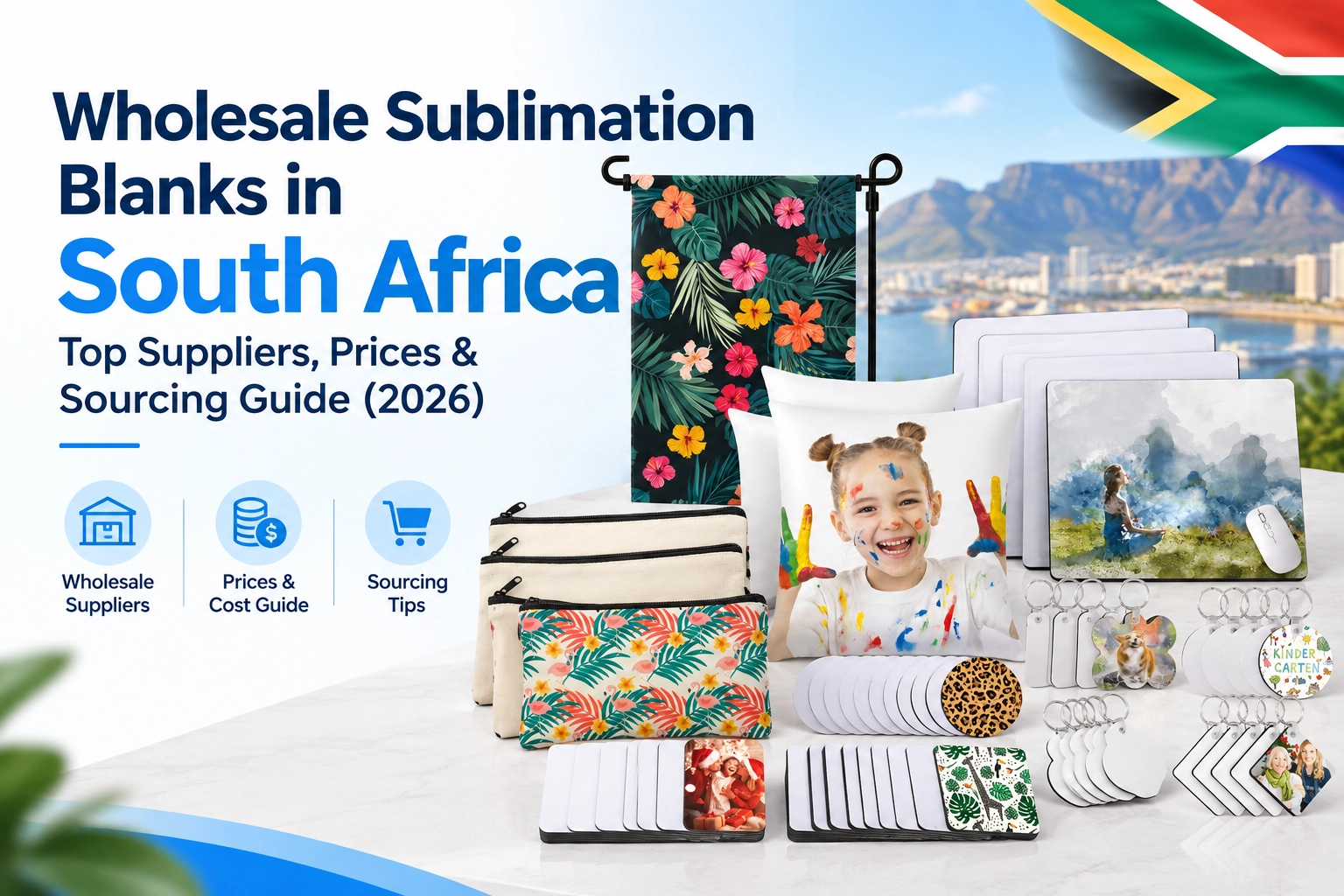
☀️ For great results, use Winnerjet Sublimation Ink.
See how desktop dye sublimation works with the Epson F170 setup:
[00:08] Printing high-definition patterns onto sublimation transfer paper with CMYK ink
[00:46] Heat press transfer: high heat locks color molecules into synthetic polyester fibers
[01:13] Revealing final prints: photo-realistic floral textures, vibrant kitten designs, and metallic horse motifs
5. Heat Transfer Printing
Print the image on transfer paper, then use a heat press to apply it.
- ✅ Good for full-color prints and mixed fabrics
- ❌ May peel or fade over time

6. Digital Textile Printing
This includes modern options like DTF, DTG, and sublimation—fast, detailed, and ideal for short runs or personalized orders.
Textile Printing vs Dyeing
| Feature | Textile Printing | Dyeing |
|---|---|---|
| Color Placement | Only where needed | Whole fabric |
| Design Options | Photos, text, patterns | Mostly solid colors |
| Setup Time | Fast (especially digital methods) | Slower and more manual |
| Best For | T-shirts, custom products | Coloring fabric in bulk |
Production Essentials: Printers, Transfer Films & Specialized Inks
Scaling your textile printing business requires high-efficiency hardware matched with industrial-grade consumables:
Production Equipment: Match your machine to your run volume. A3 desktop systems offer agile, short-run customization, while 60cm (A1) dual-head or quad-head DTF printer bundles maximize daily output with continuous roll-to-roll productivity.
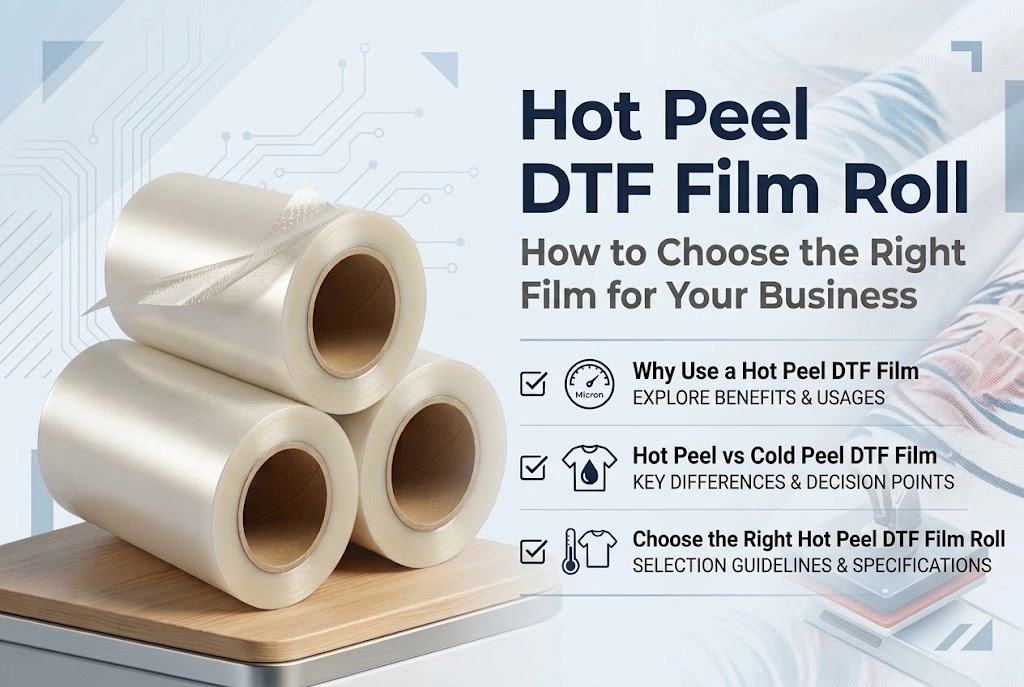
Premium Transfer Films: Use double-sided matte PET films with anti-static coatings to ensure sharp edge definition, zero ink bleeding, and effortless hot or cold peel releases.
Specialized Ink Formulations: Low-grade inks clog fine printhead nozzles and wash out quickly. Reliable production demands ultra-filtered inks—such as anti-sedimentation DTG white inks, high-density DTF pigments, and vibrant sublimation formulations—certified for OEKO-TEX eco-safety and high wash fastness.
Ready to optimize print quality while cutting material costs? Partnering directly with a factory source makes all the difference. Request free sample packs or get factory-direct bulk quotes on DTF printers, transfer films, TPU hot-melt powders, and compatible inks from Winnerjet today.
💬 Reach out to us now for help
FAQs – Textile Printing Questions
Is this expensive to start?
Not at all! Heat presses and DTF starter kits are affordable for small businesses!
What is the most durable textile printing method?
For cotton and blends, DTF and screen printing provide exceptional durability (50+ standard wash cycles). For 100% white polyester, dye sublimation is permanent, as the dye molecules chemically fuse inside the synthetic fibers.
Which ink types are used for digital inkjet textile printing?
Textile Pigment Ink: Universal for cotton, linen, polyester, and blends without post-washing.
Reactive Dye Ink: Best for natural fibers (cotton, silk, rayon) requiring premium hand feel and color fastness.
Sublimation Ink: Formulated exclusively for polyester and poly-coated rigid items.
What textile printing setup is best for small businesses?
A compact Direct-to-Film (DTF) printer (A3 or 60cm/24-inch) is the most versatile, low-risk option. It eliminates expensive pre-treatment equipment and prints high-resolution graphics on dark, light, natural, and synthetic textiles with low consumable costs.
What is the main difference between direct and indirect textile printing?
Direct printing (like DTG or industrial inkjet) sprays ink straight onto fabrics for a soft, breathable hand feel. Indirect printing (like DTF or dye sublimation) prints onto an intermediate film or paper first, then heat-presses it to the fabric, offering stronger color vividness and wider material compatibility.