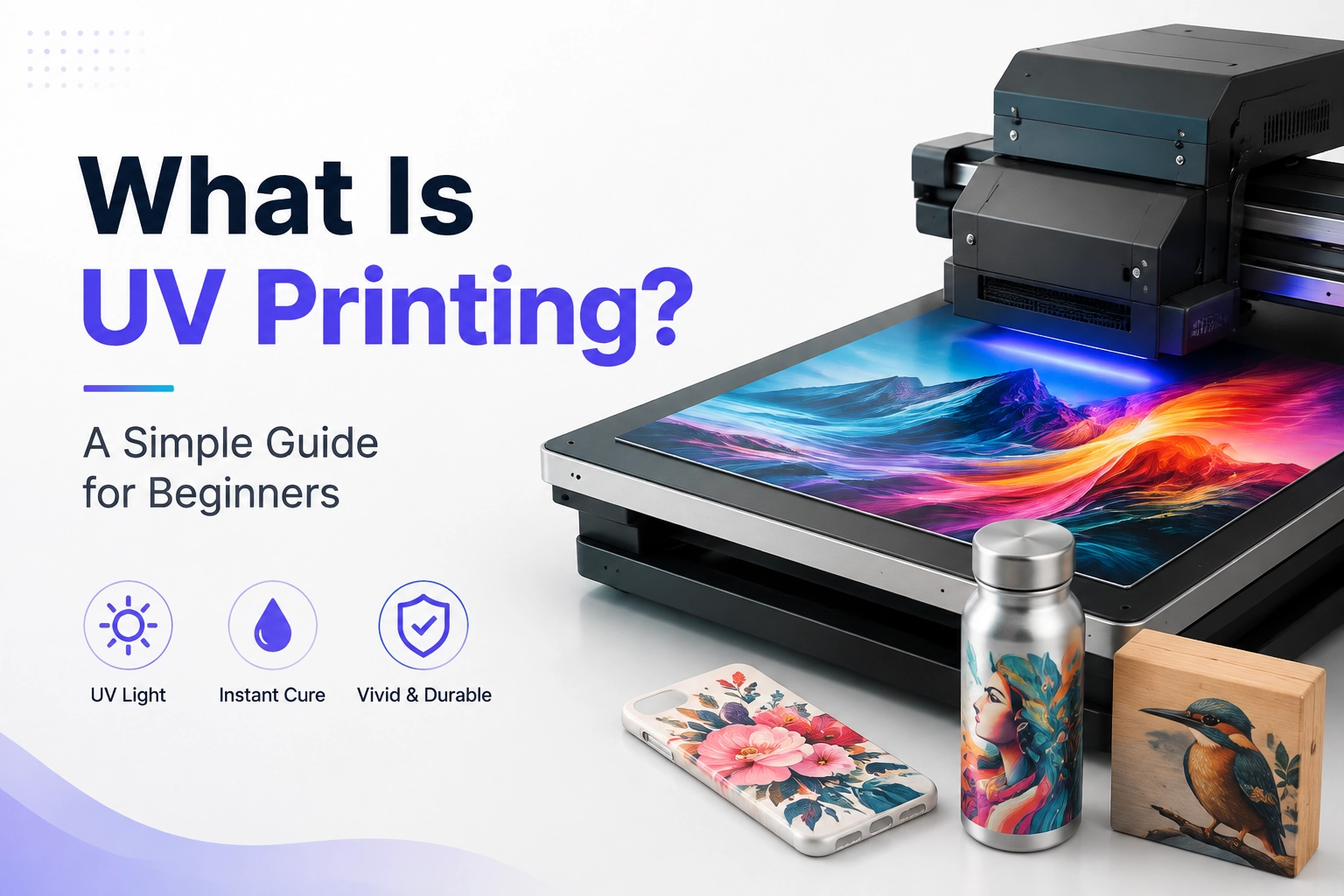
UV printing is a digital printing technology that uses ultraviolet (UV) light to instantly cure or dry specially formulated inks printed onto various substrates.
Because the ink dries immediately upon exposure to UV light, it produces vibrant, scratch-resistant, and waterproof prints on both rigid and flexible materials—such as acrylic, glass, metal, plastic, and PVC tarpaulins.
🔧 What Exactly Is UV Printing?
UV printing is a modern type of digital printing that utilizes uv inkjet printing technology, which employs ultraviolet (UV) light to dry the ink rapidly. As the printer places ink on the surface, a UV light follows right behind and instantly dries the ink. This quick-drying process ensures the image adheres better and lasts longer compared to traditional methods.
One of the most common questions for those new to this technology is: is uv printing waterproof? The answer is a resounding yes. Because the uv ink printing process creates a durable, chemically-bonded layer, the final product is highly resistant to water, scratches, and fading. Unlike older methods, where ink takes time to evaporate and dry, UV printing is fast, clean, and incredibly reliable for both indoor and outdoor applications.
🛠️ How Does UV Printing Work?
Here’s how it works in 3 simple steps:
- Ink is sprayed onto the surface using a UV printer.
- UV light immediately shines on the ink, instantly drying it.
- The finished print is sharp, colorful, and ready for immediate use.
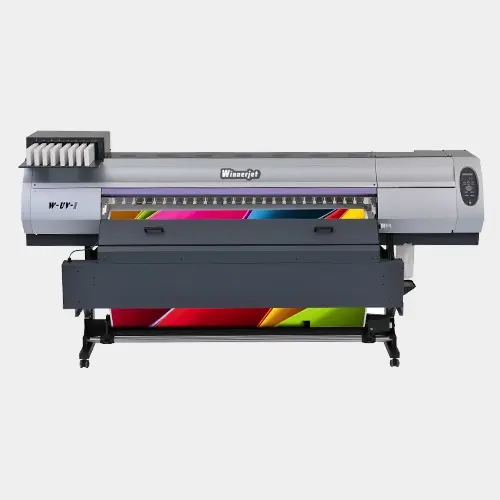
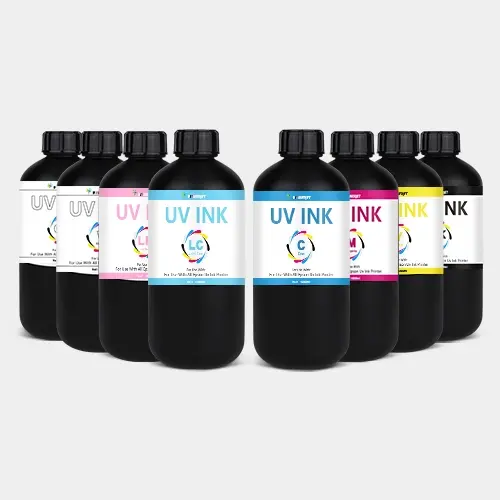
💡 Winnerjet’s UV inks are specially designed to dry quickly and work well on many surfaces. They’re perfect for flatbed or roll-style UV printers.
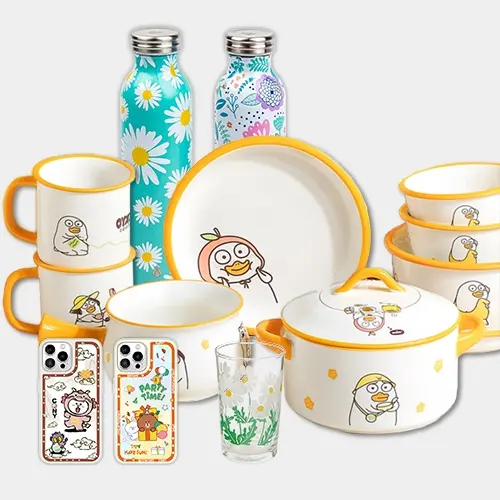
📦 What Can You Print On with UV Printing?
If you are wondering what is uv printing used for, the answer lies in its incredible versatility.
UV printing works on a wide range of materials, including:
- Plastic (like phone cases and cards)
- Glass
- Wood
- Metal
- Ceramic tiles
- Leather
- Paper and cardboard
- Some fabrics
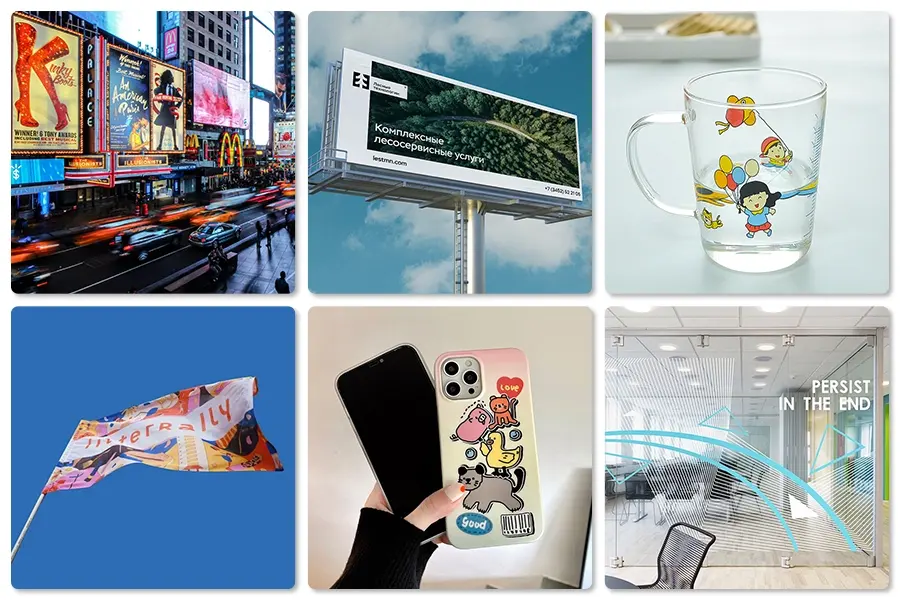
You can also print on PVC Tarpaulin, a flexible and durable material widely used for truck covers, outdoor tents, and advertising banners.
UV printing on PVC tarpaulin offers excellent color brightness and strong weather resistance, making it ideal for outdoor graphic applications.
This makes it great for printing things like:
- Promotional gifts
- Product packaging
- Store signs
- Custom artwork
- Nameplates and labels
🖨️ Using Winnerjet’s low-viscosity UV inks ensures smoother printing on tough surfaces, such as metal and plastic, without clogging or smudging.
Industrial Guide: UV Ink Types, Wavelengths, and Printheads
Selecting the right UV ink formulation prevents nozzle clogging, poor adhesion, and print cracking in commercial production.
Hard UV Ink vs Soft UV Ink
Hard UV Ink: Highly durable and scratch-resistant. Engineered for rigid substrates like glass, metal, wood, ceramic tiles, and acrylic.
Soft or Flexible UV Ink: Formulated to stretch up to 200% without cracking. Ideal for flexible materials like TPU phone cases, leather, and PVC tarpaulin.
Neutral or Hybrid Ink: Versatile option for medium-flexibility plastics like ABS and Polycarbonate.
LED UV Curing Wavelengths
395nm (Standard): Deep-layer curing and high energy efficiency. Best for flatbed and roll-to-roll industrial printers.
365nm: High surface energy for ultra-fast solidifying. Ideal for high-speed packaging and specialized optics.
Printhead Compatibility Guidelines
Epson Series (i3200-U1, XP600): Requires ink viscosity between 3.0 and 5.0 mPa·s. Sub-micron filtration under 0.2 microns is necessary to prevent micro-nozzle clogs.
Ricoh Series (Gen5, Gen6): Requires ink viscosity between 8.0 and 12.0 mPa·s for stable fluid dynamics under high-frequency driving voltages.
Kyocera and Konica Minolta Series: Requires ink viscosity between 10.0 and 14.0 mPa·s with fast chemical response for high-speed production lines.
✅ Why Choose UV Printing? The Main Benefits
Here’s why more people are using UV printing for their business:
| 💡 Benefit | 📌 What It Means for You |
|---|---|
| No waiting time | The ink dries instantly, so there no smearing or delays. |
| Sharp, bright colors | You get bold images that look professional and eye-catching. |
| Works on many materials | You can print directly on wood, glass, plastic, and more. |
| Better for the environment | UV inks produce fewer harmful fumes than older inks. |
| Lasts longer | The prints resist scratches, water, and sunlight. |
🔄 UV Printing vs Other Printing Methods
Let’s see how UV printing compares to two other common methods:
| Feature | UV Printing | Solvent Printing | Offset Printing |
|---|---|---|---|
| Drying Time | Instant | Several hours | Varies by job |
| Surfaces | Almost any material | Mostly vinyl and banners | Mostly paper |
| Setup Cost | Medium | Medium | High |
| Durability | Very strong | Medium | Lower |
| Eco-Friendly | Yes, low odor and VOC | No, uses chemical solvents | Somewhat |
👤 Who Is Ultraviolet Printing Good For?
UV printing is great if you:
- Run a print shop and want to offer more products
- Make custom items like signs, phone cases, or awards
- Need fast turnaround and strong, colorful prints
- Work with wood, plastic, or metal materials
🧪 Winnerjet’s UV inks are tested for compatibility with various printer models, including Epson and Ricoh printheads, ensuring you can print with confidence and achieve consistent results.
📌 Final Thoughts
UV printing is a smart, flexible, and fast method for printing on almost any surface. It provides bright colors and strong results, eliminating the need for drying time. That’s why many businesses in the signs, gifts, and packaging industries are switching to UV.
👉 Looking for reliable UV inks to get started? Discover Winnerjet’s UV ink series — ideal for all surfaces, featuring fast drying and vibrant color results. You can even request a free sample to test before making a purchase.
❓ FAQs
Is UV printing waterproof?
Yes, UV printing is completely waterproof. During the printing process, liquid UV ink undergoes a rapid photo-chemical reaction under ultraviolet light, forming a tough, chemically cross-linked polymer layer. This cured ink layer bonds tightly to the substrate and will not dissolve, smudge, or peel when exposed to water or moisture.
Can I print white ink with a UV printer?
Yes. Many UV printers allow you to print with white ink, which is particularly helpful on dark or transparent surfaces.
Is UV printing safe for the environment?
It’s better than older types of printing. UV inks dry with light instead of chemicals, producing fewer harmful fumes.
How long does UV print last outdoors?
On average, UV prints last 3 to 5 years outdoors without significant fading, cracking, or peeling. The cured ink layer features high resistance to atmospheric moisture, direct sunlight, and UV degradation. Using high-grade outdoor UV inks combined with proper surface pre-treatment can extend outdoor durability even further.
Can I use UV ink in any printer?
No, UV inks only work with UV printers that have special drying lights built in.
What’s the difference between UV and UV DTF printing?
UV printing is applied directly to the product. UV DTF prints on film, which is then transferred onto the object.