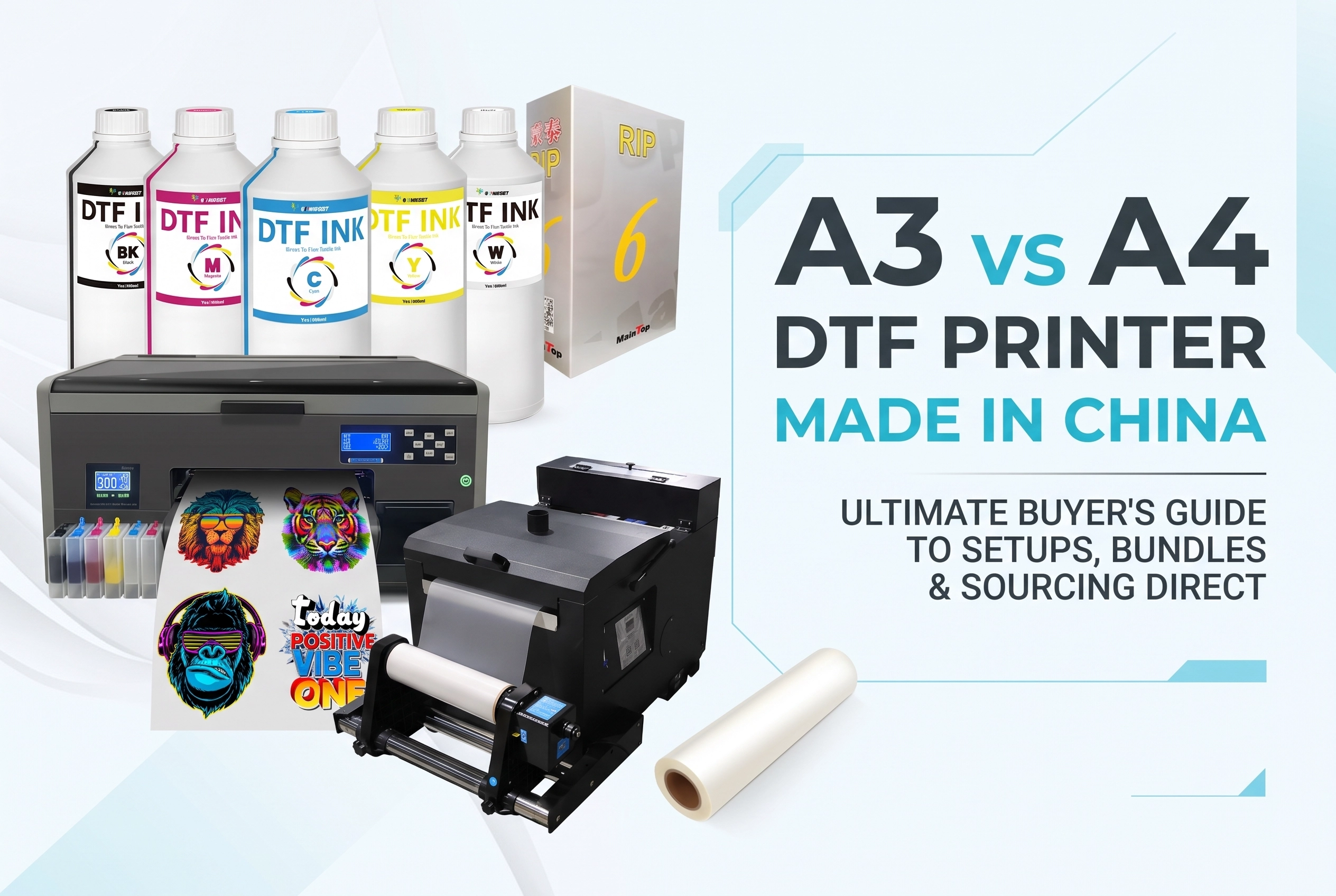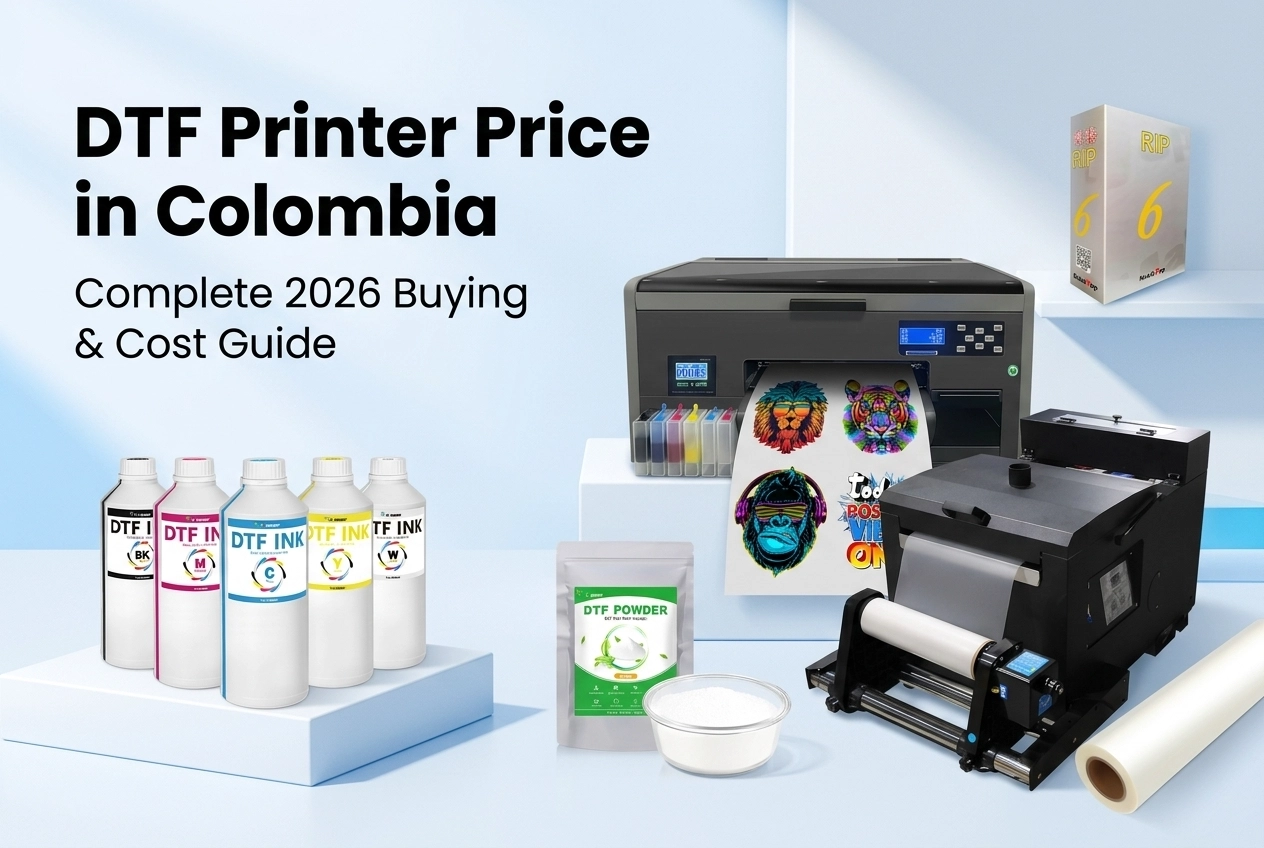
DTF ink is a high-density, water-based textile pigment formulated with elastic polymers to bind with hot-melt adhesive powder and cure under heat. In contrast, regular ink consists of low-viscosity dyes or photo pigments engineered strictly for absorbent paper, lacking the stretchability, heat tolerance, and opacity required for garment transfer.
DTF Ink vs Regular Ink at the Molecular & Hardware Level
To truly understand why regular inkjet ink cannot produce transfer-ready prints, we must examine the chemical architecture and fluid dynamics that separate standard photo/office inks from textile-grade Direct-to-Film (DTF) formulations.
Regular Ink (Dye or Standard Pigment)
Standard desktop inks use dissolved colorant molecules (dye) or finely milled pigments suspended in a basic water-glycol carrier. They lack chemical binders and are engineered solely to absorb into paper fibers. When exposed to heat or mechanical stretching, these inks break down immediately.
-
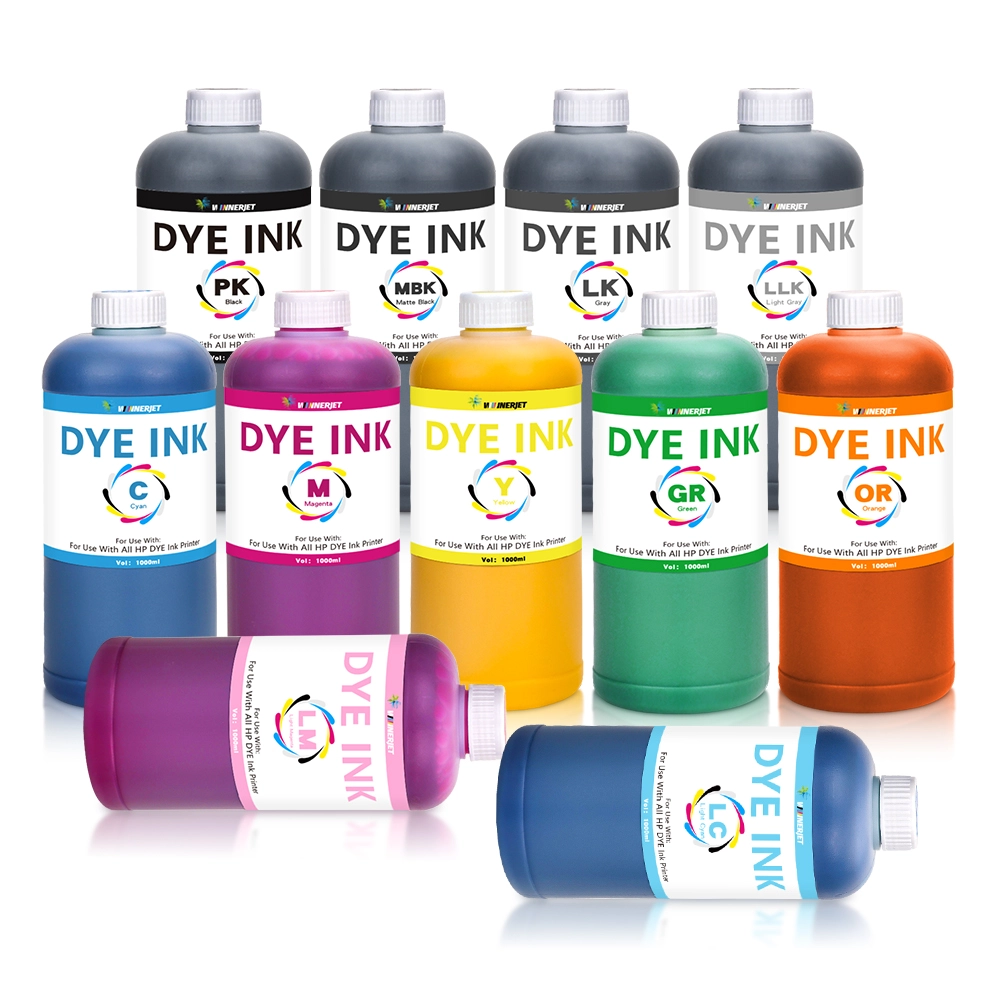
- Dye Ink
-
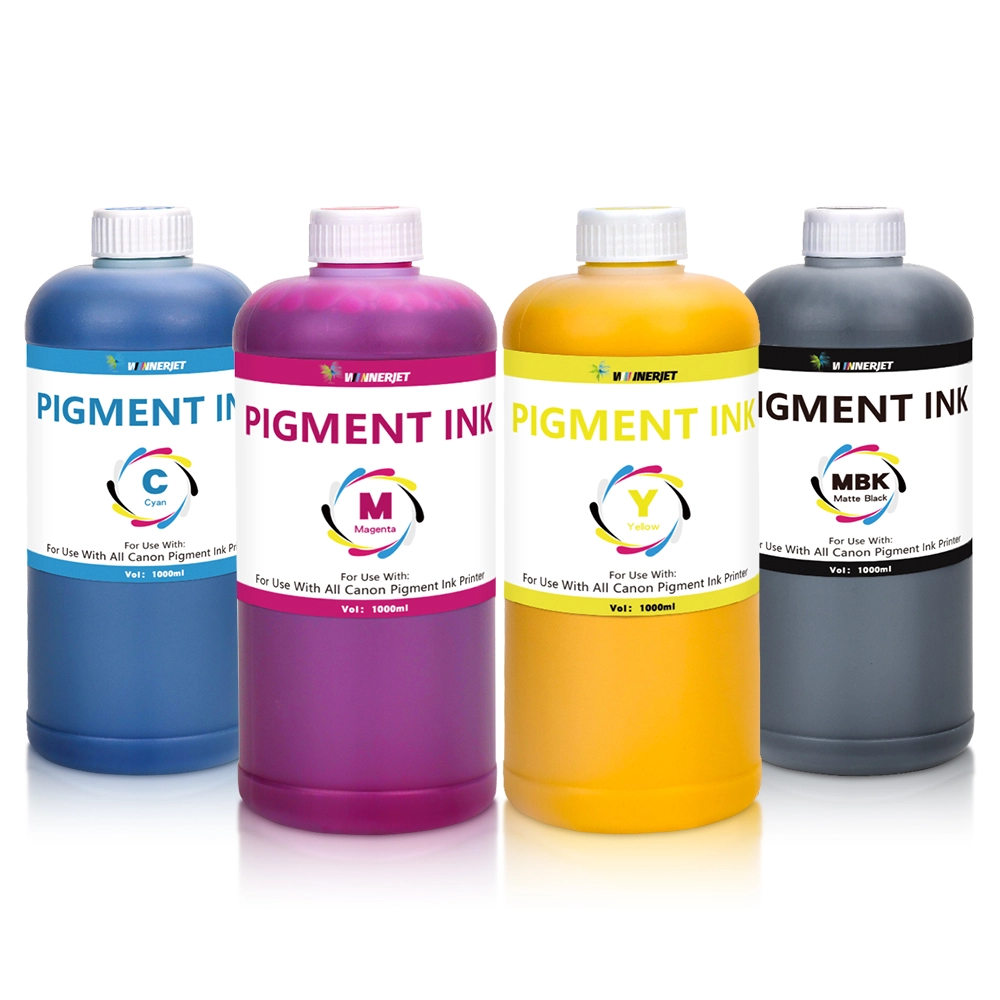
- Pigment Ink
DTF Ink (Textile Pigment Dispersion)
Formulated with high-density nano-pigments encased in high-elasticity water-based acrylic resins and heat-activated crosslinking polymers. These polymers keep the ink film pliable after transfer, granting elongation without cracking when garments stretch. Crucially, the liquid ink contains surface-active functional groups that physically anchor to hot-melt TPU (polyurethane) adhesive powder before the drying cycle.

DTF Ink vs Regular Ink Comprehensive Comparison
| Key Feature | DTF Ink (Direct-to-Film) | Regular Ink (Dye / Pigment) |
|---|---|---|
| Ink Formulation | DTFTextile pigment + Elastic acrylic resin | RegularWater-soluble dye or basic pigment |
| Viscosity & Flow | DTF4.0 – 6.0 mPa·s (Optimized for film coating) | Regular1.5 – 3.0 mPa·s (Liquid, fast paper absorption) |
| White Ink Layer | DTFEssential (Dense TiO₂ base for dark fabric) | RegularNone (Relies entirely on paper brightness) |
| TPU Powder Adhesion | DTFHigh (Binds strongly before curing) | RegularZero (Cannot capture or hold adhesive powder) |
| Hardware Needs | DTFCirculation & mechanical agitation required | RegularStandard non-circulating gravity cartridges |
| Transfer Durability | DTFStretchable; Heat-resistant up to 165°C | RegularBrittle; Cracks, scorches, or washes out |
Can You Convert a Regular Inkjet Printer to DTF with Regular Ink?
No. You cannot perform DTF printing by simply running standard desktop printer ink through an inkjet printer. While many enthusiasts convert piezo-based desktop printers (such as Epson EcoTank models) into DTF machines, the conversion strictly requires dedicated DTF textile inks, PET film, and TPU powder. Attempting to print transfers using standard dye or office pigment ink fails across every mechanical and chemical stage.
Here is the technical breakdown of what happens when regular ink meets the DTF workflow:
1. Printhead Clogging and Ink Leaks
Regular printer ink is too watery compared to DTF ink. When you try to print thick layers on film, this thin ink quickly pools on the printhead plate, draws in air bubbles, and causes severe nozzle clogs. If used in thermal printers like Canon or HP, the heat inside the printhead can easily bake the ink residue onto the heating parts, ruining the printhead permanently.
2. Failure to Hold Adhesive Powder
DTF printing requires wet ink to catch and hold hot-melt powder before heating. Real DTF ink has special glue-like resins that grab this powder evenly. Regular paper ink doesn’t have these resins. When sprayed onto plastic DTF film, it just forms messy liquid puddles. The adhesive powder cannot stick to it and simply slides off, leaving your design with empty, patchy spots.
3. Bubbling and Immediate Washout
Regular ink cannot handle the high heat needed for DTF transfers. When you melt the powder in an oven or press it onto a shirt at high temperatures, the moisture in regular ink boils violently, creating ugly bubbles and scorch marks. Even if the design transfers, it lacks elasticity. The print will crack the moment the fabric stretches and completely wash away on the first laundry cycle.
When Should You Invest in DTF Ink?
Choose dedicated DTF ink if your printing workflow involves:
Diverse Garment Fabrics: You need consistent transfer results across 100% cotton, polyester, nylon, canvas, or blended textiles without changing ink setups.
Dark or Colored Apparel: Your artwork requires an opaque white underbase ($TiO_2$) so colors remain vivid on black or navy garments.
Commercial Wash Durability: You want prints that endure 40+ laundry cycles without cracking, peeling, or fading under stretch tension.
If you only print text documents, flyers, or standard photo paper, standard dye or pigment desk ink remains the cost-effective tool. But for apparel decoration, DTF ink is the mandatory industry standard.
Ready to Upgrade Your DTF Transfer Quality?
As a dedicated digital printing consumables manufacturer with nearly two decades of R&D expertise, Winnerjet formulates premium textile DTF inks engineered for stability and vibrant color output:
Printhead-Safe Formula: Ultra-purified nano-pigments prevent nozzle clogs and ink crusting across Epson desktop heads (L1800, XP600) and industrial systems (i3200-A1).
High Opacity & Stretch: Anti-sedimentation white ink delivers crisp coverage and high elasticity that moves naturally with fabrics.
Global Direct Supply: Reliable batch-to-batch consistency delivered directly from the factory floor.
Request Free Ink Samples or Talk to Our Technical Sales Team to optimize your print shop today!
FAQ DTF Ink vs Regular Ink
Can I use normal ink for DTF?
No, you cannot use normal printer ink for DTF transfers. Regular dye or document pigment inks lack the stretchable acrylic resins required to hold TPU hot-melt adhesive powder. When printed on non-absorbent PET film, regular ink creates messy puddles that boil or blister during heat curing and wash away immediately in water.
What are the disadvantages of DTF ink?
The main challenge of DTF ink is maintenance and ink sedimentation. Because DTF white ink contains dense Titanium Dioxide ($TiO_2$) for opacity, it settles quickly if left idle, requiring daily shaking, nozzle cleaning, or automated circulation systems to prevent printhead clogs. Additionally, DTF prints produce a slightly heavier hand-feel (breathability reduction) compared to direct dye sublimation.
Which ink is best for DTF printing?
The best DTF ink uses high-purity nano-scale textile pigments formulated with flexible polyurethane/acrylic resins. It must feature an anti-sedimentation white ink with strong opacity, clean viscosity (around 4.0–6.0 mPa·s at 25°C) to protect micro-piezo printheads (such as Epson i3200 or XP600), and proven 40+ wash-cycle elasticity.
Is DTF ink the same as sublimation ink?
No, they rely on entirely different chemical mechanisms. While DTF ink vs. sublimation ink is a frequent debate for beginners, sublimation relies on heat to infuse disperse dye gas directly into light polyester fibers. DTF ink, on the other hand, bonds to TPU adhesive powder to create an opaque, flexible transfer layer suitable for dark cotton and versatile fabric blends.
How long do DTF transfers last?
With proper care, DTF transfers can last through 40–50 washes or more.