Looking for the lowest prices but afraid of getting scammed? In the Philippines, Sublimation printing is the gold standard for sportswear and corporate team-wear, but the price gap in the market is massive.
Research by the Winnerjet team indicates 2026 Philippines Sublimation Pricing Summary:
Full Sublimation (Dri-Fit): ₱180 – ₱240 / pc (Bulk 100+ pcs) | ₱450 – ₱650 / pc (Retail 1–5 pcs)
Spot Printing (A4/A3): ₱35 – ₱100 / location
Print-Only Rolls: ₱28 – ₱45 / meter
As a printing consumables expert with nearly 20 years of experience, Winnerjet warns: behind ultra-low prices often lie risks of “fading” and “clogged printheads.” This article will break down the pricing traps in the Philippine market and teach you how to get high-quality, 1:1 color-matched shirts that never fade—all within a reasonable budget.
I. 2026 T-Shirt Printing Price List Philippines
In the Philippine market, pricing is primarily determined by order quantity and print coverage. To help you compare budgets, we have categorized prices into three main types:
1. Full Sublimation (All-Over Printing)
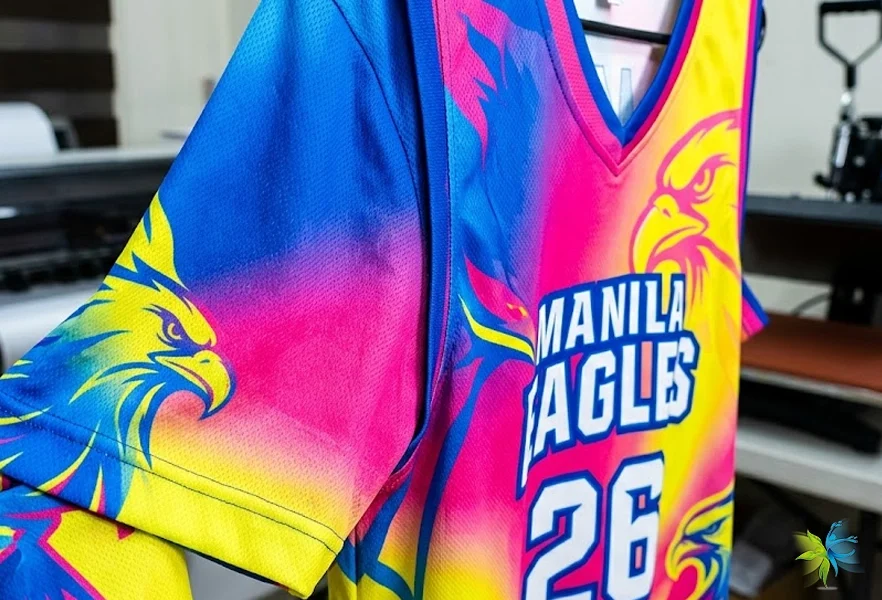
The most popular choice for basketball jerseys, Drifit shirts, and athletic wear. As for the full sublimation shirt price philippines, it offers the best value because the design covers the entire garment while remaining breathable and lightweight.
| Quantity | Price per Piece (Estimated) | Inclusions |
|---|---|---|
| 1 - 5 pcs (Retail) | ₱450 - ₱650 | Shirt + Basic Design + Shipping |
| 6 - 30 pcs (Small Group) | ₱350 - ₱400 | Standard Drifit Fabric + Full Color |
| 31 - 100 pcs (Mid-Batch) | ₱250 - ₱320 | Best Value: Ideal for teams/corporate |
| 101 - 500+ pcs (Bulk) | ₱180 - ₱240 | Factory Wholesale; OEM support |
2. Spot Sublimation (Partial Printing)
Ideal if you already have white or light-colored polyester shirts and only need a logo or design printed on the chest or back.
- A4 Size (8.27 × 11.69 in): ₱35 – ₱60 / location
- A3 Size (11.69 × 16.54 in): ₱60 – ₱100 / location
- Logo Size (Chest pocket): ₱20 – ₱35 / location
3. Print-Only Service (Labor Only)
For clients who own heat press equipment and only want to outsource the printing process.
- Continuous Rolls (100m+): ₱28 – ₱45 / meter
- Single A3 Transfer Sheet: ₱15 – ₱25 / sheet
💡 Expert Insight: Why the price difference? (Information Gain)
As the Winnerjet team with 20 years in the industry, our lab data reveals the logic behind the pricing:
- Ink Cost vs Maintenance: In the PH, suppliers using Winnerjet 1:1 high-fidelity ink may charge slightly more than those using cheap bulk ink. However, our anti-clogging formula allows machines to run 24/7 without downtime. This means higher efficiency and lower defect rates, which actually makes your long-term cost more stable and transparent.
- Color Saturation: Low-end suppliers often reduce ink output to save money, resulting in “washed-out” or grayish colors. Our professional-grade ink ensures that at 200°C, the ink fully sublimates into the fiber, keeping colors vivid even after 50 washes.
II. 4 Key Factors Affecting Sublimation Prices
In the Philippines, quotes can range anywhere from ₱150 to ₱500. Winnerjet breaks down the four factors that dictate your final invoice:
1. Printing Area
Coverage directly impacts consumable usage and labor complexity:
- Spot Sublimation: Only a logo on the chest or back. This uses the least paper and ink, making it the most affordable.
- Full Sublimation: The standard for Philippine “Jerseys.” It requires printing full patterns for every panel (front, back, collar, sleeves) before heat-transferring and sewing them together. Because of the high ink volume and manual labor required, it usually costs 2.5x more than spot printing.
2. Fabric Type
Sublimation only works on Polyester-based fabrics.
- Drifit (Standard): The “king of value,” widely used for marathon singlets and activewear.
- Jersey (Premium Mesh): Thicker than standard Drifit with superior breathability. It feels more premium and usually adds ₱30-₱50 to the base cost.
- Polycotton (CVC): For those wanting a cotton feel. Note: The higher the cotton content, the paler the sublimation print will look. CVC fabric is also typically more expensive than 100% polyester.
3. Minimum Order Quantity (MOQ)
Why is the price for 100 pieces so much lower than for 10?
- Fixed Cost Distribution: Every order requires professional layout, color calibration, and heat-press preheating. The labor and electricity for 1 piece are nearly the same as for 100; the larger the volume, the lower the setup cost per unit.
- Economies of Scale: Bulk production allows for assembly-line sewing, which significantly reduces fabric waste and labor hours.
4. Ink & Equipment Quality (The Winnerjet Edge)
This is the “invisible” factor that determines the garment’s lifespan.
- The Low-Price Trap: Ultra-low quotes often utilize cheap, unbranded inks with high carbon content. These clog expensive printheads and produce dull colors (blacks look purple; reds look gray).
- Winnerjet Premium Solution: We believe “Quality ink is the true cost-saver.” Our 1:1 color-matching ink is lab-tested for 50+ high-temperature washes to ensure vibrant colors stay that way.
- For Print Shop Owners: Using professional ink like Winnerjet not only guarantees 1:1 fidelity but its nano-grade particles also protect your printheads, slashing maintenance costs. This allows you to provide stable, high-quality quotes without worrying about customer complaints regarding fading.
💡 Pro Tip: When buying custom shirts in the Philippines, don’t just look at the price. Ask the supplier: “What brand of ink do you use?” Quality ink is the only bridge between a beautiful design on screen and a perfect shirt in hand.
III. Sublimation vs Other Printing Methods
In the Philippines, you generally choose between Sublimation, DTF, and Screen Printing. While each has its merits, Sublimation offers unbeatable value in specific scenarios.
1. Which one is right for you?
| Feature | Sublimation | DTF | Screen Printing |
|---|---|---|---|
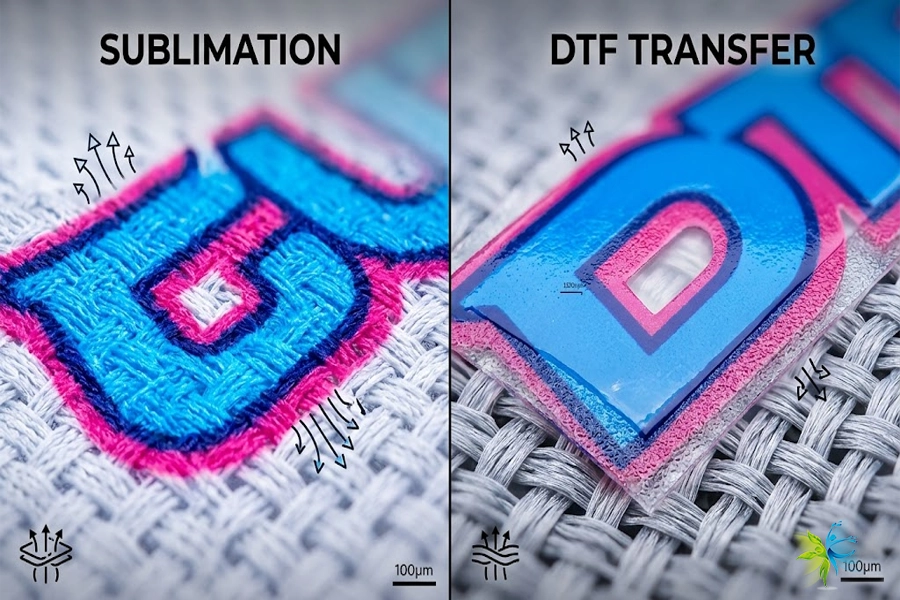
| Feel | Zero feel (Ink dyes the fabric) | Slight "plastic" feel; less breathable | Thick, textured layer on surface |
| Complexity | Full color/Gradients/Photos | Full color | Extra cost for every color added |
| Fabric | Light-colored Polyester only | All fabrics (Cotton/Dark) | Almost any fabric |
| Durability | Permanent (Lasts as long as the shirt) | May crack after many washes | High, but print can become stiff |
2. Why Sublimation wins for complex designs?
- Cost Efficiency: Screen printing charges “per color.” If your logo has 10 colors, the setup cost for 10 screens is massive. With Sublimation, the cost is the same regardless of the number of colors. For vibrant, personalized designs, Sublimation is the undisputed winner.
- Breathability: The climate in the Philippines is hot, and the key benefit of moisture-wicking (Dri-Fit) garments lies in their breathability. DTF and screen printing involve applying a layer of adhesive or ink to the surface of the garment, which blocks the ventilation holes. In contrast, sublimation penetrates the fibres through vapourisation without blocking any pores, making it the only choice for summer sportswear.
3. The King of Bulk Efficiency
For orders over 100 pieces, Sublimation’s advantages become even clearer:
- No Setup Required: Unlike the long screen-making process, Sublimation is “what you see is what you get,” allowing for fast sampling and immediate roll-to-roll mass production.
- Lower Failure Rate: As consumables experts, we’ve observed that shops using Winnerjet high-quality ink can run 24-hour operations without clogged mesh or wasted film. This translates to shorter lead times and more stable bulk pricing.
💡 Buying advice:
If you’re looking to print intricate team kits, full-colour event T-shirts or large batches of Drifit garments, don’t hesitate to choose sublimation.
if you just need to print a small design on a dark cotton T-shirt, DTF is the way to go.
👉 Useful tools: What size DTF transfer design do I need? A comprehensive guide to choosing the right size
IV. How to Choose a Reliable Printing Supplier in the PH
The Philippine market is flooded with suppliers, from small home-based setups to massive factories. Winnerjet recommends looking past the price and evaluating these three professional metrics:
1. Request and Inspect Physical Samples
Never rely solely on photos from social media.
- Edge Sharpness: Look closely at the borders of the design. High-quality prints (using premium ink and calibrated equipment) should be crisp. If you see blurring, “bleeding,” or ghosting, the supplier has calibration issues or is using low-grade transfer paper.
- Stretch Test: Pull the fabric firmly. A quality sublimation print should not “crack” or show white underneath; the design should stretch and recover perfectly with the fabric.
2. Inquire About the Ink Source
Ink is the “soul” of the garment; it determines wearer health and garment longevity.
- Eco-Safety: Ask if the ink is eco-certified (e.g., OEKO-TEX). Cheap inks may contain heavy metals or have a harsh chemical smell, which can cause skin irritation in the humid Philippine heat.
- Color Accuracy: Ask if they use ICC Profiles.
- Winnerjet Pro Advice: Many local suppliers produce “blacks” that actually look dark purple or brown. Winnerjet 1:1 ink is specifically tuned for PH fabrics to ensure the color you designed is the color you receive.
3. Verify Lead Times and Logistics
In the Philippines, logistics is the biggest variable. Always build in a buffer.
- Standard Lead Times:
- Small Batches (20-50 pcs): 3-5 business days.
- Bulk Orders (100-500 pcs): 7-14 business days.
- Logistics Efficiency:
- NCR (Metro Manila): Same-day delivery via Lalamove or Grab.
- Luzon (Outside Manila): 1-3 days.
- Visayas & Mindanao: 5-10 days via J&T or LBC.
- Tip: Ask if the supplier has a Genset (Generator). Brownouts are common in certain regions; a supplier with backup power is much more likely to hit your deadline.
💡 Winnerjet Tip: An excellent supplier will candidly disclose the brand of consumables they use. If you discover that they are using inks of a quality equivalent to—or even superior to—Winnerjet’s, you can rest assured; this signifies that they have chosen a solution that offers a triple guarantee: exceptional color fidelity, environmental safety, and printhead protection.
Your All-in-One Sublimation Printing Solution by Winnerjet
Stop worrying about color mismatches, paper jamming, and printhead replacements. Get the complete package directly from the manufacturer:
Sublimation Printers + Professional Grade Inks + High-Release Transfer Papers
Direct Manufacturer Pricing
Free Technical Guidance & ICC Profile Tuning
Global Direct Supply & Fast Dispatch