The best DTF (Direct-to-Film) transfer film balances high resolution (1440+ DPI), smooth ink absorption, and superior durability lasting over 50+ washes without cracking. The right choice depends on your production workflow:
- Best for Bulk & Fast Production: Matte Hot Peel Film (Peeled instantly in 1–3s to maximize shop output).
- Best for Premium Apparel & High Vibrancy: Matte Cold Peel Film (Delivers deeper color saturation and a soft-hand, non-plastic feel).
- Best for Sportswear & Shiny Finishes: Glossy DTF Film (Provides high-contrast, reflective micro-details).
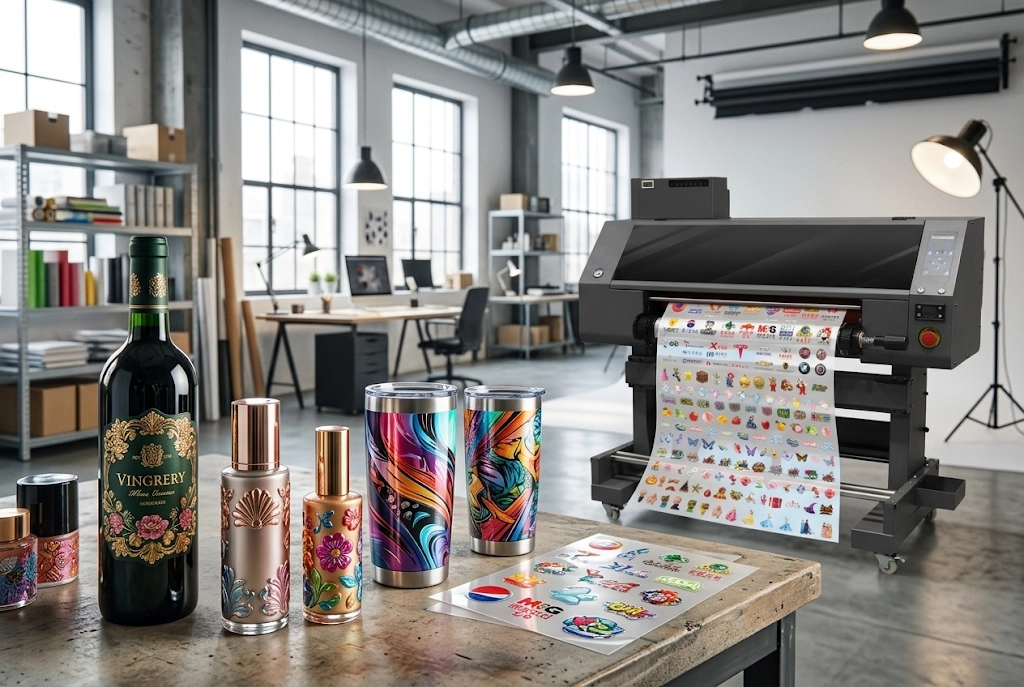
- Best for Hard Substrates (Tumblers, Glass, Acrylic): UV DTF A/B Film (No heat press needed; pressure-applied transfers).
- Best for Luxury Streetwear: Gold & Metallic Specialty Film (Direct foil-effect transfers without separate weeding).
allic Film (instant foil effect).
In this guide, we compare film types, troubleshoot common printing issues, and share optimal pressing settings to keep your transfers flawless.

What Makes a DTF Film “The Best”?
Not all DTF films perform reliably under production heat and ink loads. When choosing the best DTF film for professional printing, look for these five core technical standards:
- nk Absorption: Holds heavy white and CMYK inks evenly without bleeding or pooling.
- Anti-Static Coating: Stops stray powder sticking to blank areas and prevents printer feeding jams.
- Smooth Release: Peels cleanly (hot or cold) without tearing edges or leaving coating residue.
- Heat Stability: Stays completely flat in curing ovens (150°C–160°C) without curling or shrinking.
- Wash Durability: Keeps prints soft, stretchable, and vibrant across 50+ wash cycles without cracking.
When printing a detailed multi-color graphic, a low-grade film often causes white ink to bleed into colored lines, attracts stray TPU powder due to static electricity (leaving visible “dirty edges”), and may warp inside the dryer.
By contrast, a premium film feeds smoothly, absorbs high ink volume cleanly, and releases effortlessly after pressing—leaving sharp 1440+ DPI details with a soft, durable touch on the garment.
Winnerjet DTF transfer films are engineered to handle high ink loads without bleeding, maintain dimensional stability through the curing tunnel, and peel away effortlessly without damaging intricate design edges.
Watch the full hands-on demonstration: Winnerjet Complete DTF Printing Workflow & Transfer Test
Types of DTF Film Compared: Which One Fits Your Needs?
Choosing the right DTF film depends on your print equipment, production speed, and the fabric or substrate you are decorating. Here is how the primary types compare:
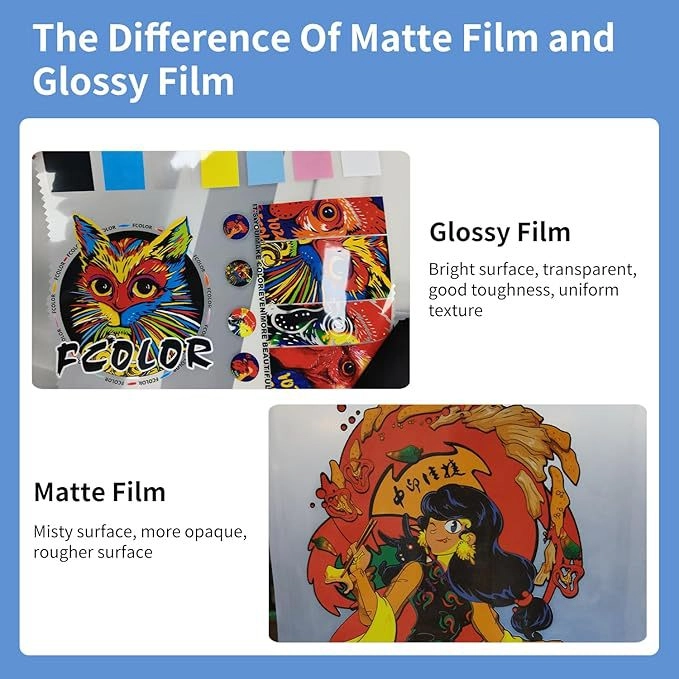
A. DTF Film Glossy vs Matte Finish
- Matte DTF Film: Delivers a smooth, non-reflective finish with an ultra-soft hand feel that blends naturally into fabric fibers. It is the industry standard for high-end streetwear, retail clothing, and vintage graphic tees.
- Glossy DTF Film: Creates a vibrant, shiny top layer with rich color contrast and sharp edges. Ideal for athletic sportswear, polyester jerseys, promotional event gear, and vivid cartoon prints.
B. Hot Peel vs Cold Peel Film
- Hot Peel (Instant Release): Peel within 1–3 seconds right off the heat press. Cuts production cycle times significantly—best suited for high-volume commercial print shops and rush orders.
- Cold Peel (Maximum Color Saturation): Requires waiting 30–60 seconds until the transfer cools completely. Offers slightly sharper micro-details and deeper ink adhesion, making it ideal for intricate designs and delicate fabrics.
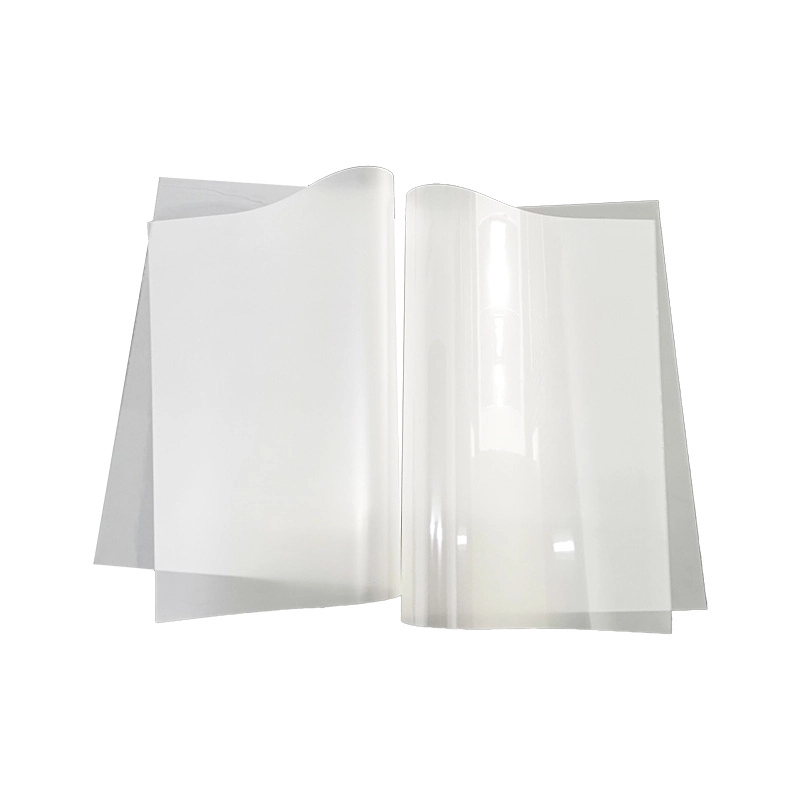
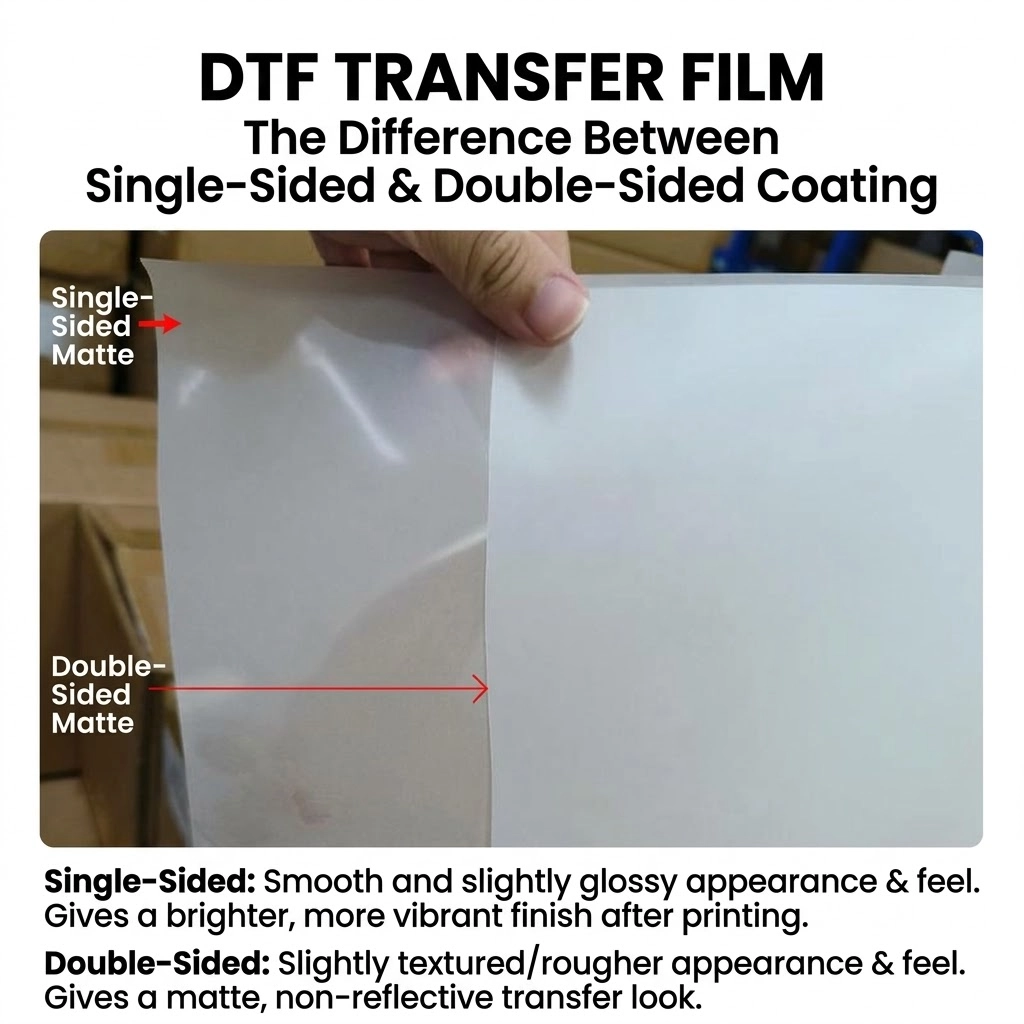
C. Single-Sided vs Double-Sided Coating
- Single-Sided Film: Economical option with coating applied only to the print face.
- Double-Sided Treated Film: Features an anti-static treated back side. It dramatically prevents printer feeding slippage, stops static cling, and keeps excess adhesive powder off blank film margins.
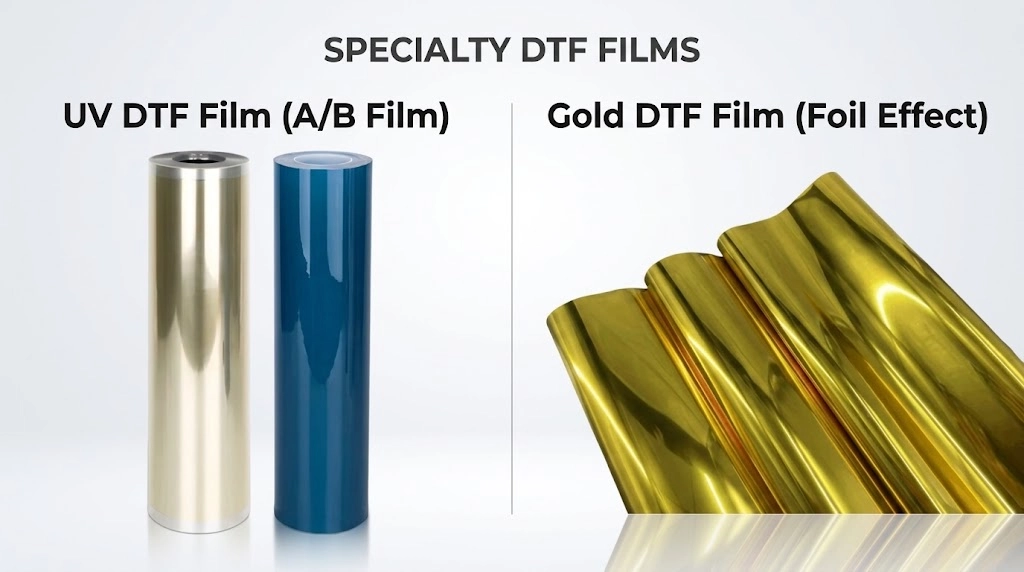
D. Specialty DTF Films (UV DTF & Gold DTF Film)
- UV DTF Film (Crystal Sticker A/B): Formulated for hard substrates without heat pressing. Print on Film A with UV inks, laminate with Film B, and transfer directly by hand onto glass, tumblers, acrylic, ceramics, and metal.
- Gold & Metallic DTF Film: Integrated with metallic foil layers to produce reflective, shiny gold or silver graphic effects in a single heat transfer—eliminating tedious traditional foil weeding steps.
📌 Quick Comparison Table
| Type | Advantage | Best For |
|---|---|---|
| Hot Peel | Fast production | Bulk orders |
| Cold Peel | More vibrant finish | Fashion wear |
| Glossy | Shiny look | Promotional prints |
| Matte | Natural look | Everyday apparel |
| Double-sided | Smooth feeding | Industrial use |
Low-grade DTF films often suffer from uneven coating, weak static resistance, and unstable release layers. In everyday production, these coating defects waste valuable time, materials, and money through ink bleeding, static-induced powder contamination, and ruined garments.
Why Winnerjet DTF Film Stands Out
Winnerjet films are engineered to solve these pain points:
- ✅ Stable coating for clean, sharp, and vibrant prints
- ✅ Reliable peeling – both hot and cold peel options available
- ✅ Smooth feeding – no sticking or jamming during production
- ✅ Proven durability – transfers stay bright and flexible after dozens of washes
That’s why professional print shops around the world rely on Winnerjet for consistent results.
How to Choose the Best DTF Film for Your Print Shop
Finding the best DTF film is not about buying the most expensive roll—it is about matching the film’s release and coating properties to your everyday production workflow:
- Need high-speed volume? Choose Matte Hot Peel for rapid peel times (1–3s) and maximum press turnover.
- Need soft retail feel & deep contrast? Choose Matte Cold Peel or Glossy DTF Film.
- Printing on tumblers, acrylic, or metal? Switch to UV DTF (A/B Film) without needing a heat press.
- Want to upsell high-margin custom designs? Introduce Gold & Metallic DTF Films for instant foil shine.
Test the Quality on Your Own Printers
The most reliable way to prevent ink bleeding, static cling, and expensive batch reprints is hands-on testing on your own equipment.
👉 Request Your Free Winnerjet DTF Film Sample Kit
(Includes sample sheets of Matte Hot/Cold Peel, Specialty Gold Foil, and UV DTF A/B Film. Test coating absorption, wash fastness, and feed consistency risk-free today!)
FAQs
What’s the difference between hot peel and cold peel DTF film?
Hot peel is faster, while cold peel gives a slightly richer finish.
Can the same DTF film work on all fabrics?
Yes, high-quality films like Winnerjet’s work on cotton, polyester, and blends.
Will DTF film transfers survive washing?
Good films last through dozens of washes without fading or peeling.
Why does peeling sometimes fail?
Usually, it’s due to wrong press settings or using poor-quality film.
Where can I buy reliable DTF film?
From trusted suppliers like Winnerjet, offering both hot and cold peel options.