Updated June 2026
Ever seen a T-shirt with a colorful photo or detailed design printed on it? There’s a good chance it was made using DTG printing.
If you’re new to this, understanding the DTG meaning is the first step. In simple terms, it refers to “Direct-to-Garment” printing, a method that allows designs to be printed directly onto textiles with high detail and color accuracy.
In this article, we’ll explain in plain English how DTG printing works, why businesses choose it, and how it compares to other printing methods. Let’s get started.
🧵 What Is DTG Printing?
DTG printing stands for Direct-to-Garment printing. It’s a method of printing where special inks are sprayed directly onto clothing, like how a home inkjet printer prints on paper.
You can use DTG to print colorful and detailed designs on cotton T-shirts, sweatshirts, and more—without needing screens or transfers.
The Evolution of DTG Printing Technology
Direct-to-Garment printing originated in 1996 when Matthew Rhome introduced the world’s first commercial digital garment printer, transforming how we customize apparel. According to Wikipedia’s Direct-to-Garment Printing History, the technology took a massive leap forward in 2005 with the release of the first dedicated industrial fabric printer. Today, it has evolved from an experimental concept into a mainstream, multi-billion-dollar solution for on-demand printing.

⚙️ How DTG Printing Works (Step by Step)
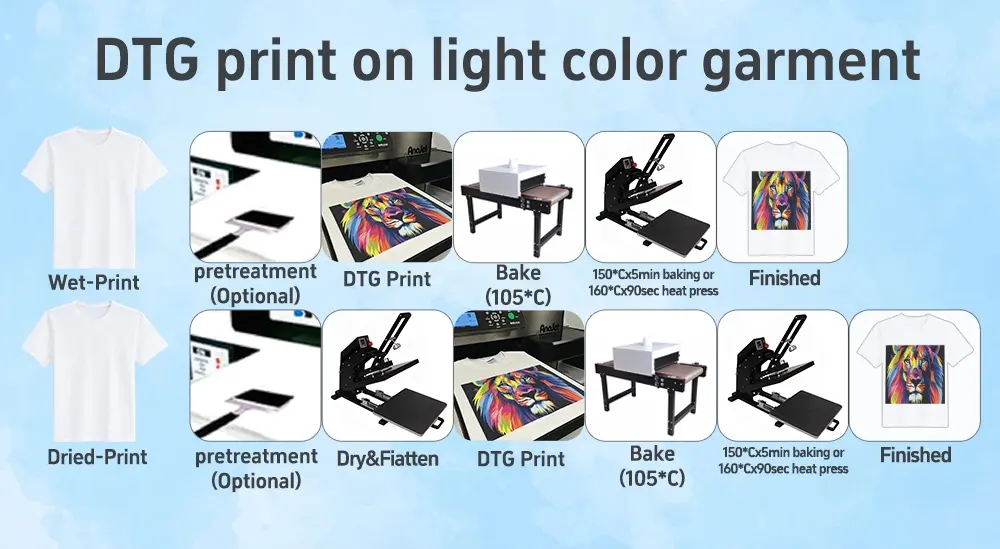
Here’s how DTG shirt printing works and answers the question what is DTG printing on shirts: digital inks are applied directly onto garments, producing vibrant, full-color designs with fine detail—perfect for custom T-shirts and small-batch production.
1️⃣ Pretreat the Fabric
Before printing, the garment is sprayed with a special liquid (called pretreatment) to help the ink adhere better and last longer when you DTG print T-shirts.
2️⃣ Heat the Shirt
A heat press flattens the shirt and dries the pretreatment before printing.
3️⃣ Print the Design
The DTG printer sprays the design directly onto the shirt, just like printing a photo on paper—this is the core process of DTG shirt printing.
4️⃣ Dry the Ink
The printed shirt is heated again to dry the ink and make it permanent.
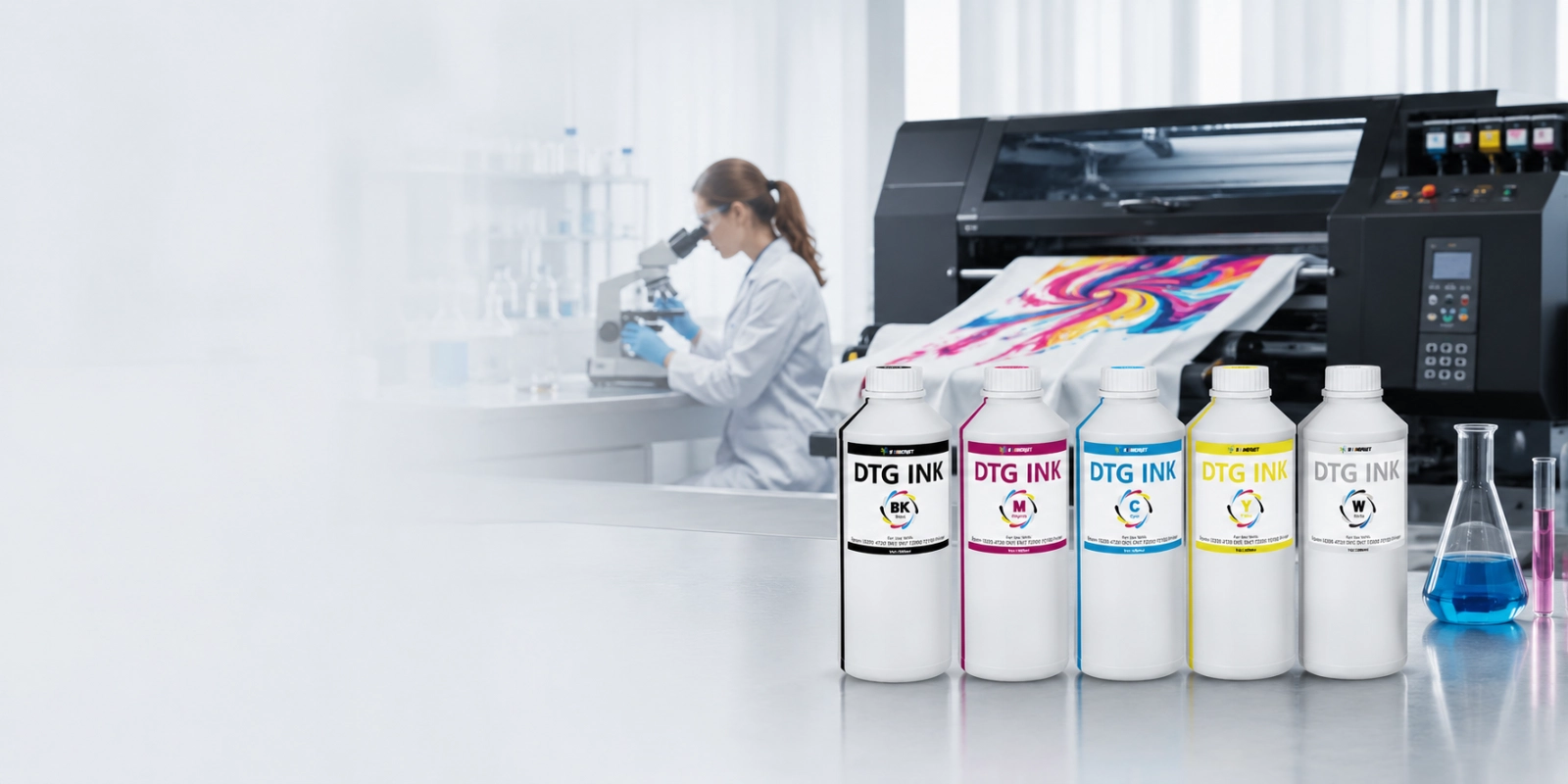
💡 Using quality DTG ink—like Winnerjet’s water-based pigment ink—makes colors look brighter and keeps prints from fading.
🔍 Pros and Cons of Direct-to Garment-Printing
As a professional supplier of printing consumables, we strongly advise you to carefully weigh the advantages and limitations of DTG printing technology before investing in digital textile equipment or purchasing consumables in large quantities. Although this technology has revolutionized the custom apparel market, a thorough understanding of its pros and cons will help you maximize both production efficiency and return on investment.
✅ Pros of DTG Printing
- Perfect for colorful designs
- Great for printing photos, gradients, and detailed artwork.
- Easy setup
- No screens or extra equipment needed. You can print even one shirt at a time.
- Soft to the touch
- The ink soaks into the fabric, so prints feel soft, not heavy or rubbery.
⚠️ Cons of DTG Printing
- Best for cotton
- It works best on 100% cotton shirts. Synthetic fabrics may not hold the ink well.
- Not ideal for big batches
- DTG is slower than screen printing when printing hundreds of shirts.
- Extra step needed
- Dark shirts need pretreatment before printing, which adds time.
🆚 DTG vs Screen Printing vs DTF: What’s the Difference?
| Feature | DTG Printing | Screen Printing | DTF (Direct-to-Film) |
|---|---|---|---|
| Best Use | Small runs, photo-like prints | Large orders, bold graphics | Wide fabric types, full-color |
| Fabrics | Cotton | Most fabrics | Cotton, polyester, blends |
| Setup Time | Low | High | Medium |
| Durability | Good | Very strong | Strong |
| Print Feel | Soft | Slightly raised | Thin film-like feel |
Advice for garment printing professionals: To overcome the limitations of DTG regarding fabric compatibility while keeping equipment investment costs low, many print shops are now combining DTF solutions with their existing equipment, thereby expanding their product lines to include items such as polyester sportswear and hoodies.
🤔 When Should You Use DTG?
DTG is a great choice if:
- You want to print small batches or custom orders
- Your designs are colorful and detailed
- You’re printing on cotton clothing
- You need fast and easy production
It’s popular with small clothing brands, Etsy sellers, and on-demand print services.
🧰 What You Need to Start DTG Printing
Here’s the basic equipment you need:
- A DTG printer
- DTG ink (water-based pigment ink works best)
- A pretreatment machine or hand sprayer
- A heat press or dryer to cure the ink
💡 Want smooth printing with vibrant results? Winnerjet’s DTG inks are easy to use and work well with major printer brands like Epson.

🧵 Final Thoughts: Should You Choose DTG Printing?
DTG printing is a smart choice if you’re printing detailed designs, small quantities, or running a print-on-demand business. It’s easy to start, requires little setup, and gives high-quality results on cotton garments.
🎯 Looking for DTG Ink That Won’t Fade?
Are you ready to start your DTG printing work? Winnerjet’s DTG inks are made for bold colors, smooth performance, and long-lasting prints. Compatible with Epson printheads and trusted by printing professionals.
👉 Contact Us to learn more about bulk orders.
❓ FAQs About DTG Printing
What does DTG stand for?
It means Direct-to-Garment printing straight onto the clothing.
Is DTG eco-friendly?
Yes. It uses water-based ink and creates less waste than screen printing.
Can DTG print on dark shirts?
Yes, but you need to pretreat them first and use white ink as a base.
How long do DTG prints last?
With proper washing, DTG prints can last 30–50 washes or more.
What shirts work best for DTG?
100% cotton shirts give the best results for color and clarity.
How can I find DTG printing services near me or get bulk support?
If you require custom apparel services with fast local delivery, seeking out a local print-on-demand fulfillment center is an excellent starting point. However, if you are a print business operator looking to optimize your production line, sourcing reliable commercial DTG equipment and high-performance consumables directly from reputable manufacturers ensures the lowest operating costs and optimal print stability.