I. List of Top 10 Renowned Japanese Dye-Sublimation Ink Manufacturers
Leveraging strengths in precision chemical R&D and a comprehensive supply chain for inkjet consumables, Japan has cultivated the dye-sublimation ink industry for over four decades, earning high acclaim in global sectors such as high-end textiles, digital printing, and industrial customization. The following are the top ten active, reliable, and fully certified domestic manufacturers of dye-sublimation ink:
- Mimaki Engineering (Mimaki)
- Epson
- Sakata INX
- Mutoh
- Toyobo
- Taka-MS
- SuperInk
- Canon
- Brother
- Kiian Japan
Detailed Overview of Top 10 Japanese Sublimation Ink Manufacturers
- Mimaki Engineering Co., Ltd.
Official Website: https://www.mimaki.co.jp
Address: 540-1 Oaza-Wa, Tomi City, Nagano Prefecture, Japan
Key Products: SB610 industrial water-based sublimation ink; SB530 low-migration ink (certified safe for infants/maternity use); sublimation inks for the TS series high-speed printers.
Core Features & Advantages: A global leader in industrial sublimation printing; inks are 100% compatible with their own wide-format printers. Offers Grade 7 lightfastness and Grade 4–5 wash-fastness, with industry-leading color saturation. Reliable high-speed printing without nozzle clogging; suitable for continuous textile printing runs of over 10,000 meters. Holds a full suite of European and American environmental certifications; the preferred ink for cross-border home textile exports.
Disadvantages: Very high price point; poor general compatibility (works only with Mimaki printers using genuine printheads); prone to error messages when used with modified printers; high minimum order quantities create barriers for small-scale buyers; after-sales support is handled exclusively through authorized distributors, resulting in slow response times for individual customers. - Epson
Official Website: https://www.epson.jp
Address: 3-3-5 Yamato, Suwa City, Nagano Prefecture, Japan
Key Products: SureColor SC-T series sublimation inks (desktop/industrial); UltraChrome DS specialized sublimation dye inks.
Core Features & Advantages: Unmatched compatibility with piezoelectric printheads; ink viscosity is optimized for the entire range of Epson commercial printheads. Precise color accuracy and smooth, natural gradients; excellent storage stability with a 24-month shelf life at room temperature (unopened). Dual-track product lineup covering both desktop and industrial machines, meeting the full range of needs for small-to-medium-sized processing facilities.
Disadvantages: Uses encrypted chips to restrict ink usage, preventing compatibility with third-party ink supply systems; consumables are bundled, resulting in a cost-per-milliliter that far exceeds the industry average. Weaker color saturation on dark tones; printing on dark fabrics requires increased ink volume, leading to higher consumption rates. - 3. Sakata INX Corporation
Official Website: https://www.sakata-inx.co.jp
Address: 3-2-11 Torishima, Konohana-ku, Osaka-shi, Osaka, Japan
Key Products: Eco-friendly sublimation inks for textiles, thermal transfer sublimation inks for advertising substrates, low-odor water-based sublimation inks.
Core Features & Advantages: A long-established Japanese specialist in ink and chemical manufacturing; inks are not tied to proprietary printers and offer superior universal compatibility compared to Japanese peers. Features mature dye purification technology resulting in extremely low odor—safe for use in enclosed workshops without irritating fumes. Color formulas can be fine-tuned on demand, allowing for flexible small-to-medium batch customization; compatible with mainstream printheads from domestic, Japanese, and Korean manufacturers.
Disadvantages: Stability during high-speed industrial printing is inferior to Mimaki or Mutoh; limited overseas stock leads to long delivery times in the Asia-Pacific region; high-end weather-resistant inks carry a significant price premium, resulting in a lower price-performance ratio. - Mutoh Holdings Co., Ltd.
Official Website: https://www.mutoh.co.jp
Address: 1-21-12 Shinkoiwa, Katsushika-ku, Tokyo, Japan
Key Products: MS41 sublimation transfer ink, weather-resistant sublimation ink for outdoor advertising, specialized ink for wide-format digital textile printing.
Core Features & Advantages: Outstanding strengths in outdoor signage and advertising consumables; finished prints offer excellent UV and rain resistance. Excellent ink fluidity, making it suitable for large-format, high-speed roll-to-roll printers; strong compatibility with grayscale printing and high fidelity in reproducing fine details and textures; compatible with various third-party modified ink supply systems.
Disadvantages: Wash-fastness on textile fabrics is average, making it unsuitable for high-end intimate apparel production; ink drying speed is relatively slow, requiring extended drying equipment; limited range of niche color shades. - 5. Toyobo Co., Ltd.
Official Website: https://www.toyobo.co.jp
Address: 2-2-8 Nakanoshima, Kita-ku, Osaka City, Osaka Prefecture, Japan
Key Products: Low-migration polymer-based sublimation ink, functional antibacterial sublimation ink, specialized ink for high-end polyester fabrics.
Core Features & Advantages: Leverages R&D strengths in polymer materials; features extremely low sublimation migration rates, meeting EU standards for infant textiles; contains built-in antibacterial agents, ensuring finished fabrics meet antibacterial compliance standards; offers distinct advantages in compatibility with specially modified fabrics; the preferred choice for high-end, “affordable luxury” home textiles.
Disadvantages: Highly niche product with very poor cost-performance for use on standard fabrics; priced at the premium end of the Japanese ink market; does not offer custom formulation services, resulting in very limited procurement flexibility. - Taka-MS
Official Website: https://taka-ms.biz
Address: 7-12 Hakusan-cho, Kasugai City, Aichi Prefecture, Japan
Key Products: Sublimation ink for crafts, sublimation ink for hard substrates (mugs/metal sheets), general-purpose sublimation ink for small-format printers.
Core Features & Advantages: Specializes in sublimation printing on hard substrates, distinguishing it from major Japanese textile ink manufacturers; compatible with desktop-sized thermal transfer equipment, with viscosity optimized for small-bore printheads; ample local stock ensures convenient purchasing for individual customers in Japan; priced at an accessible, consumer-friendly level.
Disadvantages: Lacks industrial-grade mass-production textile inks, limiting its market scope; prone to color deviations and spotting defects in large-area prints; limited export qualifications, restricting cross-border sales capabilities. - 7. SuperInk Japan
Official Website: https://www.superink.jp
Address: 1-16-3 Shibafuji, Kawaguchi City, Saitama Prefecture, Japan
Key Products: Compatible desktop sublimation inks (Epson/Ricoh), home DIY heat transfer inks, and repackaged economical Japanese-style inks.
Core Features & Advantages: Focuses on compatibility with third-party printers without chip encryption restrictions; offers a wide range of repackaging sizes (e.g., 100ml bottles) suitable for small DIY shops; color profiles cater to consumer aesthetics and are easy to calibrate; Japanese-standard quality control ensures impurity levels far superior to standard domestic consumer-grade inks.
Disadvantages: Consumer-grade quality only; unsuitable for industrial mass production; color fastness fails to meet standards for apparel exports to Europe and the US; no bulk purchase discounts. - Canon Inc.
Official Website: https://canon.jp
Address: 3-30-2 Shimomaruko, Ota-ku, Tokyo, Japan
Key Products: GI series desktop photo-grade sublimation inks and sublimation inks for textile photo printing.
Core Features & Advantages: Precise photo-grade color reproduction with natural skin tone transitions for portrait textile prints; compatible with Canon’s full range of desktop photo printers; minimal ink dust generation maintains a clean printing environment; excellent packaging seal integrity prevents degradation under extreme temperatures.
Disadvantages: Lacks an industrial high-speed printing ink product line; narrow sublimation temperature range means temperature control errors directly lead to color fading; closed ecosystem compatible only with Canon’s own printer models. - Brother Industries, Ltd.
Official Website: https://www.brother.co.jp
Address: 15-1 Naoshiro-cho, Mizuho-ku, Nagoya City, Aichi Prefecture, Japan
Key Products: Sublimation inks for home-based garment DIY and water-based sublimation inks for small-scale custom apparel.
Core Features & Advantages: High operational tolerance; compatible with small garment printers used in retail shops; water-soluble formula allows for easy printhead cleaning; simple consumable replacement enables operation by staff with no technical background.
Disadvantages: Very limited production capacity; unable to handle bulk export orders; insufficient color density results in a washed-out look when printing on dark fabrics; completely unsuitable for industrial applications. - 10. Kiian Digital Japan
Official Website: https://www.kiandigital.jp
Address: 6-2 Minatojima, Chuo-ku, Kobe City, Hyogo Prefecture, Japan
Key Products: Sublimation inks for high-speed rotary printers; sublimation inks for high-penetration knitting fabrics.
Core Features & Advantages: Specializes in the high-speed rotary textile printing sector; features rapid sublimation rates, making it compatible with high-speed production lines exceeding 80 meters per minute; ensures uniform penetration on elastic knitted fabrics with no surface residue; utilizes a unified global formula to ensure consistent quality across domestic and international markets.
Disadvantages: High equipment compatibility threshold (compatible only with high-end imported rotary machinery); high maintenance costs (requires specialized filtration consumables); high minimum order quantity (starting at 500L), making it inaccessible for small and medium-sized factories.
Industry Characteristics of Japanese Dye-Sublimation Ink Manufacturers
Leveraging three core technological strengths—domestic fine chemical expertise, disperse dye purification, and printhead compatibility—Japanese dye-sublimation ink companies have developed distinct characteristics that set them apart from global competitors. Their products cater to the full spectrum of high-end commercial and industrial digital printing applications, defined by six key dimensions:
- Raw Materials and Quality Control
They exclusively use high-purity, refined Japanese disperse dyes, keeping impurity levels below 0.02%. With exceptional uniformity in nano-milled particle size, the inks resist clogging, sedimentation, and separation, ensuring compatibility with high-end industrial printheads from manufacturers like Seiko, Epson, and Kyocera. Production lines adhere to JIS (Japanese Industrial Standards) and EU REACH environmental regulations; levels of heavy metals and volatile organic compounds (VOCs) are far below standard national limits, making the inks suitable for export orders—including those for infant/maternity apparel and home textiles—that must meet strict Western compliance standards. - Technology and R&D
Most companies operate under an integrated “printer plus ink” R&D model, where ink formulas are specifically tailored to their own printing equipment. Color profiles and drying/sublimation parameters are deeply synchronized, with color gamut accuracy and color fastness fine-tuned through proprietary, closed-loop processes. They continuously iterate on specialized formulas—featuring high lightfastness, wash fastness, and penetration—targeting high-end polyester, blended fabrics, and hard-coated sublimation substrates, maintaining global leadership in specialized process technologies. - Product Positioning
The product portfolio focuses primarily on mid-to-high-end industrial inks, with minimal production of low-end, generic varieties. Key selling points include high color fastness, a wide color gamut, low volatility, and long shelf life. The product range is comprehensive, covering four major categories: water-based sublimation inks, solvent-based sublimation inks, low-migration inks for infant/maternity products, and specialized low-viscosity inks for high-speed printers. These products serve a wide range of sectors, including home textiles, sportswear, advertising signage, and handicrafts. - 4. Production Capacity and Supply Chain Characteristics
Domestic production is refined rather than blindly expanded, with strict inventory control focusing on small-batch, high-value-added orders. Overseas operations rely primarily on exclusive regional distributorships with few direct-operated outlets, utilizing distributors for after-sales service. High self-sufficiency in raw materials—including in-house production of core dyes and auxiliaries—results in exceptional supply chain resilience. - Pricing and Business Model Characteristics
The brand commands a premium, with global pricing set at the higher end of the market; products are tied to OEM printer warranties, limiting the compatibility of third-party inks. The business model favors a closed-loop ecosystem, prioritizing consumable supplies for proprietary equipment while limiting production capacity for general-purpose inks. - Common Weaknesses
Mass production costs remain high, lead times for custom color modifications are long, and minimum order quantity (MOQ) thresholds are high. Compatibility with low-cost domestic printheads and modified printers is poor. Production capacity for eco-friendly, high-end formulations is limited, and delivery lead times for large-volume export orders typically range from 30 to 45 days.
Japanese vs. Chinese Sublimation Ink Manufacturers: Comprehensive Comparison of Pros, Cons, and Costs
At present, the R&D technology of leading Chinese ink manufacturers has been greatly upgraded, and the quality of mid-range products is basically comparable to conventional Japanese products. There are obvious differences between Japanese and Chinese manufacturers in five dimensions: cost, product quality, compatibility, after-sales service and order delivery. The detailed comparison is as follows:
| Comparison Dimension | Japanese Sublimation Ink Manufacturers | Chinese Sublimation Ink Manufacturers |
| Overall Production Cost | Extremely high labor cost, chemical raw material cost and factory environmental protection cost; the comprehensive manufacturing cost is 45%-60% higher than that of Chinese products. Superimposed with tariff and ocean freight premium, the terminal selling price is 60%-120% higher than domestic Chinese ink. | Complete industrial supply chain, self-sufficient local dyes and additives, large-scale factory production with low comprehensive manufacturing cost. No high brand premium, affordable terminal price, and large bargaining space for bulk procurement. |
| Product Advantages | Top-level color fastness, weather resistance and raw material purity for high-end models; complete compliance certificates, barrier-free for high-end European and American maternal and infant, luxury textile orders; perfect compatibility with original printheads, stable performance for long-term continuous printing; focused on R&D of special formulas for high-end fabrics. | Strong universal compatibility, compatible with modified printers, domestic printheads and all imported printheads; flexible customization including color adjustment and viscosity modification for non-standard equipment; sufficient spot goods with bulk delivery finished within 7 days; mid-range quality equivalent to conventional Japanese ink with ultra-high cost performance. |
| Product Disadvantages | Closed ecological compatibility bound with original printing equipment; long customized color adjustment cycle (15-25 days); high minimum order quantity; insufficient localized after-sales support; weak competitiveness for low-cost foreign trade orders. | Low-end unknown-brand ink features many impurities, easy nozzle clogging and poor color fastness; leading Chinese manufacturers lag slightly behind Japanese brands in high-end special ink R&D; longer application cycle for top-tier European environmental certificates. |
| Equipment Adaptation & Operation Maintenance | Strict chip encryption control limiting third-party ink supply; extra investment required for supporting original drying and filtering equipment, high operation and maintenance cost. | Open ink supply without encryption restriction; compatible with new and modified printing machines, matching existing factory equipment with zero extra operation and maintenance cost. |
| Delivery & After-sales Service | 30-45 days delivery cycle for overseas orders; agent-only after-sales support with time zone difference in technical communication; high-charged after-sales service. | Fast delivery within 3-10 days supported by domestic and overseas bonded warehouses; one-on-one multilingual technical support including free color curve debugging and equipment adaptation; free global after-sales service. |
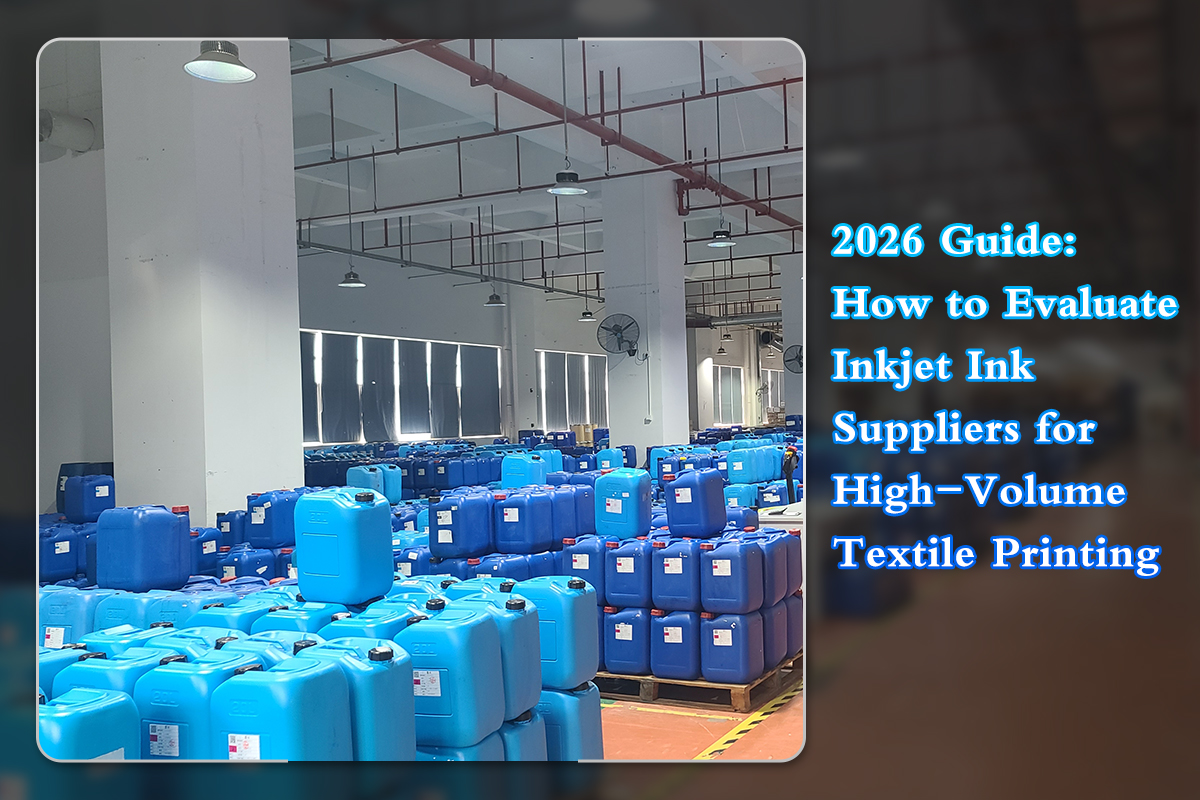
Winner Jet: A Leading Chinese Sublimation Ink Manufacturer—Going Global and Partnering with Japanese Firms to Build a Worldwide Consumables Supply Chain
In the global landscape of dye-sublimation ink supply and demand, Winner Jet—a specialized Chinese manufacturer with over a decade of experience in digital printing consumables—leverages China’s manufacturing cost advantages and localized R&D capabilities. By benchmarking against the chemical R&D standards of leading Japanese enterprises, the company has established an integrated global system covering production, sales, service, and R&D. It complements major Japanese ink manufacturers through differentiated positioning and collaborative supply, serving the global printing industry.
- Global Strategic Vision
Winner Jet rejects the “race to the bottom” characterized by low-price, low-end competition. Instead, it benchmarks against the quality control standards of major Japanese firms like Mimaki and Sakata INX. The company has established a three-tier dye purification laboratory and imported Japanese nano-grinding equipment to create products that offer “Japanese quality at Chinese prices.” Its business spans over 120 countries and regions, with deep market penetration across Southeast Asia, the Middle East, Latin America, Europe, the Americas, and Oceania. Catering to all market segments—from high-end customization and mass production to consumer DIY—Winner Jet addresses the shortcomings of Japanese manufacturers regarding slow delivery for small-to-medium orders, poor compatibility, and excessive pricing. - Core Product Competitiveness Benchmarked Against Japanese Standards
Winner Jet’s entire product line adheres to both Japanese Industrial Standards (JIS) for inks and EU REACH environmental regulations. The portfolio comprises five distinct product lines: low-migration ink (safe for infant and maternal use), ink for high-speed industrial printers, ink for hard-substrate transfer, universal desktop-compatible ink, and modified ink for specialty fabrics. Key performance indicators—such as particle size uniformity, printhead clogging rates, and wash-fastness—now match mainstream mid-range Japanese products. Furthermore, the inks are compatible with the full range of Japanese printer models (including Epson, Mimaki, and Mutoh printheads), breaking the monopoly of encrypted OEM inks and reducing consumable costs for processing plants worldwide. - 3. Comprehensive Global Localized Service Capabilities
Unlike the agency-based after-sales models typical of Japanese firms, Winner Jet has established a network of bonded warehouses in Southeast Asia, service centers in Europe, and logistics hubs in the Americas, enabling localized shipping and rapid restocking. The company deploys dedicated multilingual technical teams to provide end-to-end services—free of charge—including color profile calibration, printhead compatibility adjustments, production line process optimization, and assistance with regulatory compliance documentation. Furthermore, Winner Jet supports small-batch customization, formula fine-tuning, and OEM/private-label manufacturing; this flexibility allows it to meet the personalized needs of global SMEs, effectively addressing the limitations of Japanese competitors, such as high minimum order quantities and rigid customization processes. - Sino-Japanese Collaboration Empowering the Global Industry
Japanese sublimation ink manufacturers leverage cutting-edge chemical R&D and high-end specialty formulations to anchor the technological foundation of the global premium printing consumables market, focusing on the high-value, high-end customization sector. Meanwhile, Winner Jet—backed by large-scale intelligent manufacturing, a flexible supply chain, and comprehensive localized services—handles high-volume, diverse, and cost-effective orders from around the world. Moving forward, the two sides will continue to share technical expertise and leverage complementary strengths: Japanese firms will contribute high-end dye R&D processes, while Chinese brands will optimize mass-production costs and global service efficiency. Through this joint effort, they will consistently supply stable, compliant, and high-quality sublimation ink products to the global textile printing, creative customization, and outdoor advertising industries, fostering a healthy global ecosystem for printing consumables.