Testing Statement and Commitment to Neutrality: Our R&D and technical engineering teams possess extensive expertise in the fields of digital textile printing and DTG (Direct-to-Garment) consumables. We conducted comprehensive benchmark evaluations on 6 mainstream entry-level and commercial-grade DTG printers over a 45-day period, involving continuous real-world production runs and rigorous laboratory testing. The evaluation covered over 1,000 garments made of 100% combed cotton (in both dark and light colors), focusing on key metrics such as wash fastness, white ink circulation stability, printhead longevity, and total per-unit production costs. This guide aims to provide an objective technical perspective to help printing entrepreneurs and small-scale workshops maximize their return on investment (ROI).
Top 6 Affordable DTG Printers by Category
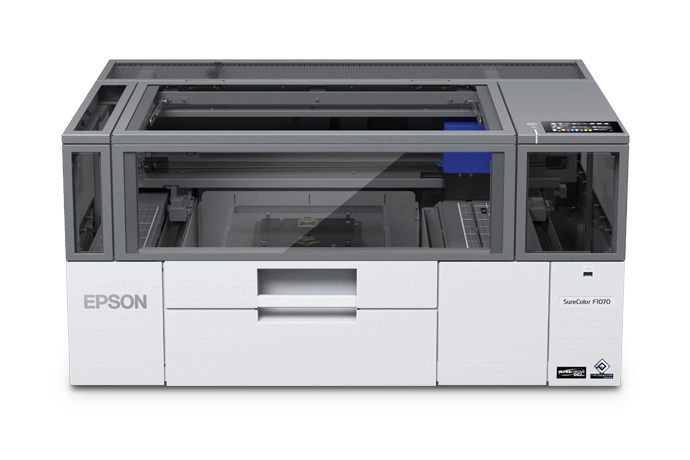
Best Overall Budget & Hybrid DTG/DTF: Epson SureColor F1070 (~$4,995 – $6,495). Offers factory-grade PrecisionCore Micro TFP reliability, automated maintenance, and direct film-transfer versatility.
Best Mid-Tier Commercial Workhorse: Ricoh Ri 1000 (~$11,500 – $14,000 / Certified Refurbished ~$8,000). Ideal for growing print shops requiring 1200×1200 dpi resolution, larger platens (up to 16″ × 19.6″), and fast 28-second color throughput.
Best Value in the Certified Refurbished Market: Brother GTX / GTXpro Series (~$5,000 – $13,000 Refurbished). High-durability industrial piezo heads, massive brand support, and low ink cost per print in bulk configurations.
Best Large-Format Commercial Benchmark: Epson SureColor F2100 / F2270 (~$10,790 – $13,000). Industry-standard 16″ × 20″ format, proven ICC profiles, and high-opacity white ink underbasing for mid-to-high volume apparel runs.
Best A1 Large-Format & Low Running Cost Workhorse: Winnerjet Dual Epson i1600-A1 DTG Printer (~$4,500 – $6,500). Features dual industrial Epson i1600 heads (CMYK + White dedicated array), a true A1 (60 × 90 cm) platen bed, and active white ink recirculation that slashes per-print consumable expenses by ~40%.
Lowest Upfront Capital (Ultra-Budget Entry): Converted Chinese A3/A4 Flatbed Printers (e.g., Epson L1800/L805 conversions, ~$1,500 – $3,000). Lowest entry barrier, but demands intensive manual head cleaning and lacks automated degassing.
Technical Evaluation: How We Benchmarked the 6 Machines
To eliminate bias, every DTG system was scored across four critical industrial dimensions:
- Fluid Dynamics & White Ink Circulation: Sedimentation prevention, damper integrity, sub-tank agitation, and degassing systems.
- True Operating Costs (TCO): Ink cost per milliliter ($/ml), pretreatment consumption, and printhead replacement pricing.
- Mechanical Precision & Drop Placement: Minimum picoliter drop volume and registration accuracy on high-pile textiles.
- Maintenance Overhead: Waste ink purge volume during automatic idle cleaning versus manual daily capping-station servicing.
Side-by-Side Specifications Comparison (All 6 Models)
| Model | Target Price Tier | Printhead Architecture | Max Print Area | White Ink Agitation / Circulation | Best For |
|---|---|---|---|---|---|
| Epson SureColor F1070 | $4,995 – $6,495 | PrecisionCore Micro TFP | 10″ × 12″ | Automated Fabric Wiper & Nozzle Verification | Home Startups & DTG/DTF Hybrid Use |
| Winnerjet Dual i1600-A1 | $4,500 – $6,500 | Dual Epson i1600 (Dedicated CMYK+W) | A1 Large Format (60 × 90 cm) | Active Line Recirculation & Sub-Tank Agitation | Streetwear Full-Prints, Multi-Platen Production & High ROI |
| Ricoh Ri 1000 | $11,500 – $14,000 (New) | 4x Ricoh Industrial Piezo (8 Channels) | Up to 16″ × 19.6″ | Continuous Active Circulation & Auto-Agitation | Mid-Volume Custom Print Shops |
| Brother GTXpro (Refurb) | $9,000 – $13,000 (Used/Refurb) | Brother Proprietary Piezo Heads | 16″ × 21″ | Advanced Internal White Ink Recirculation | High-Volume Industrial Scaling |
| Epson SureColor F2100/F2270 | $10,790 – $13,000 | PrecisionCore TFP Industrial Array | 16″ × 20″ | Active Line Circulation & Automated Flushing | Established Boutiques (30–80 shirts/day) |
| Converted Desktop Flatbeds | $1,500 – $3,000 | Converted Epson Desktop Heads | A4 to A3+ (13″ × 19″) | Passive CISS / Stirrer Only (High Risk) | Tech-Savvy Hobbyists & Low-Frequency Sampling |
Detailed Brand & Model Evaluations
1. Epson SureColor F1070: Best Overall Value for Small Shops
The SC-F1070 is a factory-built desktop DTG printer from a top-tier manufacturer priced under $7,000. It eliminates the clogging risks associated with DIY converted printers.
- Pros: Dual-purpose DTG and direct-to-film (DTF) transfer capability; cartridge-free 250ml UltraChrome DG2 ink pack system; automated wiper assembly.
- Cons: The 10″ × 12″ platen limits maximum graphic dimensions on XL/2XL garments.
- Best Suited For: Etsy sellers, boutique retail stores, and home-based apparel startups.
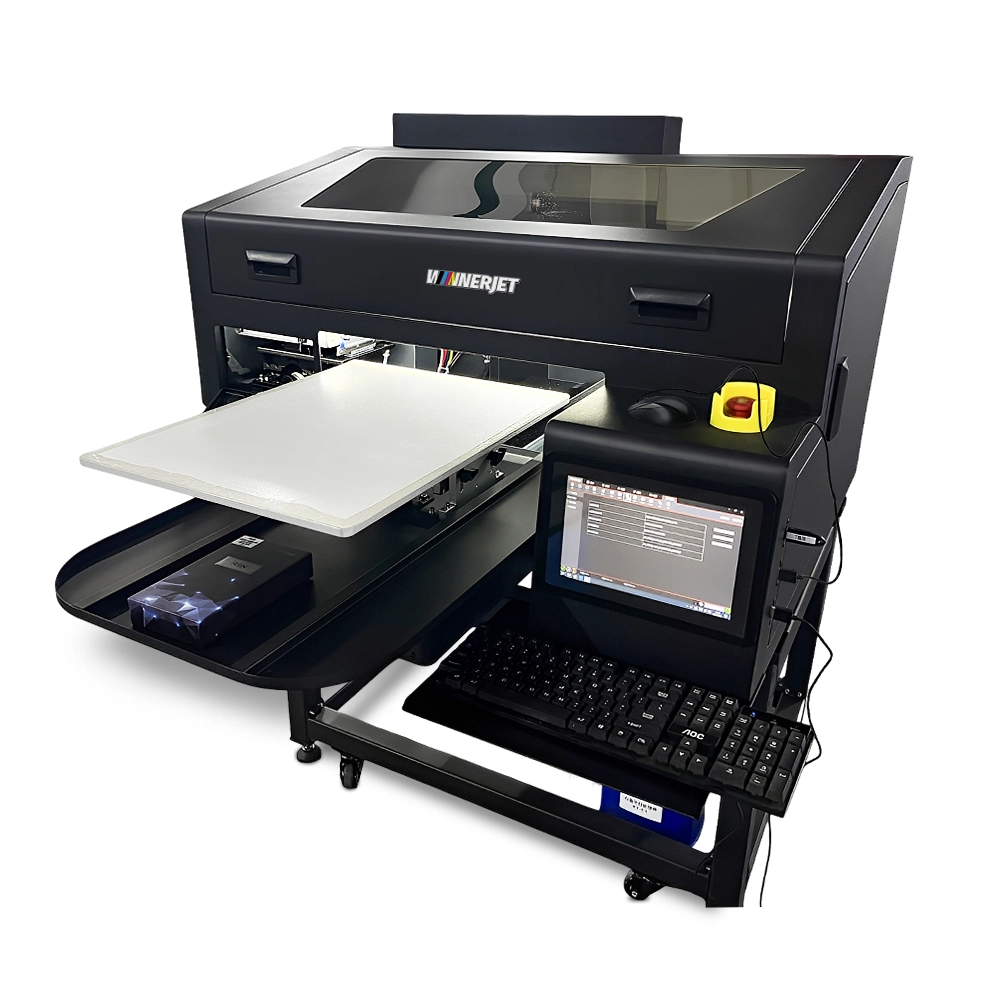
2. Winnerjet Dual Epson i1600-A1: Best A1 Large-Format & High-Efficiency Workhorse
The Winnerjet Dual Epson i1600-A1 DTG Printer is engineered specifically for businesses that need industrial-scale throughput without paying the $20,000+ brand markup.
- Pros: Dual industrial-grade Epson i1600 printheads configured for simultaneous CMYK and White ink laydown; true A1 (60 × 90 cm) bed allows multiple garments to be printed simultaneously or massive oversized streetwear graphics; open bulk ink architecture reduces ongoing ink overhead by ~40%; active white ink sub-tank agitation prevents nozzle dropouts.
- Cons: Larger industrial footprint requiring dedicated workshop floor space.
- Best Suited For: Growing apparel brands, commercial print shops handling large streetwear designs, and businesses demanding maximum profit margin per print.
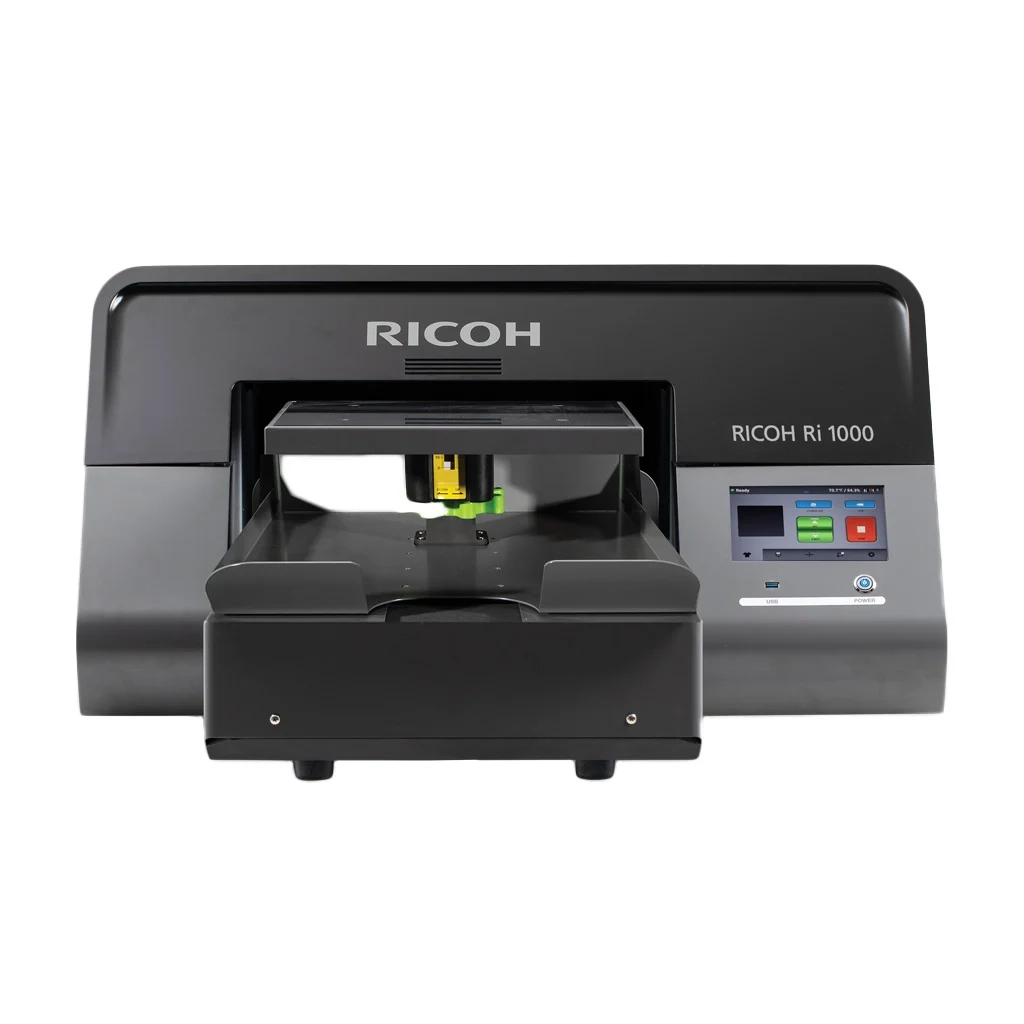
3. Ricoh Ri 1000: Best Mid-Tier Production Workhorse
The Ri 1000 balances commercial build quality with high print resolution (1200 × 1200 dpi) using genuine industrial-grade Ricoh printheads.
- Pros: Magnetic quick-change platens (up to 16″ × 19.6″); full-color light garment prints in under 28 seconds; interactive touchscreen maintenance alerts.
- Cons: Higher initial cost; larger footprint (110 kg) requiring dedicated workshop space.
- Best Suited For: Existing sign shops, commercial screen printers, and print-on-demand fulfillment centers.
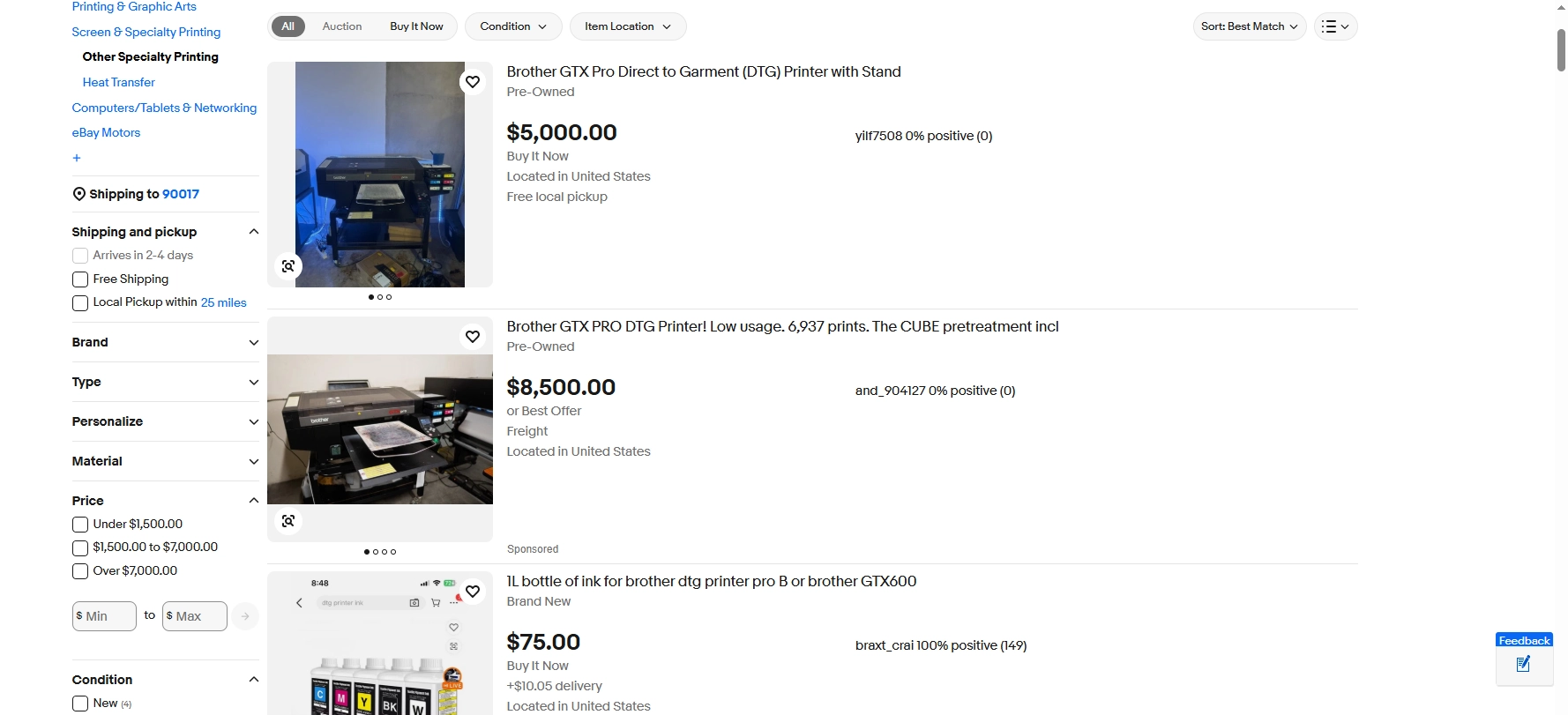
4. Certified Pre-Owned Brother GTX / GTXpro: Best Value in the Secondary Market
Acquiring a certified refurbished Brother industrial printer from an authorized dealer gives print shops enterprise-grade speed and wide platen areas at entry-level investment figures.
- Pros: Substantial 16″ × 21″ platen clearance; high bulk ink capacity; proven ink line longevity.
- Cons: Requires thorough inspection of capping stations, pumps, and past maintenance logs if purchased from third-party sellers.
- Best Suited For: Growing shops looking to scale output without taking on $25,000+ in new equipment debt.
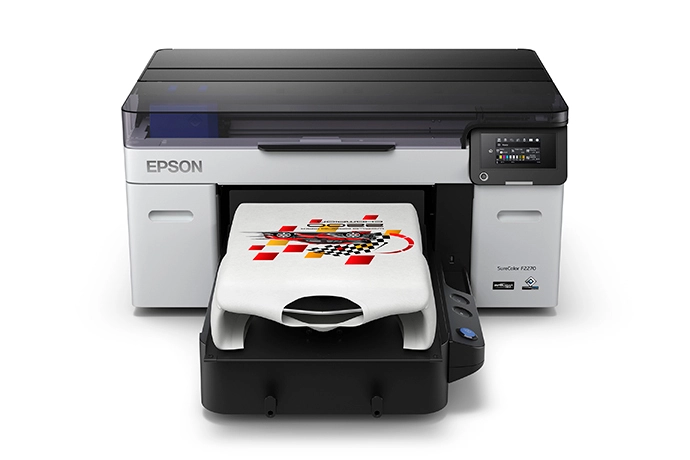
5. Epson SureColor F2100 / F2270: The Industry Large-Format Benchmark
A staple in commercial print studios, the SC-F2100 series offers a balance of high-density white ink laydown, wide-format capability, and widespread technical documentation.
- Pros: Generous 16″ × 20″ printable area; refined RIP color profiles; high white ink opacity on dark 100% cotton garments.
- Cons: Closed ink pack ecosystems yield higher ongoing consumable costs compared to open bulk-ink solutions.
- Best Suited For: Mid-sized custom apparel brands producing 30 to 80 units daily.
6. Budget Chinese A3/A4 Conversions: Lowest Upfront Cost
Using converted desktop engines (such as Epson L805/L1800 mechanics), these third-party flatbeds deliver low upfront entry costs.
- Pros: Inexpensive initial price tag ($1,500–$3,000); wide availability of replacement mechanical components.
- Cons: Lack of built-in pressurized degassing and white ink recirculation leads to high nozzle failure rates; no OEM warranty.
- Best Suited For: Low-budget hobbyists with electronics and mechanical troubleshooting skills.
What Actually Drives the Price of a DTG Printer?
- Printhead Engineering: Industrial drop-on-demand piezo heads (Epson i1600, Ricoh, Brother) feature steel nozzle plates and integrated thermal stabilization. These cost significantly more than consumer-derived Micro Piezo heads, but they deliver millions more firing cycles before deflection occurs.
- Closed-Loop Fluidics: Affordable conversions rely on gravity-fed siphon tubes. Commercial-grade DTG hardware integrates peristaltic pumps, timed sub-tank agitators, and continuous white ink return lines to prevent titanium dioxide settling.
- Platen Bed & Frame Build: A1-sized structures (such as 60 × 90 cm) require high-precision linear guide rails and stepper motors to ensure drop-on-drop registration accuracy across expansive print areas.
Critical Factors to Consider Before Buying
Brand Longevity vs. Used Hardware Risks
While refurbished commercial units offer high build quality, never purchase a used DTG printer that has sat dry or powered off for extended periods. Direct-to-garment pigment inks solidify inside internal micro-dampers and printhead channels, often requiring an immediate $1,500–$3,000 head replacement.
Workshop Climate Control Requirements
DTG water-based pigment inks require an operating environment maintained strictly at 45%–80% Relative Humidity (RH) and 18°C–28°C (64°F–82°F). Operating in dry, low-humidity spaces causes ink to dry inside the nozzle orifices during idle periods, regardless of brand quality.
Technical Support and Consumable Integrity
Ensure your hardware provider offers local technical support and certified ink formulations. Mismatched ink viscosity or third-party inks lacking proper humectant balancing will accelerate piezo actuator wear and corrode damper membranes.
Current DTG Industry Trends
- A1 Large-Format & Multi-Platen Efficiency: With oversized streetwear graphics dominating fashion, A1 large-format flatbed DTG systems are gaining massive traction, enabling either full-coverage jumbo prints or simultaneous multi-shirt production.
- The Rise of DTG/DTF Hybrid Printing: Modern decorators no longer limit themselves strictly to direct printing. Dual-purpose workflows allow users to swap between direct-to-garment printing and film transfers for non-standard apparel like caps and polyester blends.
- High-Opacity, Low-Viscosity Inks: Next-generation ink formulations yield softer hand-feel on 100% cotton garments while requiring less white underbase ink, directly lowering per-print production costs.
Buying Verdict: Which DTG Printer Should You Choose?
If your budget is $4,500 – $6,500 and you want A1 large-format capacity (60×90 cm), dual-head speed, and low bulk-ink operating costs, choose the Winnerjet Dual Epson i1600-A1 DTG Printer.
If your budget is under $7,000 and you want a desktop, factory warranty, clean operation, and the option to run film transfers, purchase the Epson SureColor F1070.
If your budget is $8,000 – $14,000 and you need standard 16″ × 20″ commercial production, invest in a Ricoh Ri 1000, an Epson SC-F2100/F2270, or a Certified Refurbished Brother GTX.
If your budget is under $3,000, bypass low-tier converted DTG machines and invest in a dedicated Direct-to-Film (DTF) system instead, which avoids fabric pretreatment steps and provides wider substrate compatibility.
DTG Buyer’s Checklist
✔ Platen Size Match: Ensure printable area fits standard graphic dimensions (12″ × 16″ for standard tees, A1 60 × 90 cm for oversized streetwear).
✔ Pretreatment Workflow: Account for a dedicated pretreatment spray area and a commercial heavy-duty heat press.
✔ True Cost-per-Print Calculation: Factor in ~$0.80–$2.20 per dark garment print (ink + pretreatment + maintenance flush).
✔ Daily Maintenance Protocol: Verify the equipment has auto-cleaning capabilities if you do not run prints daily.
FAQs –Best Affordable DTG Printer
Is a DTG printer worth it for a small business?
Why is white ink maintenance so critical on DTG printers?
Can DTG printers print directly on 100% polyester?
Standard DTG inks are engineered for cellulose fibers (cotton, linen, canvas). Printing on dark polyester requires specialized poly-blocking pretreatment and dedicated poly inks to avoid dye migration.
Selecting an affordable DTG printer requires balancing initial hardware capital against the ongoing reality of maintenance, consumable stability, and production output. Prioritize verified fluid circulation and accessible technical support over raw machine discounts to protect your long-term margins.
What extra equipment do I need to buy besides the DTG printer?
Besides the printer itself, a complete DTG production line requires two essential pieces of post-processing hardware:
A Commercial Heavy-Duty Heat Press (16″ × 20″): Required for curing the pretreatment liquid and fixing the water-based pigment ink into the cotton fibers ($400 – $1,500).
Pretreatment Applicator: Manual HVLP spray guns work for low volumes ($50 – $100), while automatic pretreatment machines ($2,500 – $4,500) ensure perfectly even liquid distribution and eliminate halo marks on dark garments.
Should I buy an affordable DTG printer or a DTF printer for my startup?
Choose DTG if your brand focuses on premium, 100% ring-spun cotton streetwear where customers demand a breathable, ultra-soft “zero-hand” feel and high-end retail quality. Choose DTF if you need to print on mixed synthetic fabrics, polyester, nylon, dark hoodies, or irregular items like hats and tote bags without applying liquid pretreatment. Many modern businesses also opt for dual-purpose setups (like the Epson SC-F1070) to handle both methods.