In the 2026 global printing market, when looking for sublimation printer in china, your first stops are usually Alibaba or Made-in-China. However, on these platforms, you immediately encounter a “numbers game”: two 1.9m wide-format printers that look identical, yet one is quoted at $2,800 while the other hits $5,500.
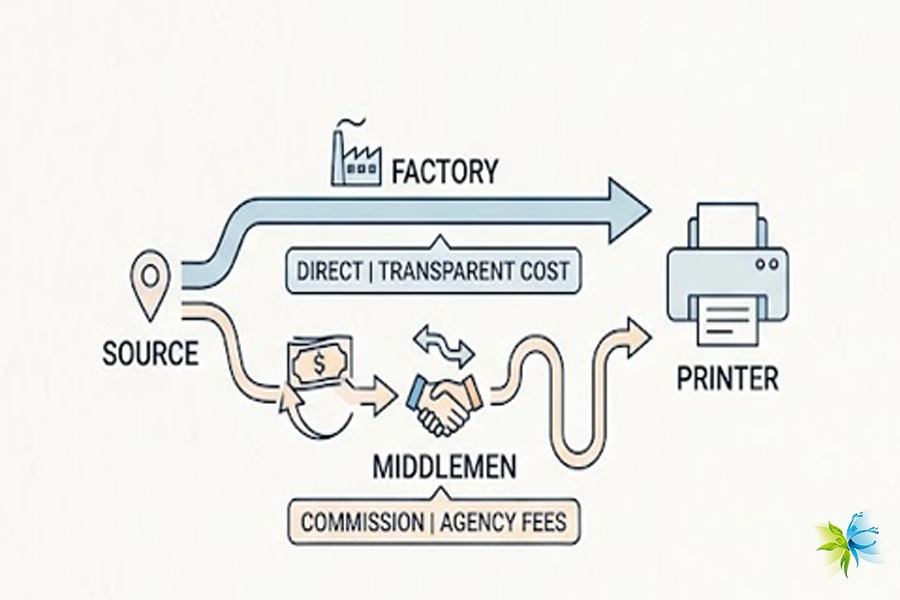
This significant price gap usually stems from the fundamental difference in supply channels: Factory Direct vs Middlemen. As a printing consumables expert with over 18 years of R&D experience, I will help you look past the Alibaba price traps. From a professional Total Cost of Ownership (TCO) perspective, I’ll teach you how to identify authentic factories and ensure every dollar you spend translates into perfect print results.
I. Distinguishing Between Chinese Factory Direct and Middlemen
In the complex Chinese market, identifying a supplier’s true identity is the first step in cost control.
1. Factory Direct: The Bedrock of Professional Production
While factories offer unrivaled technical depth, dealing with them directly can occasionally present challenges for global buyers.
Characteristics & Advantages:
- Specialized Focus: Factories usually focus on specific product lines (e.g., only sublimation printers or only UV printers). Their R&D is concentrated on optimizing the synergy between Board Waveforms and ink delivery systems.
- Source-Level Access: They possess source-code level technical authority, allowing them to adjust printing parameters based on the physical properties of high-end inks like Winnerjet.
- Transparent Pricing: Quotes are typically based on FOB factory prices without hidden middleman commissions.
- Direct Technical Support: When a printhead experiences deflection or dropouts, you speak to a product engineer, not a salesperson.
- Long-term Parts Availability: Even if a model is discontinued, factories usually stock spare parts for 5+ years, preventing your machine from becoming obsolete due to a single failed sensor.
❗ Disadvantages & Risks:
- High Barriers to Entry: Factories prioritize “production efficiency” and favor high-volume orders. For startups needing only one machine or low-volume specialized consumables, factory cooperation may be lower.
- Narrow Product Range: Factories only sell what they manufacture. If you need heat presses, transfer paper, or specific cleaning tools, you must coordinate with multiple vendors, increasing logistics and customs complexity.
2. Middlemen/Trading Companies: The “General Store”
In 2026 B2B trade, middlemen are more than just “pass-throughs”—they act as resource integrators.
Characteristics & Advantages:
- Comprehensive Catalogs: Their catalogs are like encyclopedias, covering everything from printers and heat presses to blank T-shirts. Their core competency is Sourcing, not Manufacturing.
- Multi-Brand Distribution: While they offer many choices, they often lack core technical mastery, simply assembling components from various manufacturers or white-labeling products.
- Superior Service: Trading company reps are often better at multilingual communication and have a stronger service mindset, helping you navigate complex shipping documents and customs regulations.
❗ Disadvantages:
- Price Markups: To cover marketing and profit margins, their prices are typically 10-20% higher than the factory. Alternatively, to hit a low price point, they may swap in inferior components.
- Support Latency: Middlemen are merely “messengers.” When a machine fails, they must relay information to the factory. This delay can be fatal during peak production seasons.
How to Identify a “Real Factory” in 1 Minute?
Winnerjet suggests asking these three professional questions:
- “Can you provide the dongle upgrade logs for the mainboard system?” (Middlemen usually lack authority for firmware updates).
- “Can you show me the waveform setting parameters specifically for high-density inks?” (Only factory technical departments understand this).
- “Can I get free samples of your recommended consumables for a 200-hour continuous firing test?” (Authoritative suppliers like Winnerjet support OEM customization and free samples because of our rigorous testing standards).
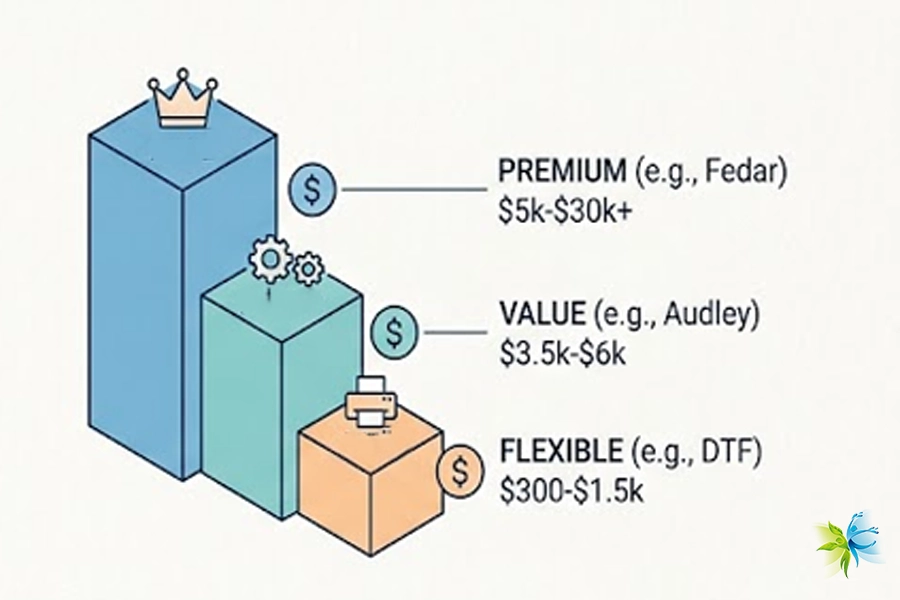
II. 2026 Chinese Sublimation Printer Brand & Price Comparison
The Chinese sublimation market is divided into three tiers: Top-tier Exporters, Mid-range Value Brands, and Entry-level/Assembled Brands.
1. Top-Tier (Premium Exporters): Fedar, Skycolor
These are China’s most stable and highest-volume export brands. They are the benchmarks for Winnerjet ink’s 1:1 color matching tests.
- Typical Price:$5,500 – $30,000+ (depending on printhead count).
- Pros: Extreme stability using high-end Hoson boards; designed for 24/7 industrial production; perfectly compatible with Winnerjet anti-clogging inks.
- Cons: Roughly double the price of budget brands; “picky” about parts and consumables (low-quality inks are highly discouraged).
- Expert Insight: If you have high daily output and demand zero downtime, choose Fedar. Their precision voltage control can extend printhead life by over 30%.
2. Mid-Range (Value Leaders): Audley, Locor
These are the favorites of small-to-medium garment factories worldwide.
- Typical Price:$3,500 – $6,000.
- Pros: Incredible value—the same Epson i3200 printhead for 20-30% less than top-tier brands. Easy to maintain with universal structures; parts are readily available in markets like India, South Africa, and the Philippines.
- Cons: Fit and finish (vacuum bed stability, media tracking) are slightly below premium brands.
- Expert Insight: These machines are most vulnerable to “inferior consumables.” Since their waveform handling is less refined than Fedar, you must use Winnerjet’s rigorously tested high-performance inks to compensate for hardware tolerances and prevent “banding.”
3. Flexible Tier (DTF/Small Customization): Sunmeta, Freesub
Focused on desktop or all-in-one machines, targeting Etsy sellers or gift boutiques.
- Typical Price:$300 – $1,500.
- Pros: Compact, plug-and-play. Highly optimized for phone cases, mugs, and specialized heat transfer logic.
- Cons: Slow speeds; printheads are often “converted” (like the XP600), leading to lower durability.
- Expert Insight: For these machines, “Anti-clogging” is the #1 priority. Winnerjet provides specialized OEM small-format ink kits to ensure the heads stay hydrated even if you don’t print every day.
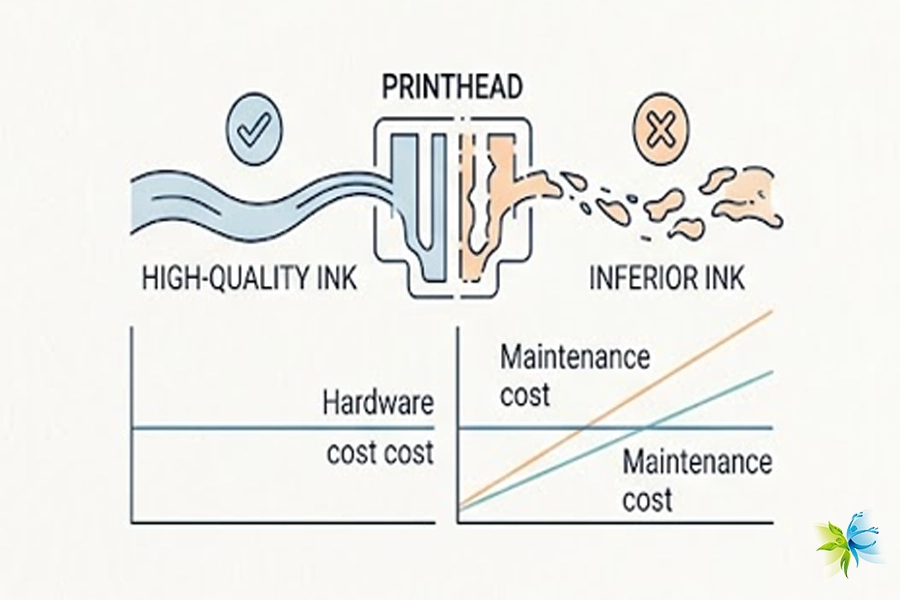
III. Total Cost of Ownership (TCO) Analysis
Many buyers focus only on the invoice price while ignoring the “money pits” hidden in daily operation.
1. Printheads: Productivity or Time Bomb?
Printheads are your most expensive consumable, accounting for 30-50% of the machine’s value.
The Trap: Extremely low quotes often hide Refurbished or Second-hand printheads. These have lost over 50% of their firing life and are prone to “missing nozzles” and “ink deflection.”
The Winnerjet Value: Our inks undergo 200-hour continuous firing tests. Even a brand-new $1,000 Epson i3200 head will fail in 3 months if used with unfiltered, chemically unstable ink. Using Winnerjet’s 1:1 ink solutions essentially protects your multi-thousand-dollar hardware investment.
2. Stability Loss: The Price of Downtime
Budget machines often use cheap mainboards to cut costs.
The Risk: Unstable boards lead to data loss, misaligned prints, or sudden system crashes.
The Math: During peak season, a single day of downtime—lost orders, idle labor, and late-delivery penalties—often far exceeds the $500 – $800 you “saved” on the purchase price.
Winnerjet Insight: Stable hardware needs stable “blood.” Winnerjet inks feature superior fluidity, minimizing cleaning cycles and maximizing your actual Yield Rate.
3. Color Management: The Invisible Time Sink
Many buyers find that their prints don’t match their screens, spending weeks struggling with ICC profiles.
Turnkey Solutions: Winnerjet provides a “Ink + Paper” closed-loop testing system. We have pre-set optimal color profiles for mainstream Chinese brands like Fedar and Audley. This means you can start production immediately upon delivery, reducing your “calibration period” to zero.
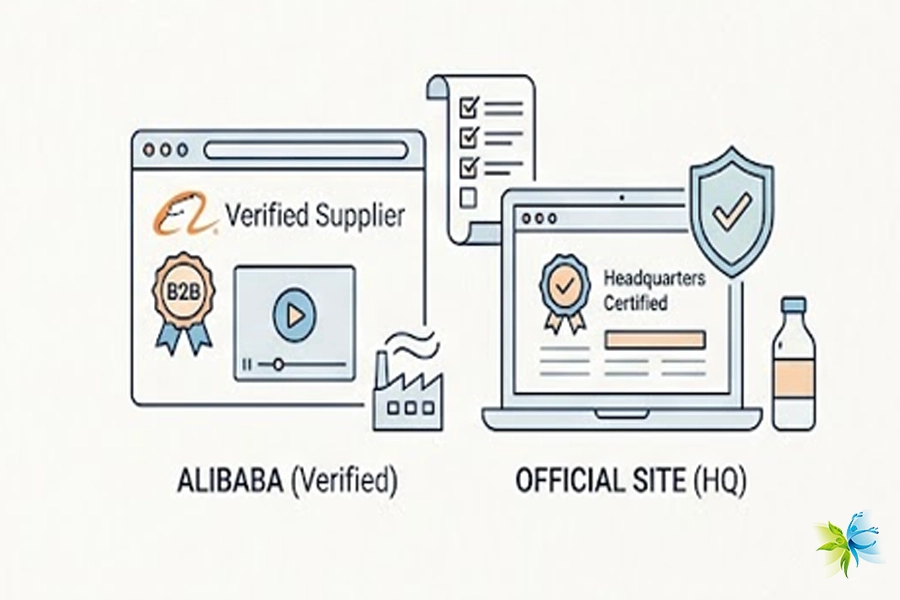
IV. Where to Buy a Chinese Sublimation Printer?
In 2026, while online sourcing is convenient, your “entry point” determines whether you pay retail or wholesale.
- Global B2B Platforms: Alibaba & Made-in-China
Alibaba: The largest platform. Tip: Look for the “Verified Supplier” badge and watch their Factory Inspection videos.
Made-in-China: More specialized for industrial products with a higher concentration of large manufacturers.
Caution: You will encounter many traders here. Use our technical questions to verify their R&D capabilities.
- Factory Direct Official Sites
If you’ve settled on a brand, visiting their official site is the best way to get the Wholesale Price by bypassing platform fees.
Warning: Traders often register similar domains (e.g., brandname-printer.com). Look for “Global Headquarters” certification.
- Industry Trade Fairs
Attending APPPEXPO (Shanghai) or DPES (Guangzhou) is the best way to see machines run in person. You can check noise levels, tracking accuracy, and take samples home.
The Winnerjet Technical Advantage
We act as your technical consultant. Show us your quote/specs, and we will tell you how that hardware will perform with our anti-clogging inks. Before your machine ships, contact us for Free Ink Samples. You can ask your printer supplier to calibrate the machine and create ICC profiles using Winnerjet ink before it leaves the factory. This ensures your machine is in “Peak Condition” the moment it arrives.
Start Strong in 2026
The Chinese sublimation market is complex, but by focusing on “Factory Direct + Professional Consumable Support,” you can secure competitive pricing without sacrificing quality.
[Contact the Winnerjet Expert Team Today]
- Get the latest 2026 ink matching solutions.
- Request FREE ink samples to power your new equipment.
- With 18+ years of industry experience, we know the machines, but we know how to make your business perfect.