If you’re printing on items like phone cases, wood signs, or glass panels, you’ve likely heard of UV printing and UV DTF printing. But which one suits your business best?
💡 What Is UV Printing?
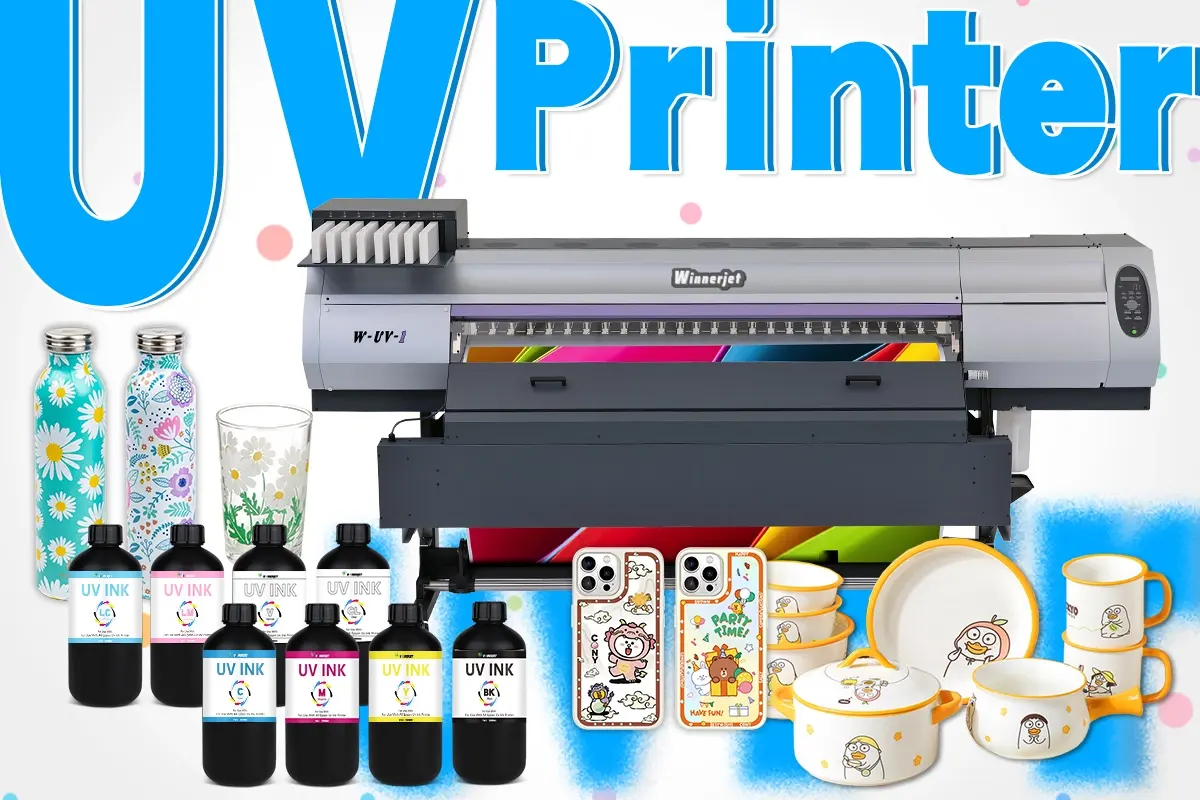
UV printing utilizes a specialized printer and ultraviolet light to dry the ink directly onto the material. The ink sticks well to many flat surfaces.
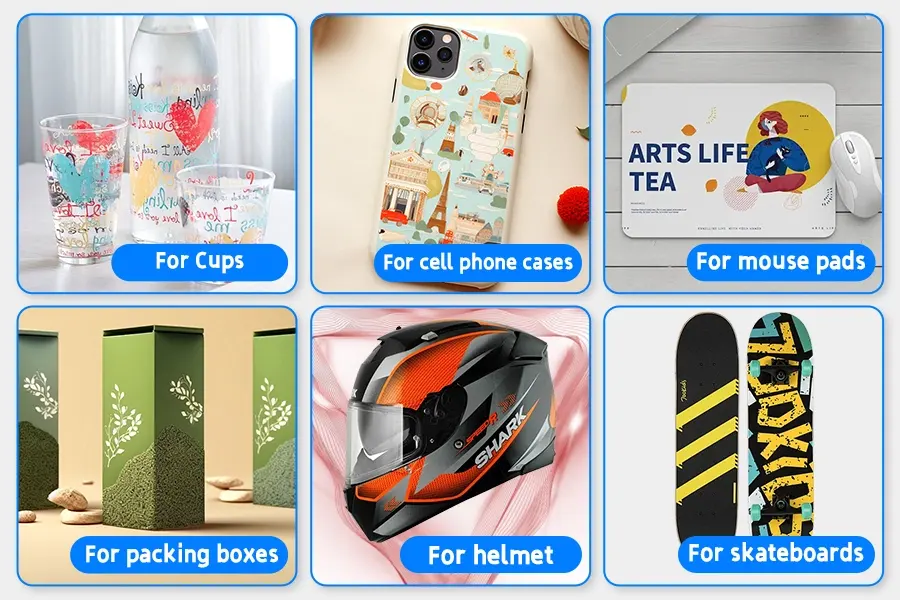
✅ Winnerjet’s UV ink dries instantly and adheres firmly to materials like metal, wood, and acrylic.
🧴 What Is UV DTF Printing?
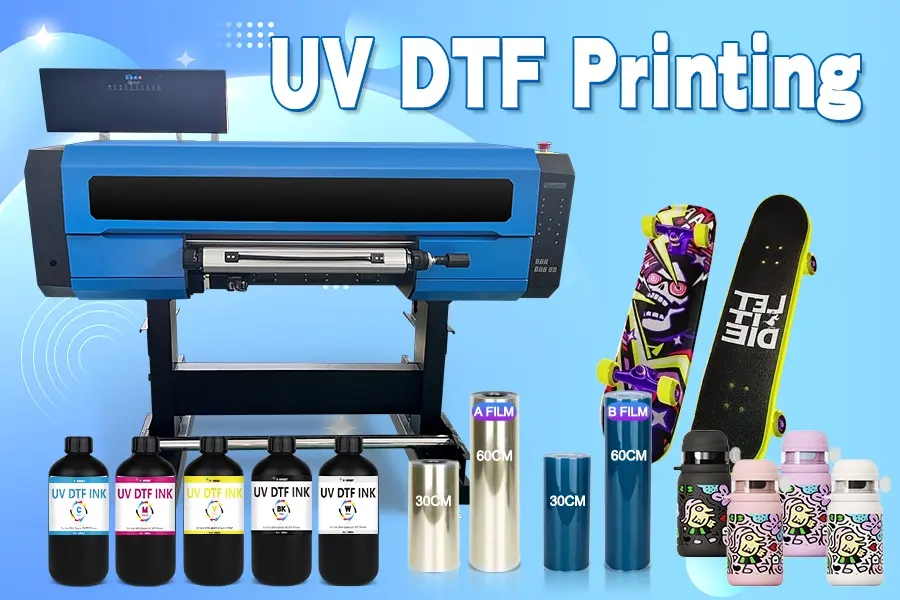
UV DTF (direct-to-film) printing involves printing on a special film first, then transferring the design to the object without the use of heat.
✅ For items with curves or texture, like mugs or candles, UV DTF makes things much easier.
⚖️ UV vs UV DTF: What’s the Difference?
| 🧩 Feature | 🎯 UV Printing | 🎯 UV DTF Printing |
|---|---|---|
| How It Works | Direct print with UV light | Print on film, then apply by pressing |
| Surface Compatibility | Best for flat surfaces | Works on both flat and curved surfaces |
| Durability | Very high | High, slightly less than UV direct |
| Ease of Use | Needs alignment | Easier to apply and fix mistakes |
| Best Use Case | Bulk jobs, signage | Custom shapes, short runs |
Solving the Challenge: How UV DTF Transfers to Irregular-Shaped Objects
Traditional UV printing often struggles with objects that aren’t flat—think of curved surfaces, irregular-shaped inksticks, or products with deep grooves. This is where UV DTF shines as the ultimate problem-solver.
Breaking the “Flatbed” Limit: Unlike direct UV printing, which requires a consistent gap between the print head and the substrate, UV DTF decouples the printing and application processes.
Seamless Application on Complex Geometries: Because the UV DTF film is flexible, it can be hand-applied and molded to fit the contours of irregularly shaped items like cylinders, tapered pens, or even rugged industrial parts.
3D Textured Effect on Any Surface: You can still achieve that premium “raised” or embossed feel even on items that would be impossible to fit inside a standard flatbed printer tray.
No Jig Required: For small batches of irregular items, you no longer need to waste time and money 3D-printing or machining custom jigs to hold the object in place.
🤔UV Printing vs UV DTF vs DTF: Which One Do You Really Need?
Many creators and business owners are confused by the similar names: UV Printing, UV DTF, and DTF. While they all offer high-quality results, they serve completely different purposes.
The biggest difference lies in the substrate (surface) you want to print on. While traditional DTF is designed for fabrics, UV DTF is a game-changer for hard surfaces, especially irregularly shaped items like inksticks, curved bottles, or textured gadgets.
Quick Comparison Table
To help you decide which technology is right for your project, here is a breakdown of their core differences:
| Feature | UV Printing (Direct) | UV DTF Printing | DTF Printing (Textile) |
|---|---|---|---|
| Primary Materials | Rigid, flat surfaces (Phone cases, acrylic) | Hard surfaces, irregular/curved objects | Textiles (T-shirts, hoodies, canvas) |
| Transfer Process | No (Direct-to-substrate) | Yes (Print to film, then peel & stick) | Yes (Heat press required) |
| Adhesion Type | Instant UV Curing | Strong Adhesive Layer | Heat-activated Adhesive Powder |
| Irregular Object Suitability | Low (Requires flat clearance) | Excellent (Perfect for inksticks, pens, clips) | Low (Not for rigid items) |
| Production Speed | High (Great for mass production) | Moderate (Great for DIY & small batches) | High |
🔄 Can You Use Both?
Yes, many print shops combine both. UV for bulk flat prints, UV DTF for flexible or irregular shapes.
🔧 Some of Winnerjet’s printers support both UV and UV DTF modes—ideal if you want more versatility in one machine.
✅ Final Thoughts
Both methods are great, but it depends on your needs.
🎯 Use UV Printing if:
- You need fast output on rigid, flat items.
- You want direct-to-object prints.
🎯 Use UV DTF if:
- You handle tricky shapes or short runs.
- You want a no-heat transfer method.
🛒 Winnerjet’s UV DTF inks and films are engineered for excellent adhesion, color, and durability. Explore your options today!
👉 Contact Winnerjet for samples!
📬 Need Help Deciding?
Whether you’re launching a new product line or upgrading your equipment, we’re here to help.
💬 Request a free sample or start a chat with our team.
Let Winnerjet support your printing success—one solution at a time.
❓ FAQs
Are UV DTF prints waterproof?
Yes. Once transferred, they’re water- and scratch-resistant.
Do I need two printers?
Some UV printers support both methods. Check before buying.
What works better on curved surfaces?
UV DTF is more flexible for complex shapes.
Can UV DTF be used outdoors?
Yes, especially with UV-resistant ink and film.
How long do prints last?
With quality supplies like Winnerjet’s, prints can last for years.
What is the main difference between UV DTF and regular DTF?
UV DTF is for hard surfaces; regular DTF is for garments.