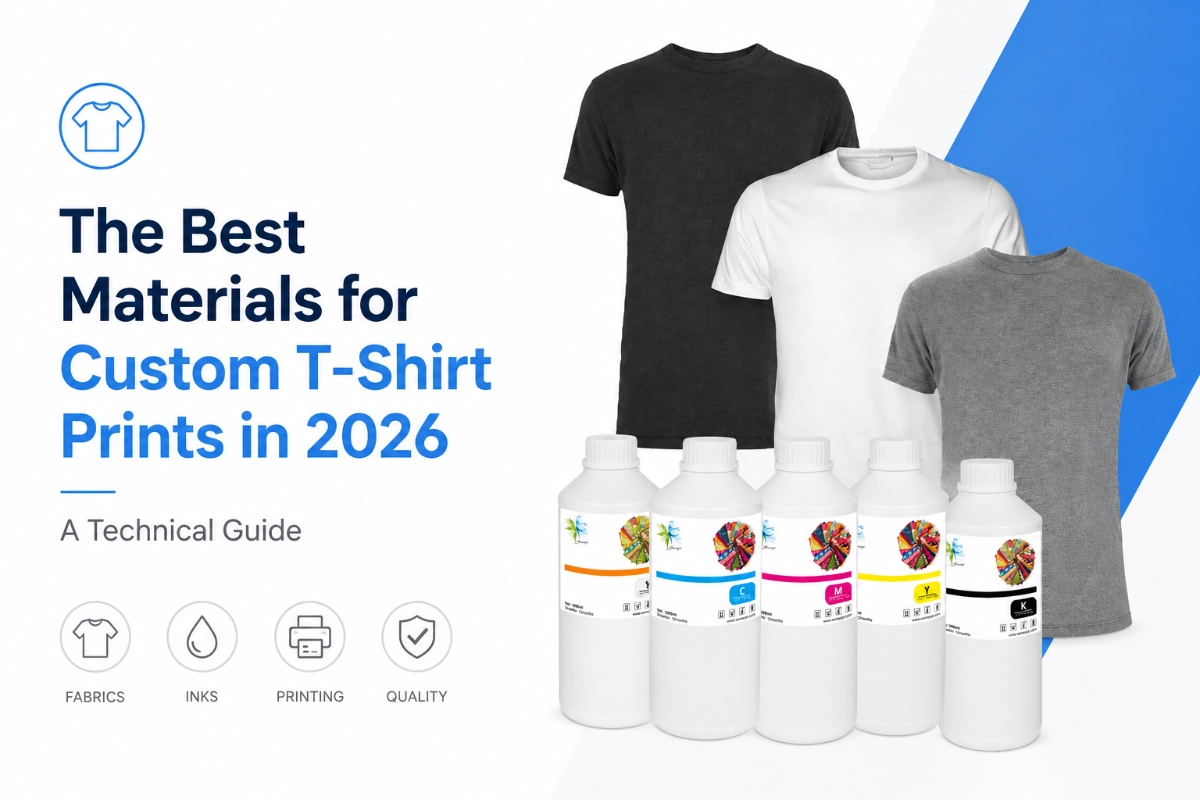
In the world of garment decoration, there is no single answer to the best materials for custom t-shirt prints. 100% Ring-spun cotton remains the premier choice for minimalist comfort and DTG printing. 100% Polyester is the exclusive stage for vibrant sublimation, while Cotton-Poly blends have become the perfect partner for the trending DTF process. Selecting a fabric is more than just a tactile preference—it is a technical decision where textile fibers must achieve perfect physical and chemical bonding with the ink to prevent cracking, fading, or bleeding.
In this 2026 guide, we move beyond basic fabric descriptions to provide a deep analysis from a professional supplier’s perspective. We explore how high-performance textile inks and advanced PET films adapt to different fabrics, ensuring your custom prints achieve retail-grade washfastness and pixel-perfect color precision.
Why Choosing the Wrong Fabric Destroys Your Print Quality
In professional garment decoration, the fabric is not just a canvas; it is a chemical substrate. Many businesses fail because they assume all “cotton” or “polyester” fabrics are identical.
When you pair high-performance inks with incompatible fabrics, “dye migration” is highly likely to occur. This causes polyester dyes to bleed into the white ink, turning a crisp logo into a dull, muddy mess.
Furthermore, low-quality fabrics with excessive surface fuzz can lead to pilling and cracking. These physical barriers prevent the ink or DTF hot-melt adhesive from bonding deeply with the fibers.
With 18 years of experience, we have continuously tested how ink viscosity and film coatings interact with various textile textures. We know that “cheap” materials often lead to expensive reprints and lost customers.
Top 4 Fabrics Decoded: Balancing Comfort and Durability
1. The Fabric Dimension: Choosing Your Print Carrier
100% Cotton (Ring-spun & Combed)
The gold standard for comfort and breathability. Combed cotton provides a smoother surface by removing short fibers, making it the top choice for high-precision DTG imaging.
100% Polyester
Offering superior moisture-wicking, polyester is the essential substrate for Sublimation. Under high heat, the fibers open to permanently lock in gasified dyes, creating prints that never fade.
Cotton-Polyester Blends (CVC/TC)
Known as the “Golden Balance” for modern printers. It combines the comfort of cotton with the durability of polyester, providing ideal surface tension for DTF applications.
Tri-Blends (Cotton/Poly/Rayon)
These fabrics offer a vintage, high-end aesthetic with an incredibly soft hand-feel. Their lightweight nature requires precise ink-volume control to ensure the print doesn’t feel “heavy” on the chest.
2. The Consumables Dimension: The “Engine” of the Print
DTG Water-based Textile Inks
For 100% cotton, high color density is vital. Winnerjet’s professional DTG inks are engineered to penetrate natural fibers deeply while maintaining vibrant CMYK clarity.
DTF Films & Hot-melt Powder
In blends, the transfer is key. High-quality PET stable-coating films ensure DTF inks do not bleed during printing and allow for perfect release during the heat-press stage.
On 100% polyester, color saturation is everything. Our sublimation inks are formulated for high-speed stability and an ultra-wide color gamut, keeping your sportswear competitive in the market.
The Expert Matrix: Matching Fabric Materials with Printing Technology
Choosing the right combination is a science. To help you avoid costly mistakes, we have summarized the compatibility between mainstream fabrics and leading printing technologies.
Before printing, ensure your artwork scale is correct. If you have questions about dimensions, please refer to our T-Shirt Design Size & Placement Guide to match high-quality materials with perfect proportions.
| Fabric Type | Recommended Method | Durability | Feel / Comfort | Best For |
|---|---|---|---|---|
| 100% Ring-Spun Cotton | DTG, Screen Print | High | Ultra-soft, Breathable | Streetwear, Premium Casual |
| 100% Polyester | Sublimation | Best (Never Fades) | Zero Feel (Integrated) | Activewear, Sports Jerseys |
| Cotton/Poly Blend | DTF, Screen Print | High | Soft, Wrinkle-resistant | Corporate Apparel, Events |
| Tri-Blends | DTF, Discharge | Medium | Lightweight, Silky | Vintage Styles, Luxury Tees |
The 2026 Sustainability Shift: Eco-friendly & Functional Alternatives
By 2026, “best materials” are defined by environmental impact as much as quality. While many suppliers still rely on basic cotton, global procurement has shifted toward Organic Cotton, Recycled Polyester (rPET), and biodegradable fibers like Bamboo and Tencel.
Additionally, the rise of Smart Fabrics (such as temperature-regulating and moisture-wicking cooling fabrics) presents new challenges. These high-tech materials are often extremely heat-sensitive, requiring low-temperature DTF curing solutions to prevent fabric yellowing or the loss of “Cool-Touch” properties.
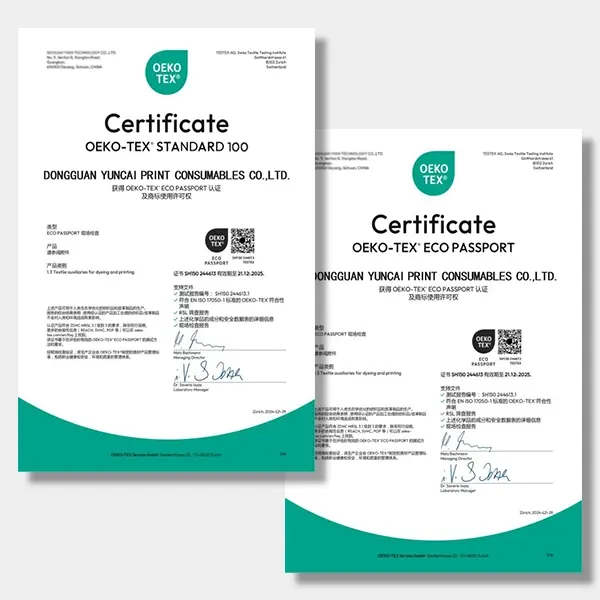
Winnerjet has deeply optimized our OEKO-TEX certified textile inks for these sensitive substrates. Our formulas ensure excellent color reproduction on recycled fibers without clogging the micro-pores of functional textiles. Pairing the right eco-fabrics with non-toxic, premium water-based inks is the core competency for standing out in the sustainable procurement wave.
How to Test Fabric Quality Before a Bulk Order
Before placing a large order, you must look beyond the label. In 2026, the composition of many “blended” fabrics remains inconsistent, which can lead to poor ink adhesion and wasted inventory.
The “Burn Test” for Fiber Verification
Pull a single thread and ignite it. Natural cotton smells like burning paper and leaves gray ash; polyester melts into a hard, plastic-like bead. If your “100% cotton” melts, your DTG print is destined to fail.
“Stretch & Recovery” Analysis
Stretch the fabric to its limit and release. High-quality materials should snap back instantly. If the fabric remains distorted, your DTF prints will likely crack or peel during wear and washing.
“Surface Fuzz” Water Droplet Test
Place a small drop of water on the fabric. If it beads up on the surface without penetrating, the fabric may have a chemical coating that blocks ink penetration. Pre-washing or switching suppliers is necessary.
Build Your T-Shirt Business on the Right Foundation
In 2026, choosing the best materials for custom t-shirt prints is about the synergy between fabric, technology, and high-performance consumables. Whether you are building a premium streetwear brand or managing bulk corporate orders, combining the right substrate with Winnerjet professional-grade inks and films is your key to winning in a fierce market.
Don’t let rising raw material costs or inconsistent fabric quality hinder your growth. Join our 2026 “Pre-pay & Lock” Program today to secure long-term low costs and enjoy localized logistics through our USA and Global Warehouses.